Oatmeal Monday
Oatmeal Monday is a quirky tradition with practical roots in Scottish university life.
Long before dining halls, meal plans, and late-night delivery, students were expected to fend for themselves, and that meant hauling in the basics: food for the belly and fuel for the fire.
Oats, ground into oatmeal, were the dependable staple that could survive travel, store well in a room, and turn into a hot meal with minimal equipment.
The result was a day that blended routine and relief. Oatmeal Monday wasn’t about culinary trends or a love of breakfast for breakfast’s sake.
It was a scheduled pause that acknowledged the realities of student living and the humble grain that kept scholars going.
Oatmeal’s reputation has since expanded beyond thrift and convenience. It’s widely appreciated for being filling, adaptable, and rich in soluble fiber, including beta-glucan, which is often associated with heart health.
That makes Oatmeal Monday easy to reinterpret as a celebration of resourcefulness, simple nourishment, and the surprisingly wide world of oats.
How to Celebrate Oatmeal Monday
Start the day by cooking a variety of oatmeal dishes. Experiment with sweet or savory flavors. Try spicing it up with cinnamon or going bold with spicy toppings.
A good place to begin is choosing the style of oats, because each one behaves differently in the pot:
– Steel-cut oats cook up chewy and nutty, with a distinct texture. They take longer but feel extra hearty.
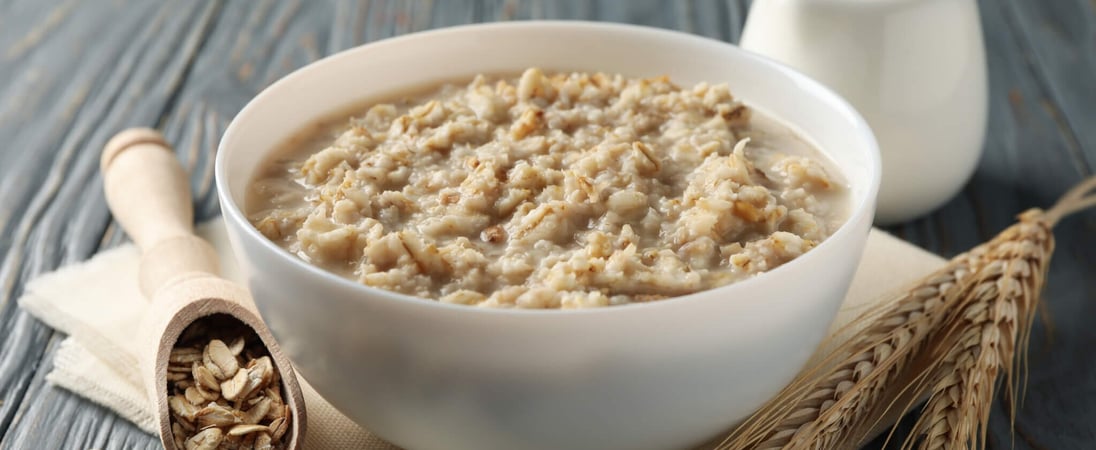
– Rolled oats (often labeled old-fashioned) turn creamy and comforting, with a quicker cook time.
– Quick or instant oats are the speed demons. They soften fast and are great for busy mornings, though flavored packets can come with extra sugar.
Once the base is chosen, build a small “oatmeal board” like a snack spread, but for porridge. Offer a mix of textures and flavors so the bowl can go classic or completely chaotic: toasted nuts, seeds, dried fruit, fresh fruit, yogurt, nut butter, cocoa, shredded coconut, or a drizzle of honey or maple syrup.
For a savory route, oatmeal can take the same toppings that work on rice or grits: a soft-cooked egg, sautéed greens, mushrooms, scallions, roasted vegetables, a pinch of cheese, or a spoonful of chili crisp.
And oatmeal doesn’t have to stay in a bowl. It can anchor an entire menu:
– Baked oatmeal, sliced into squares like a breakfast casserole
– Oatmeal pancakes or waffles for a fluffier twist
– Oat-based muffins, especially with banana, apple, or pumpkin
– Overnight oats for a no-cook option that feels like dessert in a jar
To keep the spirit of the tradition, the “feast” can still be simple. Oatmeal’s charm is that it can be impressive without being fussy.
Cook Up an Oatmeal Feast
Start the day by cooking a variety of oatmeal dishes. Experiment with sweet or savory flavors. Try spicing it up with cinnamon or going bold with spicy toppings.
A good place to begin is choosing the style of oats, because each one behaves differently in the pot:
– Steel-cut oats cook up chewy and nutty, with a distinct texture. They take longer but feel extra hearty.
– Rolled oats (often labeled old-fashioned) turn creamy and comforting, with a quicker cook time.
– Quick or instant oats are the speed demons. They soften fast and are great for busy mornings, though flavored packets can come with extra sugar.
Once the base is chosen, build a small “oatmeal board” like a snack spread, but for porridge.
Offer a mix of textures and flavors so the bowl can go classic or completely chaotic: toasted nuts, seeds, dried fruit, fresh fruit, yogurt, nut butter, cocoa, shredded coconut, or a drizzle of honey or maple syrup.
For a savory route, oatmeal can take the same toppings that work on rice or grits: a soft-cooked egg, sautéed greens, mushrooms, scallions, roasted vegetables, a pinch of cheese, or a spoonful of chili crisp.
And oatmeal doesn’t have to stay in a bowl. It can anchor an entire menu:
– Baked oatmeal, sliced into squares like a breakfast casserole
– Oatmeal pancakes or waffles for a fluffier twist
– Oat-based muffins, especially with banana, apple, or pumpkin
– Overnight oats for a no-cook option that feels like dessert in a jar
To keep the spirit of the tradition, the “feast” can still be simple. Oatmeal’s charm is that it can be impressive without being fussy.
Host a Friendly Oatmeal Competition
Gather friends or family for an oatmeal cook-off. Each person can create a unique dish, and then taste and rank the creations.
To make it more fun and less stressful, set playful categories that reward creativity rather than perfection. Ideas include:
– Best comfort bowl (classic flavors, cozy texture)
– Most unexpected savory combo (think miso, sesame, or roasted tomatoes)
– Best portable oats (bars, cookies, energy bites, or muffins)
– Best budget bowl (using pantry ingredients only)
– Best “student-style” bowl (minimal equipment, maximum satisfaction)
A small twist that nods to Oatmeal Monday’s academic history is to impose “dorm-friendly” constraints for one round: microwave-only, kettle-only, or one pot with one spoon. Suddenly, stirring becomes strategy, and toppings become extra credit.
From creamy porridge to oatmeal cookies, there’s plenty of room for creativity. Plus, everyone gets to enjoy a delicious snack afterward.
Craft Oatmeal Art
For a more unusual take on celebrating, use oats to create DIY crafts. Mix oatmeal with a little flour and water to make simple clay for modeling fun shapes. It’s a great way to get kids involved while tapping into your creative side.
Oats can also be used for sensory play and simple projects that don’t require special supplies:
– Make textured collages by gluing oats onto paper in patterns or pictures.
– Create “oat mosaics” by mixing oats with other pantry items like lentils or dried beans for contrast.
– Use oats as a gentle, biodegradable filler for handmade sachets, or as a rustic element in table decor for a breakfast-themed get-together.
Crafting with oats leans into the playful side of the day. It also highlights something students long ago understood: oats are useful beyond the bowl.
Share the Oatmeal Love
Spread joy by sharing homemade oatmeal treats with neighbors, coworkers, or local community members. Bake a batch of oatmeal cookies or granola bars and package them as small, thoughtful gifts.
If baking isn’t the plan, there are easy shareable options that still feel special:
– A jar of homemade granola with a handwritten flavor note
– Single-serve “oat kits” in small bags: oats plus a spice blend (like cinnamon and cardamom) and optional add-ins (raisins, chopped nuts)
– Energy bites made from oats, nut butter, and a little honey, rolled into snackable spheres
This is also a nice chance to be mindful of dietary needs.
Oats are naturally gluten-free, but cross-contact can happen during processing, so anyone cooking for people with allergies can choose certified gluten-free oats when needed. Including ingredient notes with shared treats keeps things welcoming.
Learn About Oats
Dive into the history of oats and their nutritional benefits. Host a mini educational session at home or online, discussing how oats have been a staple in diets for centuries. It’s a simple way to appreciate how this humble grain has fed generations.
A fun angle is comparing how oats show up across everyday cooking:
– Oatmeal and porridge: the classic warm bowl
– Baking: adding chew, structure, and a nutty flavor
– Savory thickening: oats can stand in for breadcrumbs in meatballs or patties
– Oat “milk” and oat-based drinks: a modern use that still relies on oats’ natural creaminess
Learning can be hands-on, too. Taste-test the same recipe with steel-cut, rolled, and quick oats and compare texture, cook time, and flavor.
It’s a small experiment with surprisingly clear results, and it reinforces why oats were historically beloved: they’re adaptable, affordable, and dependable.
Oatmeal Monday Timeline
c. 2000–1000 BCE
Oats Become a Domesticated Cereal in Europe
Wild oats that once grew as weeds in wheat and barley fields began to be domesticated in cooler, wetter parts of Europe, laying the groundwork for their later role as a staple grain.[1]
c. 1000 BCE–1 CE
Domesticated Oats Spread Across Northern Europe
Archaeological remains show domesticated oat grains appearing widely in European contexts, as farmers adopt oats as a hardy crop suited to poorer soils and harsher climates.[2]
Middle Ages (c. 5th–15th Century)
Oats Become a Staple Grain in Scotland
In Scotland’s cool, damp climate, oats outperform wheat and become a primary cereal, commonly ground into “meal” and eaten daily as porridge and oatcakes by rural and working communities.[3]
16th–17th Centuries
Oatmeal Porridge Entrenched in the Scottish Diet
By early modern times, Scottish foodways were strongly identified with oatmeal porridge, a cheap, filling, and easily stored food that underpins the diets of farmers, laborers, and students alike.[4]
17th–19th Centuries
Self‑Catering Becomes the Norm in Scottish Universities
Students at the ancient universities of Scotland are expected to provide their own food and fuel, commonly relying on sacks of oatmeal from home, shaping a frugal, porridge‑based student diet.[5]
Late 19th Century
Improved Transport and Campus Life Reduce Oat Dependence
As railways expand and university towns gain better markets and catering, Scottish students no longer need to haul large stores of oatmeal from home, and traditional oatmeal‑centered provisioning begins to decline.[6]
1990s–2010s
Nutrition Science Confirms Heart‑Health Benefits of Oats
Randomized trials and meta‑analyses show that about 3 g per day of oat beta‑glucan from oatmeal can significantly lower LDL (“bad”) cholesterol, prompting official heart‑health claims for oat products.[7]
History of Oatmeal Monday
Oatmeal Monday, also called Meal Monday, began as a practical tradition for Scottish university students in the 17th century. At Scotland’s ancient universities, student life could be stark by modern standards.
Many students lived in basic lodgings, and they were expected to supply their own necessities rather than rely on institution-provided meals or heat.
That expectation wasn’t symbolic. It meant students brought sacks of oatmeal and also arranged for fuel such as firewood or peat.
The two went together: oatmeal could become a sustaining meal with little more than water, but it still required heat. A warm pot and a warm room depended on whatever the student could procure and carry.
Most relied on simple, long-lasting supplies like oatmeal, which was easy to store and cook. Oats were well suited to the task. As a grain, they stored reliably, were widely available, and could be turned into porridge, baked goods, or simple dumplings and bannock-style breads.
Oatmeal was also forgiving. It could stretch to feed a hungry student, and it tolerated a wide range of add-ins, from a pinch of salt to a spoonful of something sweet when times were good.
Because many students came from rural homes or farming communities, resupplying wasn’t as easy as walking to a corner shop.
Travel could take time and effort, and the demands of studies could trap students in town longer than their provisions lasted.
Meal Monday emerged as a pressure valve: an institutional acknowledgment that studying required eating, and eating required supplies.
Since their homes were far from campus, universities gave students a day off in what became a later tradition on the second Monday of February. This allowed them to return home, gather more supplies, and come back ready for more study.
In earlier practice, the break wasn’t always confined to a single annual date. Accounts describe a pattern of more regular Meal Mondays, in some cases happening monthly, that offered students a recurring chance to restock.
Scottish universities, including Edinburgh and Glasgow, started the tradition as part of the broader culture of the ancient universities. The purpose wasn’t ceremonial; it was student welfare by schedule.
The day created a predictable rhythm for travel, family contact, and restocking, especially for those whose budgets and circumstances made daily shopping unrealistic.
In that setting, oatmeal wasn’t just food. It was a strategy. It represented a practical approach to nutrition: complex carbohydrates for energy, fiber for fullness, and enough versatility to prevent boredom.
It also represented a social reality. Students didn’t all arrive with equal resources, and a cheap staple helped narrow the gap between those who could afford variety and those who could not.
Over time, the pattern of frequent Meal Mondays faded, and the observance became more fixed. By the late 19th century, universities and cities were changing.
Transportation improved, supply chains expanded, and student accommodations gradually became less isolated from everyday services. The original need for a recurring “go home and fetch provisions” day weakened.
However, the February tradition persisted and became known as Oatmeal Monday. Even as the day’s practical role diminished, the name stuck because the story was memorable and the symbol was clear.
Oats had carried students through long stretches of study, cold rooms, and tight budgets, so it made sense that oats became the shorthand for the entire custom.
Eventually, most institutions stopped observing it as an official day off for students. Yet the tradition remained part of university lore and Scottish cultural memory.
In some cases, remnants of the day persisted in staff calendars, and the term “Meal Monday” continued to be recognized even when the actual resupply trip was no longer necessary.
This day, rooted in practicality, has evolved into a fun way to remember the role of oatmeal in student life.
It reminds people how simple foods can be powerful, and how institutions once adapted to the everyday realities of learning: hunger, weather, distance, and the logistics of keeping a small fire going.
Whether enjoyed as a warm, comforting bowl of porridge or incorporated into other creative dishes, oatmeal remains a symbol of nourishment and simplicity. It also serves as a quiet nod to resilience.
The students who once relied on oats weren’t making a lifestyle statement; they were doing what worked. Oatmeal Monday keeps that story alive, one bowl at a time.
Also on ...
View all holidays
National Pizza Day
Imagine sinking your teeth into a hot, crispy, cheesy slice of heaven. Each bite is a flavor explosion, transporting you to pizza paradise.

National Read In The Bathtub Day
Relax and rejuvenate while enjoying your favorite book in a soothing bath. It's a great way to unwind and escape from the hustle and bustle of daily life.


National Football Hangover Day
The party was legendary, the game was epic, but the hangover's no joke. Rally with comfort food, hydrate, and make the memories last!
We think you may also like...

National Bubble Gum Day
Chewy, colorful, and bursting with flavor, this sweet treat is perfect for blowing bubbles and bringing a smile to your face.

National School Lunch Week
Fueling minds, nourishing potential—school lunches aren't just meals; they're key ingredients for young aspirations to thrive.