
We are tied to the ocean. And when we go back to the sea, whether it is to sail or to watch – we are going back from whence we came.
John F. Kennedy
66% of the world is covered in a blanket of rich, vibrant blue, from its depths once came all life on the Earth, and it continues to house an immense amount of life.
This blanket is the world’s oceans, and they serve as one of the most popular vacation spots in the world and play a vital role in the economy of countries worldwide.
Across the briny deep, massive amounts of cargo cross each year, and it still serves as the primary thoroughfare for trade. World Oceans Day celebrates the ocean and the important role it plays in our lives!
How to Celebrate World Oceans Day
Visit the Ocean
Start it off by a visit to the nearest ocean to restore a personal connection to the ocean waters. Breathe deep and appreciate the beauty and serenity the ocean offers each day of the week.
Invite family along, and while there, bring information about the ocean and what people really need to know about it to make visiting it a joy for years to come.
Host a Beach Cleanup
Pick a day to go to the ocean to clean up and help restore it instead of simply sitting by it. Gather friends and family and pitch in and pick up trash that surrounds the local beaches and oceans in the area.
It’ll not only look nicer, but the wildlife in the area will benefit from these actions as well.
Avoid single-use plastics, and instead pack a picnic lunch with reusable containers to enjoy after the hard work is complete.
One may also consider organizing a fundraiser to aid preservation and restoration efforts at the local beach. With all the plastic waste coming off our beaches thanks to careless beach-goers, our ocean is awash with litter.
Learn More About the Oceans
Use this as a time to increase one’s knowledge and explore the topic further. There are a variety of books and resources out there to help a person achieve this goal.
Another idea is to gather a group of people and watch an ocean film on the topic to bring awareness to the concept of helping out the oceans.
There are plenty of activities and events that occur on World Oceans Day. Celebrate by choosing one or two to participate in and enjoy.
Engage in the day’s events by piggybacking off of other ideas that people in the area have come up with instead of having to think of activities alone!
Why Celebrate World Oceans Day
It’s a good reminder to bring attention to the fact that oceans play a major role in everyday life all around the globe.
The oceans provide a majority of the oxygen we breathe, so many consider them to be the lungs of our planet. The goal is to develop a worldwide movement of citizens to care better for the oceans.
In addition, this day is an opportunity to inform and educate humans and the public of what our actions are doing to the ocean and what impact they have in the long run.
It’s not only a day to celebrate the beauty, wealth, and promise of the ocean, but a chance to realize that they’re a critical part of the biosphere. They’re a significant source of food and medicines and simply can’t be ignored or mistreated any longer.
World Oceans Day is a time for supporters of the oceans to focus on conversation and sustainability so that they can remain clean and usable.
The animals deserve a happy and safe place to roam and live without having to worry about any destruction or man-made obstacles.
It’s important to safeguard the oceans to help ensure a healthy home for all. One this day, people can come together to create a space for all to enjoy and appreciate, no matter where each person lives.
World Oceans Day Timeline
Brundtland Report
This report, connected to The World Commission on Environment and Development (Brundtland Commission) notes that the ocean sector is lacking representation compared to other sectors.
Earth Summit in Rio de Janeiro
Created as a way to celebrate the world’s shared ocean and raise awareness for the personal connection between humans and the ocean. This is where the concept for World Oceans Day was first proposed by the Canadian representatives.
UN declares to recognize World Oceans Day
This year, after a four-year onsite and online petition drive, the UN General Assembly passes a Declaration that will officially recognize the day, beginning the following year.
First World Oceans Day is celebrated
The inaugural World Oceans Day is observed with the theme “Our Oceans, Our Responsibilities.”
World Oceans Day Youth Advisory Council is launched
Made up of 25 youth from all over the world, the Youth Advisory Council is created to develop and promote World Oceans Day.
History of World Oceans Day
In 2008, the UN gathered and uniformly created World Oceans Day. It was first proposed by the Canadian government and the Oceans Institute of Canada in 1992 in Rio de Janeiro during the Earth Summit.
The ocean has been an incredibly important part of human history, and this special was established with the intent of celebrating our connection to the sea and raising awareness about the various dangers it faces.
There are nearly 200,000 identified species that live in the ocean, but the number of actual species that reside there is likely in the millions. It’s essential to ensure that they don’t have to worry about freely getting around and enjoying a healthy and safe home to reside.
Even with that being the case, there are still problems with overfishing, and the subsidies that are given for fishing in countries all around the world are causing depletion of the game species.
These activities have led to efforts to restore the fishing industry being undermined, and the industry bringing in $50 billion a year less. It’s just one of the many factors that should have us all celebrating World Oceans Day and raising awareness about all the issues our big blue’s face.
There’s a global environmental catastrophe due to decades of overuse and a surge in single-use plastics. Plastic straws and bags are getting into the oceans and causing havoc. World Oceans Day is an opportunity to acknowledge and recognize the efforts that have been and are being made against plastic pollution.
It’s enlightening and disheartening to know that today, 13,000,000 tons of plastic leaks into the ocean every year, which among other damage, kill 100,000 marine animals annually.
Facts About World Oceans Day
Ocean Plankton Generate Up To Half of Earth’s Oxygen
Microscopic plants in the ocean, known as phytoplankton, carry out photosynthesis on an enormous scale, producing an estimated 40–50% of the oxygen generated globally each year.
These drifting organisms also absorb vast amounts of carbon dioxide and help move it into the deep ocean when they die and sink, making them central to both the planet’s breathable air supply and long‑term carbon storage.
The Deep Sea Is Our Planet’s Largest Habitat
Most of Earth’s habitable space lies in the deep ocean, below 200 meters, where sunlight cannot penetrate.
This dark realm covers more than 60% of the planet’s surface and hosts unique ecosystems like hydrothermal vents, where organisms thrive on chemical energy rather than sunlight, revealing that complex life can exist in conditions once thought uninhabitable.
Oceans Carry About 80–90% of Global Trade
Modern global commerce still relies heavily on the sea: by volume, around 80–90% of the world’s traded goods are transported on ships.
From raw materials like grain and oil to manufactured electronics and clothing, this maritime network of ports and shipping lanes forms the backbone of international supply chains and national economies.
Marine Fisheries Feed Billions but Are Under Strain
Wild-caught seafood from the ocean provides vital animal protein for billions of people, particularly in coastal and low‑income regions, yet about one‑third of assessed marine fish stocks are currently overfished.
Sustainable management is possible and has already stabilized or rebuilt some stocks, but continued overexploitation threatens both marine ecosystems and long‑term food security.
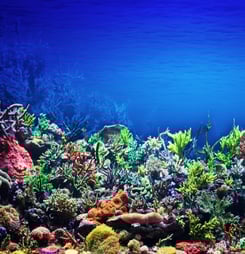
Coral Reefs Cover Less Than 1% of the Ocean yet Support a Quarter of Marine Species
Shallow‑water coral reefs occupy a tiny fraction of the seafloor but provide habitat, food, and nursery grounds for an estimated 25% of all marine species.
These biodiverse “rainforests of the sea” also buffer shorelines from storms and support tourism and fisheries, yet are highly vulnerable to warming oceans, pollution, and destructive fishing practices.
The Ocean Is a Frontier for New Medicines
Marine organisms are yielding important pharmaceutical compounds, from cancer drugs derived from sea sponges to painkillers inspired by cone snail venom.
Because many ocean species evolved unique chemical defenses and signaling molecules, researchers increasingly look to coral reefs, deep‑sea communities, and polar waters for novel substances that could treat infections, cancer, and other diseases.
Plastic Pollution Reaches the Deepest Ocean Trenches
Plastic debris is no longer confined to surface waters or beaches; scientists have documented microplastics in deep‑sea sediments, Arctic sea ice, and even in organisms living in trenches more than 10,000 meters below the surface.
These particles can be ingested by marine life at every level of the food web, raising concerns about long‑term impacts on ecosystems and potential pathways back to humans through seafood.