
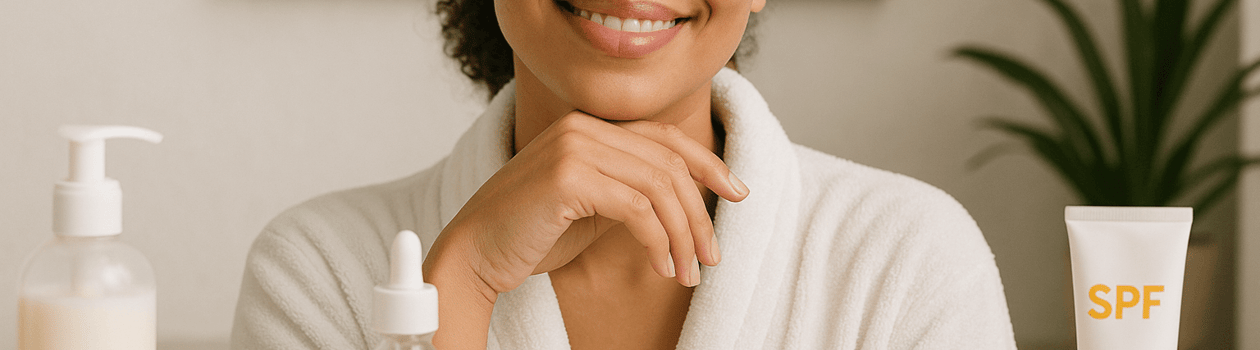
Did you know skin is the body’s largest organ and one of its hardest-working defenders? National Love Your Skin Day spotlights that everyday miracle and encourages people to treat their skin with steady, sensible care rather than chasing whatever trend is shouting the loudest.
This day is not a contest for “perfect” pores or a reason to panic-buy a dozen serums. It’s a reminder that skin is an active, living barrier. It holds moisture in, keeps irritants out, helps regulate body temperature through sweat, and even plays a role in the sense of touch. When it feels comfortable and supported, it usually looks healthier too, but comfort and function come first.
A few simple habits can make a noticeable difference: cleansing without stripping, moisturizing to support the skin barrier, and protecting against ultraviolet exposure. Those basics help reduce dryness, irritation, and the kind of long-term damage that adds up quietly over time. Many dermatology recommendations come back to the same idea: consistent, gentle routines beat aggressive “quick fixes” in the long run.
National Love Your Skin Day also nudges people to pay attention to how their skin responds day to day. Skin can become reactive when it’s overworked by harsh ingredients, frequent exfoliation, or constant product switching. Listening to what it needs, and giving it time to recover, is a form of self-care that’s practical, not performative.
People sometimes overlook skin’s role in overall well-being because it’s always there, doing its job in the background. This day brings focus back to the basics and frames skin care as a small daily act of respect. Taking a few moments to care for skin can become a calming ritual, and it often boosts confidence for the simplest reason: skin feels better when it’s not tight, itchy, or inflamed.
The goal is not flawless skin. It’s protection, comfort, and personal well-being. National Love Your Skin Day invites everyone to slow down, appreciate what their skin does, and treat it like the capable, resilient bodyguard it is.
It’s a fresh way to think about self-care from the outside in.
How to Celebrate National Love Your Skin Day
Here are some fun ways to mark National Love Your Skin Day with care and joy:
Create a gentle cleansing ritual
Start with a mild, non-abrasive cleanser and keep expectations realistic: cleansing is meant to remove sweat, excess oil, sunscreen, and daily grime, not erase skin texture. Warm water is ideal, since hot water can strip natural oils and leave skin feeling tight. A gentle cleanse can be as simple as using fingertips in small circles for about a minute, then rinsing thoroughly and patting dry with a clean towel.
A good cleansing ritual also means choosing the right frequency. Some people do well cleansing twice a day, while others find that a morning rinse and a thorough evening cleanse keeps skin calmer. Skin that feels squeaky-clean is often skin that’s been over-cleansed, and that can lead to irritation, flaking, and rebound oiliness.
If makeup or water-resistant sunscreen is part of the routine, a “double cleanse” can be useful: a first step to dissolve the product, followed by a gentle cleanser to lift it away. The key is keeping both steps mild and avoiding aggressive scrubbing tools that can irritate the skin barrier.
Apply broad-spectrum sunscreen
Cover exposed areas with SPF 30 or higher before heading outdoors, and treat sunscreen as a daily habit rather than something reserved for beach days. Broad-spectrum formulas protect against both UVA and UVB rays, and consistent use supports healthy-looking skin over time.
Application matters as much as product choice. Many people use too little, so it helps to be generous and even. Apply it to the face, ears, neck, and any exposed scalp areas, and do not forget hands, which tend to give away sun exposure early. Reapplication is important during extended outdoor time, sweating, or after towel drying.
Sunscreen does not have to be a sensory nightmare. There are lightweight lotions, gels, and mineral options for sensitive skin. For those who dislike the feel, experimenting with different textures can be a surprisingly satisfying part of “loving your skin,” since it’s much easier to stick with a product that feels comfortable.
Use a nourishing moisturizer
Pick a moisturizer that suits skin type, climate, and personal comfort. A simple fragrance-free cream can be a hero product for many people, especially if skin is easily irritated. Moisturizers do more than “add water.” They help reinforce the skin barrier and reduce moisture loss, which can ease dryness and soothe that tight, stretched feeling.
Timing helps. Applying moisturizer soon after washing, when skin is slightly damp, helps lock in hydration. For very dry skin, layering can be useful: a lighter lotion first, then a thicker cream. For oily or combination skin, a lightweight moisturizer can still be important, since skipping it entirely sometimes pushes skin to compensate by producing more oil.
Moisturizing is also a chance to check in with skin without judgment. A few seconds of gentle application can double as a mini self-assessment: Is anything stinging? Are there new dry patches? Does skin feel rough or tender? Noticing changes early can help people adjust routines before irritation becomes a full-blown flare.
Drink water throughout the day
Keep a water bottle close and sip regularly. Hydration supports the body as a whole, and while drinking water is not a magic cure for every skin concern, it helps maintain normal body function that skin relies on. When the body is dehydrated, skin can appear dull and feel less comfortable.
Hydration is also about reducing things that quietly dry skin out, such as overly hot showers, harsh soaps, and very dry indoor air. Pairing water intake with skin-friendly habits, like using a moisturizer after washing hands and choosing a gentle body cleanser, creates a more complete “comfort plan” for the skin barrier.
For an extra boost, turning hydration into a ritual can help: a glass of water in the morning, refills during meals, and a final cup in the evening. It’s simple, low-effort, and good for more than just skin.
Give your skin a rest from harsh trends
Skip strong acids, aggressive peels, or frequent retinoid use unless a dermatologist recommends them or the skin is already tolerating them well. National Love Your Skin Day is an excellent excuse to step off the product treadmill and simplify. When skin is irritated, the most “advanced” routine is often the one that lets it recover.
A gentle reset can look like this: cleanser, moisturizer, and sunscreen, plus a bland lip balm. That’s it. Many people find their redness decreases, their dryness improves, and their skin feels calmer within a couple of weeks of going back to basics.
It also helps to remember that irritation is not the same as “products working.” Stinging, burning, and persistent flaking are signals to pause and reassess. Loving skin means respecting those signals, not powering through them for the sake of a trend.
Pamper hands, neck, and lips
Extend care beyond the face. Hands wash more often than almost any other body part, which makes them prone to dryness, cracking, and irritation. A thick hand cream after washing, especially one that’s fragrance-free, can make daily life more comfortable. For very dry hands, applying cream and wearing cotton gloves for a short period can be a surprisingly cozy upgrade.
The neck and chest are frequently exposed and can be sensitive. Applying sunscreen and moisturizer there helps keep the area comfortable and supported. Lips deserve their own attention because they lack oil glands and dry out quickly. A simple, occlusive lip balm can reduce chapping, and a lip product with sun protection can be especially useful for prolonged outdoor time.
And do not forget feet and elbows, the unsung heroes of roughness. A richer cream and a few minutes of gentle massage can turn “forgotten skin” into “finally cared for” skin.
National Love Your Skin Day Timeline
Ancient Egyptian Records of Skin Treatments
The Ebers Papyrus from ancient Egypt describes numerous remedies for skin problems such as ulcers, burns, rashes, and infections, indicating one of the earliest documented medical focuses on skin health.
Alibert Helps Found Clinical Dermatology in Paris
French physician Jean-Louis-Marc Alibert begins systematically teaching and publishing on skin diseases at the Hôpital Saint-Louis in Paris, laying groundwork for modern dermatology with organized clinical observation and classification.
Von Hebra Strengthens Dermatology as a Medical Specialty
Ferdinand von Hebra is appointed professor of skin diseases and syphilis at the University of Vienna, and his Atlas of Skin Diseases becomes a landmark reference that helps formalize dermatology as an independent discipline.
Schade Demonstrates Skin’s Barrier Function
Physician Heinrich Schade publishes findings on transepidermal water loss and the role of the outer skin layers, helping to establish the concept of the stratum corneum as a physiological barrier that maintains hydration and protects the body.
Greiter Introduces the Sun Protection Factor (SPF) Scale
Austrian chemist Franz Greiter proposes the SPF rating system to quantify sunscreen effectiveness, giving people a practical tool to gauge protection against ultraviolet radiation and support healthier daily skin habits.
History of National Love Your Skin Day
National Love Your Skin Day began in 2020. It was started by a skincare company called Dermastart, with the goal of encouraging people to treat their skin with more care and less pressure. Rather than pushing complicated regimens, the day promotes a kinder approach that centers on skin health and comfort.
From the start, the message stood apart from typical beauty chatter because it focused on skin as a working organ, not a project to constantly “fix.” The idea was to steer people away from harsh routines and short-lived fads that can leave skin irritated and sensitive. In their place, the day highlights habits that are easy to understand and realistic to maintain: gentle cleansing, moisturizing, and daily sun protection.
Soon after its launch, dermatologists and educators joined in to amplify the basics. Skin health education fits naturally into community conversations because skin issues are so common. Almost everyone has dealt with dryness, acne, sunburn, eczema flare-ups, or irritation from a product that promised the moon and delivered a rash. The day’s practical tone makes it easier for people to talk about skin without embarrassment, especially younger people who are often targeted by “perfect skin” messaging.
Educational efforts connected to the day have emphasized small, repeatable actions over dramatic transformations. Sunscreen instruction, for example, is not only about appearance. It’s about preventing burns, reducing cumulative damage, and supporting long-term skin resilience. Similarly, simple cleansing and moisturizing lessons can help people understand the skin barrier, the outer layer that acts like a brick wall holding moisture in and keeping irritants out. When that barrier is damaged, skin becomes reactive and uncomfortable, which can affect sleep, concentration, and confidence.
Over time, National Love Your Skin Day gained broader support from doctors, skin care professionals, and health advocates who recognized the value in its low-pressure approach. It creates a moment to pause and ask a refreshingly nonjudgmental question: “Does my skin feel okay?” If the answer is no, the day’s message encourages dialing things back, choosing gentle products, and prioritizing protection.
National Love Your Skin Day also aligns with a growing awareness that skin care is not one-size-fits-all. Skin type, age, environment, and personal sensitivities all shape what “loving your skin” looks like. For one person, it might mean finally using moisturizer consistently. For another, it might mean learning that fragrance-free products reduce itching and redness. For someone else, it might mean seeing a dermatologist for a persistent rash instead of trying to solve it with an endless rotation of new products.
As the day continues to reach more people, its core idea stays the same: skin care is not about chasing perfection. It’s about respecting the skin’s everyday work and making choices that support comfort, function, and confidence. It’s a reminder that the most loving routine is usually the one that is simple enough to stick with, gentle enough to feel good, and protective enough to help skin keep doing what it does best.
Facts About National Love Your Skin Day
Skin as a Complex Immune Organ
Human skin is not just a passive covering but an active immune organ that hosts specialized cells such as Langerhans cells, T cells, and innate lymphoid cells that constantly monitor for pathogens and help coordinate inflammatory responses.
This cutaneous immune system works alongside the physical barrier of the stratum corneum, so when the skin barrier is disrupted by harsh cleansing or over-exfoliation, it can increase susceptibility to infections and inflammatory conditions like eczema.
How the Skin Barrier Keeps Water In
The outermost layer of the skin, the stratum corneum, is often compared to a “brick and mortar” wall, where dead skin cells are the bricks and lipids like ceramides, cholesterol, and fatty acids form the mortar that limits transepidermal water loss.
Studies show that even mild surfactants and frequent washing can strip these lipids, increasing water loss and dryness, while moisturizers that replace or mimic these lipids can significantly restore barrier function.
Origins of Modern Sunscreen and Its Impact
Although people have used natural sun-blocking substances for centuries, modern sunscreen chemistry began to take shape in the 1930s and 1940s with early p‑aminobenzoic acid (PABA) products, followed by broad‑spectrum filters that protect against both UVA and UVB radiation.
Large population studies have since linked regular sunscreen use with reduced incidence of actinic keratoses and squamous cell carcinoma, and have shown that daily SPF use can slow the development of photoaging, including wrinkles and uneven pigmentation.
Invisible Sun Damage and UVA Radiation
Ultraviolet A (UVA) rays penetrate deeper into the skin than UVB and can pass through window glass and clouds, which means the skin can be exposed even on overcast days or indoors near windows.
While UVB is more directly linked to sunburn, UVA contributes strongly to photoaging and some forms of skin cancer, which is why dermatology guidelines emphasize broad‑spectrum sunscreens that filter both types of ultraviolet radiation for everyday protection.
Skin Microbiome and Everyday Products
The skin is home to a diverse microbiome of bacteria, fungi, and viruses that varies by body site and plays an important role in maintaining barrier function and modulating inflammation.
Research has shown that frequent use of strong antibacterial soaps and some harsh topical products can disrupt this balance, potentially encouraging overgrowth of opportunistic microbes or aggravating conditions like atopic dermatitis, which has led to increased interest in gentle, microbiome‑friendly skincare formulations.
Mental Health Burden of Skin Conditions
Chronic skin disorders such as acne, psoriasis, and eczema are linked with higher rates of anxiety, depression, and social withdrawal, even when the physical symptoms are considered mild by clinicians.
Surveys and clinical studies have found that visible skin problems can significantly reduce quality of life and self‑esteem, sometimes to a degree comparable with serious systemic diseases, highlighting the importance of compassionate care that considers psychological as well as physical aspects.
Sleep, Stress, and Skin Repair
During sleep, the skin’s blood flow increases and repair processes such as collagen production and barrier recovery accelerate, while chronic sleep deprivation has been associated with slower wound healing and more pronounced signs of skin aging.
Psychological stress can further impair barrier function and increase inflammation in the skin via hormonal pathways like cortisol, which helps explain why flare‑ups of conditions like acne or eczema often coincide with stressful periods and poor sleep.
National Love Your Skin Day FAQs



You may also like

National Sunscreen Day
Discover how National Sunscreen Day promotes daily sun safety, skin cancer prevention, and smart SPF habits while encouraging education, stories, and support.
- United States

National Skincare Education Day
Discover how National Skincare Education Day promotes skin health, debunks myths, and empowers people to build confident, effective skincare routines.
- United States

International Skin Pigmentation Day
Explore International Skin Pigmentation Day, raising awareness of hyperpigmentation, skin health, and inclusive beauty while encouraging education, care, and self-love.
- Australia
- Canada
- India
- and 3 more

Don’t Fry Day
Discover Don’t Fry Day, a sun safety campaign promoting smart UV protection, skin cancer prevention, and fun, sun-smart activities for all ages.
- United States
National days and holidays on June 8

Vivid Sydney
Vivid Sydney is a dazzling celebration that transforms the city into a vibrant playground of lights, music, and creativity. For weeks, iconic landmarks and urban spaces glow with stunning light installations and 3D projections, captivating both locals and tourists. This festival draws millions of visitors each year, offering an enchanting...
- Australia

National Best Friends Day
National Best Friends Day honors the deep bond between besties, inspiring people to show gratitude, share memories, and celebrate friendship in all its forms.
- Australia
- Canada
- United Kingdom
- and 1 more

The Big Lunch
The Big Lunch is a beautiful day filled with community spirit. This annual event is like an enormous block party, where the tantalizing fragrances of home-cooked delicacies mingle with music and laughter. The event means sharing meals. It also means making new - or renewing - heartwarming connections. As...
- United Kingdom

National Upsy Daisy Day
National Upsy Daisy Day celebrates waking up with gratitude, positivity, and kindness, inspiring people to greet the morning with a cheerful, can-do attitude.
- United States
Seize Every Day
Join free for personalised recommendations, email reminders and exclusive guides. Never miss a day.