The soft clatter of a paper roll, the steady wheeze of bellows, and a familiar melody appearing as if by magic can make a room feel instantly older in the best way. Old-Time Player Piano Day shines a spotlight on these remarkable instruments and the era they helped soundtrack, when home entertainment often meant gathering close and letting a machine turn perforated paper into music.
Player pianos made a bold promise: the joy of piano music without the years of lessons. They were equal parts instrument and invention, blending woodworking, mechanics, and a dash of showmanship. Celebrating them is a fun excuse to get curious about how they work, what they meant to everyday households, and why their particular brand of “automated performance” still feels charming rather than cold.
How to Celebrate Old-Time Player Piano Day
Play a Tune
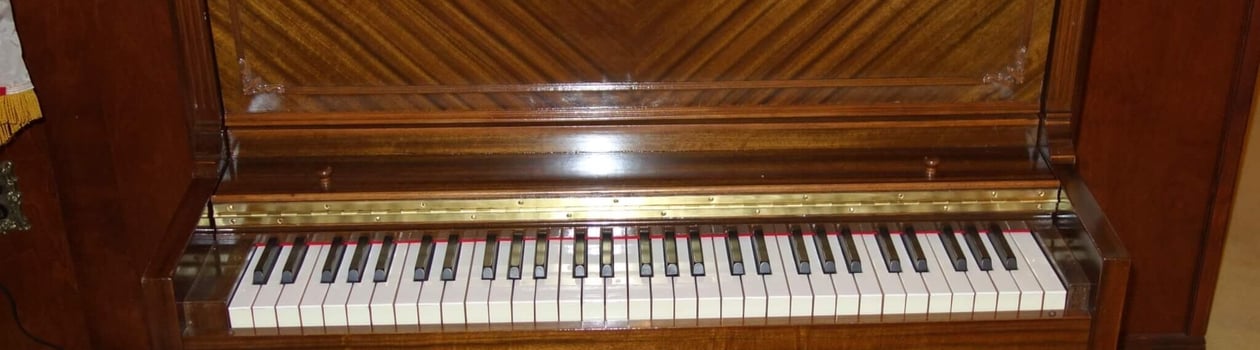
If there is a player piano within reach, this is its moment. A classic player piano is not simply switched on and forgotten. It is operated, almost like a friendly contraption that prefers a human partner. Traditional models use foot pedals to pump air through bellows, creating suction that powers the action. The faster the pedaling, the more energy the mechanism has, and the more confident the performance can feel.
A fun way to celebrate is to treat the instrument like an honored guest. Clear the area, set a comfortable bench nearby, and choose a roll that matches the vibe of the gathering. Ragtime feels instantly “player piano,” but early popular songs, waltzes, marches, and novelty pieces also shine. If the piano includes hand controls for tempo and expression, experiment with them. Many instruments have levers for dynamics or “accent,” inviting the operator to shape the music rather than merely start it.
Even for people who can play piano traditionally, the player mechanism offers its own satisfaction. It is a different skill set: maintaining a steady pedal rhythm, adjusting tempo at natural musical moments, and listening closely for when the mechanism wants a bit more air or a slightly slower pace for clarity. The goal is not perfection. The goal is to enjoy the peculiar delight of music that feels alive, but arrives through gears, valves, and paper.
Visit a Museum
Player pianos are often preserved by museums, historical societies, instrument collections, and specialty galleries, and seeing one in person reveals details that recordings cannot. The cabinets are frequently works of furniture art, and the internal mechanism can be surprisingly intricate, with rows of small pneumatic “fingers” and carefully routed tubing.
A visit becomes more rewarding with a little strategy. Start by looking for interpretive displays that explain the basics: how the perforations on the roll act like a code, how air pressure or suction triggers the piano action, and how tempo is controlled. If demonstrations are offered, listen for the moment when the room goes quiet and the first notes appear. The sound tends to be intimate and slightly percussive, because the hammers are real hammers striking real strings. It is not a recording. It is performance created in real time.
If staff members or volunteers are available, asking a few thoughtful questions can unlock the deeper story. Which rolls are most popular with visitors? How often does the instrument need maintenance? What parts are hardest to repair? Museums that actively run these pianos often have fascinating behind-the-scenes routines, such as regulating the action, checking bellows for leaks, and keeping delicate paper rolls in usable condition.
Host a Retro Party
A player piano is practically a party theme by itself. Hosting a retro gathering can be as simple or as elaborate as desired, but it helps to embrace what player pianos were made for: social music. Arrange chairs as if it is a small parlor performance, or push furniture back for dancing. Either way, make the piano the center of the room, because it is both the band and the conversation piece.
Costumes can be playful rather than historically strict. Suspenders, hats, simple vintage-inspired dresses, or anything that says “old-timey night out” sets the tone without turning the event into a museum reenactment. For food, lean into classic finger-friendly snacks that do not threaten the instrument with crumbs and grease. Keep drinks at a safe distance from the piano, ideally on a separate table, because vintage finishes and mechanics do not forgive spills.
For entertainment, consider “audience participation” in a way that respects the instrument. Guests can take turns operating the pedals while someone else adjusts tempo, or one person can act as a humorous “conductor” signaling louder, softer, faster, and slower. If the piano has a visible roll window, it is fun to let guests watch the paper scroll by and point out the perforations. The party becomes both dance night and mechanical theater.
Listen to Recordings
Not everyone can access a player piano, and that is fine. Recordings still offer plenty to appreciate, especially when listeners pay attention to what makes these instruments unique. A player piano does not sound like a modern digital keyboard, and it does not sound exactly like a human pianist either. The attack can be slightly more uniform, the tempo can have a steady drive, and the overall effect can feel like a room filled with motion.
To celebrate through listening, build a small playlist with variety. Include a few ragtime classics for that unmistakable snap, but also try sentimental ballads, early dance tunes, or theatrical medleys. Even without seeing the mechanism, listeners can often sense when the music was designed to impress: quick flourishes, bright rhythms, and showy endings that would have delighted a living room audience.
For a more immersive experience, pair listening with a simple activity that suits the era the player piano evokes. Read a book, play a board game, sketch, or host a casual get-together where the music runs in the background. The point is to let the player piano sound become part of a shared space, the way it once did for families and friends.
Learn About the History
Old-Time Player Piano Day practically invites a deep dive, because the story of these instruments sits at the crossroads of music, engineering, and everyday life. Learning can be hands-on or purely curious: exploring how the roll system works, how manufacturers competed, and how player pianos changed what people expected from entertainment at home.
A great starting point is the mechanism itself. Traditional player pianos rely on pneumatics, using air pressure differences to move small bellows that “press” keys. The roll is read by a tracker bar, where holes align with openings. When a perforation passes over an opening, air flows, a valve responds, and a pneumatic motor triggers the corresponding note. It is both simple in concept and astonishing in execution, with dozens of notes responding rapidly and repeatedly.
Learning can also include the cultural side. Player pianos helped spread popular music widely, turning the home into a kind of miniature concert venue. They also influenced what music people bought and what they considered “playable,” because a roll could capture fast passages and dense chords that would challenge many amateur pianists. This shaped taste, encouraged certain musical styles, and helped music become a shared commodity long before streaming playlists made that idea feel ordinary.
Why Celebrate Old-Time Player Piano Day
Old-Time Player Piano Day celebrates more than a quirky antique. It recognizes a pivotal moment in how music moved through the world, when mechanical innovation made listening more immediate and more social. Before people could rely on a constant stream of broadcast entertainment, households found creative ways to fill evenings, host guests, and mark special occasions. A player piano turned a living room into a performance space at the pull of a roll and the pump of a pedal.
There is also something satisfying about the player piano’s brand of technology. It is not hidden behind a sleek screen. The process is visible and audible: pedals moving, paper advancing, valves fluttering inside. The instrument invites listeners to understand the “how,” and that curiosity is part of the fun. It is an early example of user-powered automation, where the machine does the complex work but still depends on a person’s attention and energy.
Enthusiasts celebrate the craftsmanship as much as the sound. Many player pianos were built with the same care as fine acoustic pianos, then fitted with mechanisms that required precise alignment and durable materials. Restoring them often involves both woodworking and mechanical know-how, plus patience for details such as sealing air leaks, repairing bellows cloth, and keeping the action regulated so notes trigger cleanly.
The day also honors the way these instruments connected generations. For some, the sound recalls childhood memories or family stories. For others, it is a new discovery that feels oddly familiar, like stepping into a silent film that suddenly gained its soundtrack. Either way, the player piano offers a reminder that “music technology” did not begin with earbuds and apps. People have long chased the dream of bringing music closer, making it easier to share, and letting it brighten ordinary spaces.
Old-Time Player Piano Day Timeline
First patented “player” mechanism for pianos
Inventor John McTammany patents an automatic mechanism that plays a keyboard instrument, an early step toward the true player piano.
Edwin Votey’s Pianola ushers in the modern player piano
Edwin S. Votey develops the Pianola, a pneumatic player that attaches to the front of a piano, laying the groundwork for mass‑market player pianos.
Automatic player mechanism placed inside the piano case
Inventors begin integrating pneumatic playing actions inside upright pianos, creating the self-contained player piano familiar in early 20th‑century homes.
Aeolian Company launches the Pianola commercially
The Aeolian Company begins large‑scale production and marketing of the Pianola, helping make player pianos a popular form of middle‑class home entertainment.
Welte‑Mignon introduces the reproducing piano
Welte & Söhne unveils the Welte‑Mignon system, a reproducing piano that captures dynamics and pedaling so rolls can closely mimic famous pianists’ performances.
Peak era of player pianos in American homes
During the 1910s and early 1920s, hundreds of thousands of player pianos and rolls are sold annually, making them a leading source of music before radio spreads.
Rapid decline with rise of radio and phonograph
As radio broadcasting and improved phonographs become affordable, demand for player pianos collapses and many manufacturers leave the market or close.
History of Old-Time Player Piano Day
Old-Time Player Piano Day celebrates the musical charm and clever engineering of player pianos, instruments that rose to prominence during a period when invention was reshaping daily life. Player piano systems developed in the late nineteenth century and matured rapidly as builders refined the pneumatics, improved the reliability of roll reading, and designed cabinets that fit comfortably into middle-class homes. The appeal was immediate: music that sounded like a real piano because it was a real piano, yet did not require a resident virtuoso.
At the heart of the classic player piano is the paper roll. Perforations punched into the roll represent musical information, with position and timing controlling which notes sound and when. As the roll moves across the tracker bar, perforations allow air to flow through specific channels. That airflow triggers valves and small pneumatic bellows that operate the piano action, pressing keys with surprising speed. The operator supplies power through pedaling or, in some designs, through a motor, but the musical “instructions” come from the roll itself.
These instruments did more than play tunes. They helped standardize and distribute popular music. Rolls could be produced and sold widely, letting households experience the same fashionable numbers that might otherwise be heard only in public venues. In many communities, the player piano became a centerpiece for gatherings. Guests could sing along, dance, or simply marvel at the novelty of an instrument that seemed to perform on its own.
As technology advanced, some instruments aimed for even greater realism. So-called reproducing pianos were designed not merely to play the right notes but to capture aspects of a pianist’s performance, such as dynamics and phrasing, through more complex encoding. This idea was thrilling: a way to bring the artistry of accomplished performers into private homes, not as a static recording but as a physical re-creation on an acoustic instrument. The concept underscored how ambitious the player piano era truly was, with manufacturers pushing mechanical systems toward expressive nuance.
Player pianos reached peak popularity in the early twentieth century, when they competed alongside other forms of entertainment and often won because they combined spectacle with practicality. Over time, however, new options changed listening habits. As radio broadcasting and recorded music became more common and convenient, fewer households relied on large mechanical instruments for nightly entertainment. The player piano did not vanish, but it shifted from mainstream must-have to beloved relic, treasured by collectors, musicians, and restorers who appreciated its distinctive sound and the skill behind its design.
Old-Time Player Piano Day emerged as a way to keep that legacy lively rather than dusty. It encourages people to remember that these instruments were not built to sit silently. They were built to be used, heard, and enjoyed in company. Celebrating them means appreciating a blend of art and engineering that still feels wonderfully tangible: air moving through bellows, paper guiding the music, and wooden keys rising and falling as a room fills with melody.
For modern enthusiasts, preservation is part of the story. Maintaining a player piano often involves careful handling of paper rolls, regular tuning like any acoustic piano, and attention to the pneumatic system that makes the “player” portion possible. The work can be meticulous, but the reward is immediate. When the mechanism is healthy and the piano is in tune, the result is not merely nostalgia. It is a living performance from a machine designed to make music feel shared, accessible, and just a little bit magical.
Facts About Old-Time Player Piano Day
Paper Piano Rolls Captured Nuance With Surprising Precision
High‑end “reproducing” player pianos, such as Welte‑Mignon, Duo‑Art, and Ampico systems, could record not only which notes were played but also dynamics and pedaling, allowing rolls to capture a pianist’s touch with remarkable fidelity.
These rolls used complex coding and multiple perforation tracks so that when played back on a compatible instrument, listeners could hear a close approximation of performances by artists like Sergei Rachmaninoff and George Gershwin long before magnetic tape or digital recording existed.
Player Pianos Helped Spread Ragtime and Early Jazz
Around 1900 to the 1920s, player pianos were a key way popular styles like ragtime and early jazz reached middle‑class homes that had never seen a live band.
Publishers issued best‑selling rolls of pieces by composers such as Scott Joplin, and the syncopated rhythms encoded in the rolls helped standardize how these new styles were played and heard across the United States and Europe.
Player Pianos Were a Luxury Technology Before Mass Adoption
When pneumatic player mechanisms first appeared commercially in the late 19th century, they were marketed to affluent households, with early models costing as much as a small car in today’s money.
Only after manufacturers refined mass‑production methods and introduced add‑on player mechanisms that could be fitted to existing pianos did prices fall enough for the instruments to become a common feature in middle‑class parlors.
Automatic Pianos Influenced How Sheet Music Was Printed and Sold
The boom in player pianos at the turn of the 20th century reshaped the sheet‑music business, because rolls often carried the latest hits before the notation was widely available.
Publishers began printing more elaborate piano arrangements and highlighting “player‑piano versions” to match popular rolls, which encouraged amateurs to emulate the densely textured accompaniments and flashy runs they heard from the automatic instruments.
Player Pianos Prefigured Modern Data Storage and Automation
The perforated paper rolls that drove player pianos are an early example of using machine‑readable media to store complex instructions, similar in concept to the punched cards later used in looms and computers.
Each hole on the roll represented a specific time and pitch, so a piano could “execute” a musical program, foreshadowing the idea of software directing hardware to perform intricate tasks.
Nickelodeons Turned Self‑Playing Pianos Into Coin‑Operated Entertainment
In early 20th‑century saloons and amusement halls, coin‑operated player pianos known as nickelodeons or orchestrions became a staple attraction.
Patrons dropped in a coin to start a roll that might be accompanied by built‑in drums, bells, or organ pipes, creating a one‑machine “band” that generated steady income for proprietors and offered entertainment in places that could not afford live musicians every night.
Enthusiasts Preserve Historic Rolls as Fragile Audio Documents
Many original piano rolls were made from relatively delicate paper and are now over a century old, so preservation groups and museums treat them as ephemeral sound archives.
Institutions such as the Musical Instrument Museum and the International Piano Archives at Maryland document and digitize rolls to save rare performances by long‑gone pianists that exist in no other recorded form.
Old-Time Player Piano Day FAQs



You may also like
World Piano Day
Keys to unlocking musical creativity, a timeless instrument with a rich history, and an invitation to compose your own symphony.
- Canada
- Germany
- International
- and 2 more

National Piano Month
Attend a piano concert or recital, or learn to play this classic, timeless, highly versatile instrument yourself, with a teacher or even on your own.
Buy a Musical Instrument Day
Celebrate Buy a Musical Instrument Day by discovering a new instrument, exploring music’s history, and inspiring creativity through lessons, jams, and DIY melodies.
- Canada
- United Kingdom
- United States
Liberace Day
Liberace Day celebrates one of the most flamboyant entertainers in American pop culture: a classically trained pianist who turned the concert stage into a glittering spectacle and made “showmanship” feel like a musical instrument of its own. The day honors Liberace’s unique blend of classical technique and crowd-pleasing favorites, along with...
- Canada
- United Kingdom
- United States
National days and holidays on May 27

Hari Raya Haji
Hari Raya Haji, also known as Eid al-Adha, is a significant celebration in the Muslim world. It marks a time of deep reflection on faith and devotion. How to Celebrate Hari Raya Haji Hari Raya Haji offers a wonderful chance to come together and celebrate with meaningful activities. Here are some...
- Australia
- Bahrain
- Bangladesh
- and 20 more

Vivid Sydney
Vivid Sydney is a dazzling celebration that transforms the city into a vibrant playground of lights, music, and creativity. For weeks, iconic landmarks and urban spaces glow with stunning light installations and 3D projections, captivating both locals and tourists. This festival draws millions of visitors each year, offering an enchanting...
- Australia

Nothing to Fear Day
Nothing to Fear Day inspires people to face fears, build courage, and embrace new challenges through adventure, reflection, and personal growth.
- United States
National Cellophane Tape Day
Discover the sticky story behind everyday Scotch-style tape, from its inventive origins to fun, creative uses, on National Cellophane Tape Day.
- United States
Seize Every Day
Join free for personalised recommendations, email reminders and exclusive guides. Never miss a day.