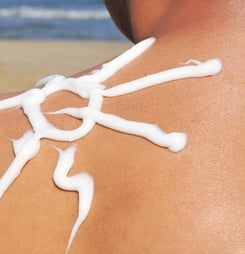

As Baz Luhrmann once sang “If I could offer you only one tip for the future, sunscreen would be it.”
This is sage advice and ears of health campaigns have ensured that we all know that sun screen is very important. It’s essential to wear and regularly reapply sunscreen when out in the sun.
And national Scuncreen Day is here to encourage everyone to do just that!
National Sunscreen Day Timeline
Ancient Egyptians Use Plant Oils for Sun Protection
Evidence from medical papyri suggests ancient Egyptians used plant extracts such as rice bran, jasmine, and lupine oils to help protect skin from harsh sun exposure along the Nile.
Greeks and Romans Adopt Early Sun‑Blocking Practices
Classical texts and archaeological evidence indicate Greeks and Romans used clothing, veils, and mixtures containing olive oil and sand or dust to reduce sunburn during outdoor labor and warfare.
Franz Greiter Begins Work on Modern Sunscreen
After suffering severe sunburn while climbing Mount Piz Buin, Swiss chemistry student Franz Greiter starts developing a protective cream that later evolves into one of the first commercially successful sunscreens.
Benjamin Green Creates Red Vet Pet for U.S. Soldiers
American pharmacist Benjamin Green formulates “Red Vet Pet,” a red, sticky petrolatum-based substance to shield World War II troops in the Pacific from intense tropical sun, a precursor to later Coppertone products.
Introduction of the Sun Protection Factor Concept
Franz Greiter introduces the Sun Protection Factor (SPF) concept to quantify how well a sunscreen delays sunburn caused by UVB radiation, laying the groundwork for modern labeling standards.
Ozone Layer Depletion and UV Risk Recognized
Scientists first publish evidence that human-made chlorofluorocarbons can deplete the ozone layer, raising global concern about increased ultraviolet radiation and the need for better sun protection.
U.S. FDA Issues Broad-Spectrum Sunscreen Rules
The U.S. Food and Drug Administration finalizes rules for “broad spectrum” labeling, requiring products to meet specific UVA and UVB protection standards before making skin cancer and aging protection claims.
How to Celebrate National Sunscreen Day
A number of different things can be done to observe National Sunscreen Day. Check out a few of these:
Wear Sunscreen, Of Course!
Sun screen defends the skin from damaging ultraviolet rays by forming a protective barrier – used properly, sun screen can help prevent skin cancer.
Exposure to the sun also damages the skin and can worsen signs of ageing, so wearing sun screen will also keep your skin looking younger.
Use National Sunscreen Day as a reminder to make sure you are properly protecting yourself from the sun, such as by keeping out of the rays at the hottest time of the day (10 am – 3pm), drinking plenty of liquids and, of course, wearing sun screen!
Get Educated About Sunscreen
We would recommend beginning by educating yourself on the most important sun safety tips. At a basic level, you should aim to use a minimum of factor 30 sunscreen.
You should also take extra care with children, cover up using suitable sunglasses and clothing, and spend time in the shade during the hours when the sun is at its strongest.
Share with Others
Another way to observe National Sunscreen Day is to take the time to educate people about the importance of wearing sun screen.
You may want to spend some time looking for insightful articles, blog posts, and infographics to share with your friends, family members, and followers on social media and your blog if you have one.
Read Stories
You can also look for real life stories whereby people have shared tales of suffering skin cancer because they have spent too much time in the sun without the right protection.
Even if you reach one person with the content that you share, you are going to be making a difference.
Support Skin Cancer Charities
Aside from this, you may want to look into different charities for skin cancer, and you can spread the word about these organizations or you can even look into fundraising options.
To fund raise, all you need is a fun idea that a group of people can get involved in. This can be anything from a fun run to a bake sale.
Alternatively, you may decide to sell your own crafts and then you can donate the proceeds to a charity. Making your own straw hats and then selling a percentage of the profits is a great way to raise awareness and funds for this important cause in the process.
Learn Common Myths about Sunscreen
To help you get a better understanding regarding safe sun screen practices, we are going to clear up some of the most common myths about sun screen that people believe today.
- Myth 1 – I don’t need to wear sun screen if it is cold or cloudy. If the sun is in the sky, you need to wear sun screen, and the sun is always in the sky!
- Myth 2 – My sunscreen is SPF 50 so I don’t need to wear it as much. It does not matter what SPF is associated with your sunscreen, it is only going to last for around two hours, so you still need to re-apply.
- Myth 3 – I don’t need to reapply my sunscreen after swimming because it is waterproof. In fact, there is no such thing as waterproof sunscreen. Water resistant, yes, but waterproof, no!
- Myth 4 – I don’t need sun screen because I have dark skin. It may be more difficult to see sun damage on dark skin. However, people with dark skin are just as susceptible to sun burn, so you still need to make sure you wear sun screen.
Learn More About National Sunscreen Day
Of course, National Sunscreen Day has been designed to make sure that people are aware of the importance of wearing sun screen. Sunburn can increase your risk of skin cancer, and so it is imperative that everyone recognizes just how pivotal it is to wear sun screen.
One of the biggest problems is that a lot of people feel that this is something that they only need to concern themselves with when they go on vacation.
However, this could not be further from the truth. After all, even when the weather is cold outside, the sun is still shining, even if you cannot feel it on your skin, and so it can always cause damage.
This is why it is vital to make wearing sun screen part of your daily routine. It is also why it is imperative to have a day whereby we educate people about sun screen and why it is important.
In fact, a lot of people believe that if they have a tan, they are going to be protected from the harmful effects of the sun. Again, this is not the case.
If you are to protect yourself and use sun screen correctly, you need to make sure that you understand SPF and star ratings. SPF stands for sun protection factor.
This is a measure of the amount of UVB – ultraviolet B radiation – protection that you are going to get from the product in question.
SPFs are rated on a scale of two to 50+, with the latter offering the strongest level of protection. For the amount of UVA – ultraviolet A radiation – protection that sunscreen offers, you are going to need to look at the star rating.
The more stars, the better protection. These are two of the most critical factors that you need to consider when you are purchasing sun screen.
History of National Sunscreen Day
National Sunscreen Day was started by the National Council on Skin Cancer Prevention in 2011 to help remind folks to protect their skin from the sun, in the summer and all throughout the year!
To understand the history of National Sunscreen Day, you also might be interested in the history of sun screen itself. One of the first known prevention creams for sunburn was actually created in the 1930s by an Australian man known as Milton Blake.
This product was the result of a lot of hard work and dedication. In fact, he spent 12 years experimenting in his kitchen until he was able to come up with a formula that worked. And boy did it work! The creams are still around today.
There have been a lot of advancements since then, of course. Franz Greiter, a chemistry student from Switzerland, was not happy with the sun protection products that were on the market.
This was especially the case after he ended up with really bad sunburn after climbing Mount Piz, which is located at the Swiss-Austrian border.
Because of this, he embarked on a mission to make sun screen better, and this is how SPF came about. The Piz Buin Glacier Cream was created in 1946. The SPF on this sun screen was only 2 at the time, but hey, this is where it all began! You’ve got to start somewhere, right?
Facts About National Sunscreen Day
Invisible Sun Damage Adds Up Over a Lifetime
Ultraviolet exposure to the skin is cumulative, which means every bit of unprotected time in the sun contributes to total damage over the years.
Even mild, repeated exposure that does not cause a visible sunburn can lead to DNA mutations in skin cells, premature aging such as wrinkles and dark spots, and a higher risk of skin cancers later in life.
Why SPF Numbers Do Not Scale the Way Most People Think
Sun Protection Factor (SPF) mainly measures protection against UVB rays, and the increase in protection is not linear with the number on the label.
For example, SPF 15 filters out about 93 percent of UVB radiation, SPF 30 about 97 percent, and SPF 50 about 98 percent, so doubling the SPF does not double the protection, although higher SPFs can be useful for people who burn easily or spend long periods outdoors.
UVA Rays Can Damage Skin Through Glass
Unlike most UVB rays, a large portion of UVA radiation can pass through ordinary window glass, which is why people can develop sun damage on the side of the face and arm closest to a car or office window over many years.
UVA penetrates deeper into the skin than UVB and is strongly linked to photoaging and some skin cancers even without causing a burn.
Daily Sunscreen Use Has Been Shown to Slow Visible Skin Aging
A long-term clinical trial in Australia followed adults who were randomly assigned either to use broad-spectrum sunscreen every day or to apply it only when they felt they needed it.
After about four and a half years, the daily sunscreen group showed significantly less skin aging, including fewer fine wrinkles and better skin texture, providing rare experimental evidence that consistent sunscreen use slows photoaging.
Chemical and Mineral Sunscreens Protect in Different Ways
Most chemical sunscreen filters, such as avobenzone or octinoxate, absorb ultraviolet radiation and convert it into a small amount of heat, while mineral filters like zinc oxide and titanium dioxide primarily scatter and reflect UV light.
Modern formulations often blend filters or finely mill mineral particles so they go on clear, but at a functional level both types can provide effective broad-spectrum protection when used correctly.
Reef-Safe Debates Spark New Sunscreen Regulations
Research in laboratory and some field settings has suggested that certain organic UV filters, including oxybenzone and octinoxate, may contribute to coral bleaching or other stress responses in marine organisms.
In response, places such as Hawaii, the U.S. Virgin Islands, and parts of Palau have passed laws restricting sunscreens containing these ingredients, which has accelerated the push for “reef-friendly” mineral and alternative filter formulations.
Skin Cancer Remains One of the Most Common Cancers Worldwide
Nonmelanoma skin cancers like basal cell and squamous cell carcinoma are the most frequently diagnosed cancers among fair‑skinned populations, and melanoma rates have risen for decades in many countries.
Public health agencies estimate that a large share of these cases could be prevented by reducing ultraviolet exposure through a combination of shade, protective clothing, and regular use of effective sunscreen.
National Sunscreen Day FAQs