
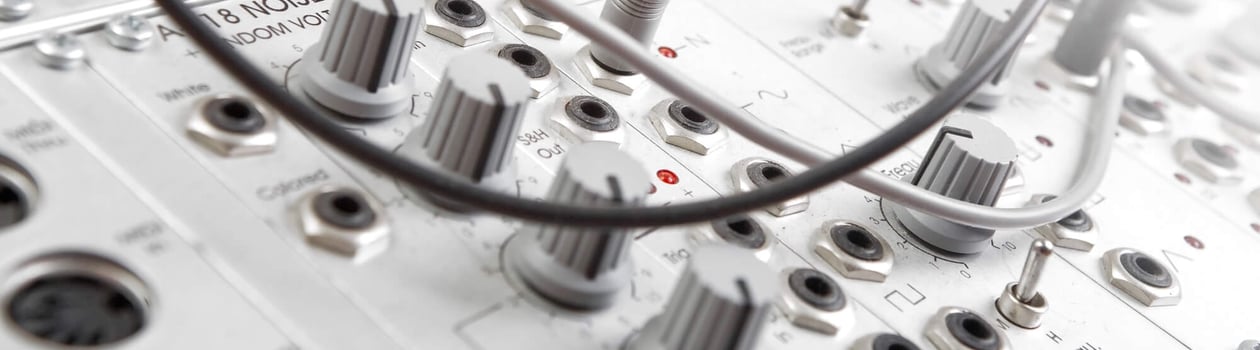
TB-303 may sound like an R2-D2 Star Wars android, but it is actually one of the most recognizable instruments in electronic music. The Roland TB-303 Bass Line is a small, silver, button-heavy box from the early 1980s that helped define the squelchy, hypnotic sound associated with acid house and techno.
It pairs a simple analog synthesizer voice with a pattern-based step sequencer, meaning it can “play itself” once programmed, freeing musicians to twist knobs and steer the vibe in real time.
World TB-303 Appreciation Day is a chance to celebrate this famously misused instrument: a machine built to mimic bass guitar lines that became legendary precisely because it did not sound like a bass guitar.
From underground clubs to modern studios packed with software emulations and reissues, the TB-303 remains a symbol of happy accidents, hands-on sound design, and dance music’s love of peculiar gear.
How to Celebrate TB-303 Appreciation Day
Get involved with some of the inner workings of TB-303 Appreciation Day — or just call it 303 Day for short! Take a look at some of these ideas or get creative with your own ways to celebrate:
Check Out Some Techno Music
The fastest way to appreciate the TB-303 is to hear what happens when it’s used not as a basic bass substitute, but as a bold lead voice with personality. Its distinctive sound comes from a single oscillator (usually saw or square) shaped by a resonant low-pass filter. When that filter is pushed, the tone becomes liquid, chirpy, and almost conversational as the cutoff and resonance move in real time.
Turn your listening into a small journey through dance music history. Begin with early acid landmarks like Phuture’s Acid Tracks, widely credited with bringing the TB-303 sound to the forefront. From there, explore how the “acid line” spread through house, techno, and rave culture.
It’s also fun to listen like a sound detective. As tracks play, focus on key TB-303 characteristics:
- Slide: notes glide into each other, creating a smooth, rubbery pitch movement instead of clean separation.
- Accent: certain steps jump forward in volume and bite, shaping the groove as much as the melody.
- Filter motion: the cutoff opens and closes, turning a simple pattern into something alive and evolving.
- Resonance peaks: that classic “squelch,” especially when resonance is high and the filter sweeps upward.
Even without technical knowledge, most listeners recognize the 303 once they know what to hear. That’s part of its magic: a small box with an enormous sonic identity.
Visit a Techno Club
The TB-303 earned its reputation in spaces where sound is felt as much as heard. In a club environment, looping patterns and sweeping filters become physical experiences. The low end moves air, while sharp resonance cuts cleanly through dense drums without complex arrangements.
For fans of live electronic music, a night out becomes a real appreciation exercise. Many DJs and performers use acid-style lines — whether from vintage hardware, modern reissues, or software processed with effects. Notice how artists introduce the “acid moment.” Some use it for peak energy, others as a steady groove layer, and some treat it like a lead instrument improvising over the rhythm.
Make the experience more interactive:
- Listen for the moment when the filter opens — the crowd reaction often says everything.
- Notice how the bassline locks with the kick drum. Acid lines can feel tight and punchy or smooth and flowing depending on programming and mixing.
- Pay attention to effects. Distortion, delay, and reverb can transform a classic pattern while keeping its core character.
Supporting local DJs and promoters helps sustain the culture that gave the TB-303 its second life. The machine may be vintage, but the scene around it is still evolving.
Create Some Techno Music
Programming a TB-303-style pattern is simple in theory but surprisingly nuanced in practice. The essentials are a short sequence, a strong rhythm, and a moving filter. The challenge comes from the original sequencer’s famously quirky workflow, which feels like learning a small instrument of its own.
For a hands-on experience, hardware units — original, reissue, or clone — offer a satisfying tactile feel. If you prefer a lighter setup, many modern devices and software instruments recreate the 303 sound with easier programming and sync options. The goal is appreciation, not purism, so any tool that produces that signature squelch works.
To capture the classic vibe:
- Keep the pattern short: Eight or sixteen steps are enough. Acid relies on variation and performance rather than long melodies.
- Use rests: Silence creates groove and space.
- Use slide selectively: Too much sliding blurs the rhythm; targeted slides add bounce.
- Treat accents as rhythm: They create a hidden pulse inside the sequence.
- Perform the filter: Record passes where cutoff and resonance change over time so the pattern feels played, not static.
Adding simple drum machine sounds enhances the experience. The TB-303 was designed to work alongside Roland rhythm boxes, and classic acid often uses minimal but tight drum patterns — kick, clap or snare, hi-hats, and a few extras.
For experimentation, run the line through overdrive or distortion to add harmonics, then use delay to create echoing patterns that feel like a conversation.
Share TB-303 Day with Others
The TB-303 has always thrived in community. Even after its commercial failure, it survived through musicians sharing gear, techniques, and records. Celebrating the day can be as simple as sparking someone’s curiosity.
Ways to share the experience:
- Post a short clip of a 303-style jam that shows real-time knob movement.
- Share a favorite track and highlight the moment when the bassline opens up.
- Compare a clean version of a pattern with a distorted one to show how sound shaping changes the mood.
- Host a small listening session where everyone brings one acid-inspired track and discusses what makes it work.
For musicians, don’t hide the imperfections. The TB-303 often produces happy accidents — unexpected slides, odd notes, or wild filter sweeps. Those moments usually feel like character, not mistakes.
World TB-303 Appreciation Day Timeline
Roland unveils the TB-303 Bass Line
Japanese engineer Tadao Kikumoto and Roland release the monophonic TB-303, designed to emulate an electric bass as a companion to the TR-606 drum machine, though it initially sells poorly. [1]
Alexander Robotnick recorded “Problèmes d’Amour”
Italian producer Alexander Robotnick releases “Problèmes d’Amour,” one of the earliest dance tracks to feature the TB-303, foreshadowing the squelchy bass sound that would later define acid house. [1]
Chicago producers reinvent the TB-303
In Chicago’s house scene, DJs and producers begin abusing the TB-303’s filter, resonance, and accent controls, transforming a failed “bass guitar replacement” into a psychedelic lead voice in club tracks. [1]
Phuture’s “Acid Tracks” defines acid house
Chicago group Phuture releases “Acid Tracks,” widely credited as the first acid house record, with its hypnotic, overdriven TB-303 line becoming the blueprint for an entire subgenre of dance music.
Acid house and techno spread worldwide
The TB-303 sound fuels the UK’s acid house explosion, European rave culture, and later Detroit and European techno, cementing the small silver box as a cornerstone of global electronic dance music. [1]
Roland reimagines the classic with the TB-3
Roland introduces the TB-3 Touch Bassline, a digital instrument inspired by the TB-303 that adds a pressure-sensitive touchpad, performance effects, and modern connectivity for contemporary producers. [1]
Boutique TB-03 brings the 303 sound back
As vintage TB-303 prices soar, Roland launches the Boutique TB-03, using Analog Circuit Behavior modeling to closely recreate the original’s sound and panel while adding USB audio, MIDI, and effects. [1]
History of TB-303 Appreciation Day
The TB-303 is a bassline synthesizer produced by the Roland Corporation in the early 1980s. Designed by engineer Tadao Kikumoto, it was intended as a practical tool for musicians who needed bass accompaniment without a full band. The idea was simple: a programmable bass machine for practice or songwriting. In reality, its synthetic tone and unusual programming made it less appealing to the guitarists it was meant to serve.
Commercially, the TB-303 struggled. Production lasted only a few years, with roughly 10,000 units made. Instead of becoming a standard instrument, many units ended up in secondhand shops at low prices, where they were discovered by young producers and experimenters.
That second life changed everything. DJs and electronic musicians began using the TB-303 not to imitate a bass guitar, but to create a new form of rhythmic melody. Its design encouraged looping patterns and real-time sound shaping. By adjusting cutoff and resonance during playback, performers could create a vocal, fluid tone that moved dynamically over drum tracks.
In the mid-to-late 1980s, producers discovered that pushing the controls to extremes unlocked a completely new sound. A key milestone was Phuture’s Acid Tracks, associated with DJ Pierre and collaborators, which placed the TB-303 front and center. The result was raw, futuristic, and unexpectedly expressive.
This period also helped redefine expectations around electronic instruments. The TB-303 became proof that limitations could become a signature style: one oscillator, a handful of controls, and an unconventional sequencer — yet endless creative potential.
During the 1990s, its influence grew across house, techno, and related genres. Producers added distortion, heavier drums, and darker atmospheres. The familiar squelch could sound playful, hypnotic, or aggressive depending on tempo and processing. What began as a niche effect became a widely recognized musical identity.
As demand grew and supply stayed fixed, original units became collectible. Prices rose, transforming the TB-303 from pawn-shop curiosity into a prized studio piece. Its story reflects how cultural value is often shaped by creative communities rather than initial market success.
Recognizing its lasting impact, Roland later released modern instruments inspired by the original design. At the same time, numerous clones and software versions appeared, giving musicians access to the sound without the rarity or cost of vintage hardware.
TB-303 Appreciation Day celebrates this unlikely journey: a machine built for one purpose that became famous for something entirely different. It honors the role the TB-303 played in shaping electronic music, the quirky design choices that made it unique, and the communities that turned a commercial failure into a lasting cultural icon.
The Quirks, Comeback, and Creator Behind the TB-303
The TB-303’s story is more than a piece of music gear history — it’s a lesson in how limitations, accidents, and creative communities can transform a misunderstood tool into a cultural icon.
From its unusual sequencer workflow to its unlikely journey from commercial failure to underground favorite, and the engineer who helped shape its legacy, these facts reveal how the TB-303 helped redefine the sound and spirit of electronic dance music.
Sequencer Quirks That Shaped the Acid Sound
The TB-303’s pattern-based step sequencer makes users enter pitch, timing, accents, and slides in separate passes rather than in real time, which many musicians find unintuitive.
This peculiar workflow often leads to mis-entered steps, unusual ties, and off-kilter accents that helped give early acid house basslines their unpredictable, “bubbling” character compared with more conventional sequencers.
From Commercial Flop to Secondhand Studio Staple
Roland’s TB-303 sold poorly in the early 1980s because guitarists and organ players who were supposed to use it as a realistic backing bassist disliked its synthetic tone and awkward programming.
As units were discontinued and cleared out to secondhand shops at low prices, cash-strapped DJs and bedroom producers began buying them and exploiting their squelchy filter and slide behavior, which helped push the sound into underground dance music.
The Engineer Behind Two Dance-Music Workhorses
The TB-303 was designed by Roland engineer Tadao Kikumoto, who also led development of the TR-909 drum machine that became another club mainstay.
By pairing a programmable analog bass line box with a drum machine that blended analog circuitry and digital samples, his designs gave early electronic producers a compact toolkit for constructing entire tracks with machines instead of live rhythm sections.
Limited Run, Big Impact on the Vintage Market
Only a relatively small production run of TB-303 units was manufactured in the early 1980s, and the model was dropped after a short time on the market.
When the instrument’s sound later became prized in dance music, this limited supply helped push surviving originals into the collector realm, where examples in good condition can command several thousand dollars compared with the bargain-bin prices they once fetched.
Why the TB-303 Sounds So “Liquid”
The TB-303’s signature “liquid” tone comes from a single analog oscillator feeding an 18 dB per octave low-pass filter with a fast envelope and a dedicated slide circuit.
When users push the filter resonance high, shorten the decay, and program frequent slides and accents, the result is a rubbery, vowel-like motion in the harmonics that listeners recognize as the classic acid bass sound.
From Imitation Bassist to Machine-Music Blueprint
Roland promoted the TB-303 as a tool for solo performers who needed an automatic stand-in for a live bass player, often to be paired with the TR-606 drum machine.
Because its tone and phrasing did not convincingly mimic a human bassist, many traditional players rejected it, yet those same mechanical qualities made it ideal for repetitive, loop-based tracks that became a foundation of machine-driven club music.
World TB-303 Appreciation Day FAQs
How does the TB-303 actually create the “acid” sound people recognize in dance music?
The TB-303’s acid sound comes from a simple signal path that becomes very expressive in motion. A single analog oscillator (with saw or square waves) is fed into a 24 dB-per-octave resonant low-pass filter.
The step sequencer lets users program not only pitch but also slides and accented steps. As cutoff, resonance, envelope modulation, and decay are tweaked while patterns run, the filter emphasizes harmonics and sweeps through frequencies, which produces the squelchy, bubbling character associated with acid basslines.
Accented steps briefly boost volume and filter intensity, making certain notes punch through and “speak” in a vocal way. [1]
Why was the TB-303 a commercial failure at first but later became so influential?
When Roland released the TB-303 in the early 1980s, it was marketed as a realistic substitute for a bass guitarist. Many musicians found its sound synthetic rather than natural, and the programming workflow was unintuitive, so sales were poor, and production stayed limited.
In the mid to late 1980s, secondhand units became cheap and ended up in the hands of DJs and producers in Chicago and Europe, who were more interested in its strange, rubbery tone than realism.
By pushing its filter resonance, using slide and accent creatively, and running it through effects, they created an entirely new style now known as acid house, which turned the once-unsuccessful box into a cornerstone of electronic dance music.[1]
What role did the TB-303 play in the development of acid house and techno?
The TB-303’s sequencer and filter shaped the sonic identity of acid house and influenced later techno. Chicago group Phuture’s “Acid Tracks,” built around a heavily tweaked TB-303 line, is widely cited as a key blueprint for the acid house sound.
As the style spread to the UK and Europe, producers combined the 303 with Roland drum machines like the TR-808 and TR-909, driving raves and warehouse parties.
In Detroit and European scenes, the same machine was pushed in darker, more mechanical directions, feeding into acid techno and other subgenres. Its distinctive timbre made it an audible marker of these movements in the late 1980s and early 1990s. [1]
Is there a meaningful difference between using an original TB-303 and modern hardware or software clones?
Modern hardware recreations and software emulations of the TB-303 aim to match the tone and behavior of the original while adding conveniences like expanded memory, built-in effects, and MIDI or USB connectivity.
Roland’s own TB-03 and TB-303 Software Bass Line, for example, model the original circuitry and preserve the basic control layout and workflow, but offer more patterns, patch storage, and editing tools.
Purists value the subtle quirks of vintage analog components and aging circuits, which can make each original unit sound slightly unique.
In practice, many producers use modern emulations in studios and on stage because they are cheaper, more reliable, and easier to integrate with current equipment, while still delivering the characteristic acid-style basslines.
Why are original TB-303 units so expensive and sought after today?
Original TB-303 units were produced only for a short period, with roughly ten thousand made, and they sold poorly at first. As acid house and related styles grew, that limited supply suddenly became historically significant.
The instrument is now seen as a cultural artifact that helped define whole genres, and surviving units are several decades old, so fewer remain in good condition.
Collectors, producers, and studios compete for the same small pool of machines, which pushes prices far beyond the original cost, especially for well-maintained or fully working examples. [1]
Can someone who does not own a TB-303 still make convincing acid-style basslines?
Producers who do not own a TB-303 can still create convincing acid lines using modern tools. Dedicated hardware recreations, such as Roland’s TB-03, copy the control layout and sequencing approach of the original while modeling its analog behavior.
Software instruments from Roland and other developers also reproduce the 303’s oscillator, filter, slide, and accent functions, often within a DAW.
Even with other synthesizers, using a monophonic line with heavy resonance, a low-pass filter sweep, short decay, and occasional pitch slides can approximate the acid character, especially when combined with distortion, delay, or reverb. [1]
Why do producers often emphasize slide and accent when programming 303-style patterns?
Slide and accent are central to the TB-303’s musical phrasing. Slide ties one note to the next so the pitch glides smoothly rather than stepping, which creates the fluid, snaking lines typical of acid bass.
Accent marks specific steps so they become louder and drive the filter and amplifier harder, briefly altering tone and attack. When these features are programmed across a pattern, even a simple sequence of notes can sound animated and evolving.
This is why modern emulations that aim to sound authentic usually recreate slide and accent behavior very closely. [1]



You may also like

World Techno Day
With pulsing beats and synths that transport you to another dimension, techno music is a force to be reckoned with.
- France
- Germany
- Netherlands
- and 3 more

National Trombone Players Day
Something about the trombone catches the ear: bold, brassy, and full of personality. National Trombone Players Day highlights the musicians behind that powerful sound, the ones who make a long brass tube and a moving slide feel as expressive as a human voice. These players do not just perform; they shape...

National Hyaluronic Acid Day
Revitalize your skincare routine with a moisture-boosting element, offering a rejuvenating touch for radiant and supple skin.
- International
- Japan
- United Kingdom
- and 1 more

National Title Track Day
Celebrate National Title Track Day by revisiting iconic album and movie title songs, exploring how they define their stories, and creating a playlist of unforgettable tracks.
National days and holidays on March 30 2027

March Madness
Get your game face on for March Madness! This high-energy tournament is a slam dunk of excitement, passion, and heart-pumping action. So grab your team colors, gear up for the showdown, and let the madness begin!

National Doctors Day
Trusted experts who heal and cure, doctors are the superheroes of the medical world. From check-ups to emergencies, they're always ready to help.

National Virtual Vacation Day
Exploring new destinations, cultures, and flavors from the comfort of your own space, letting your wanderlust loose without leaving home.
- Australia
- Canada
- United Kingdom
- and 1 more

National Tsunami Awareness Week
National Tsunami Awareness Week sparks a wave of readiness during this time each year. This week is set aside to spread knowledge about the serious threat of tsunamis, especially in regions with high risk! How to Observe National Tsunami Awareness Week Host a Tsunami Trivia Night Gather friends or neighbors for a...
Seize Every Day
Join free for personalised recommendations, email reminders and exclusive guides. Never miss a day.