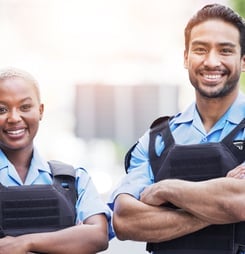
Peace offers and the police are vital in trying to keep individuals, families, neighborhoods, and communities safe and peaceful.
The job can be a difficult and stressful one, often involving a great deal of risk and sacrifice.
Law enforcement and peace officers are called to serve and protect their communities, which is an honorable and noble task that is worth celebrating. And those officers who have lost their lives in the line of duty deserve a day of remembrance.
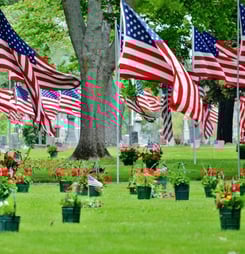
Peace Officers Memorial Day and Police Week were established more than 60 years ago as an opportunity to honor and remember the heroes and fallen officers who lived to make the world a better place for everyone involved.
How to Celebrate Peace Officers Memorial Day and Police Week
Whether impacted personally by the protection or loss of a peace officer or police, or simply desiring to offer support to the community, Peace Offers Memorial Day and Police Week are great times to get involved and show appreciation. Check out some of these ideas for participating in this event:
Light a Candle of Hope
Individuals spread throughout the nation can participate in the Annual Candlelight Vigil by lighting a real candle at home as well as a “virtual” flame online with a small donation.
It’s also possible to send a message of hope and healing at the same time through the National Law Enforcement Memorial Fund organization website.
Thank a Peace Officer
Those who are related to, work with or have a friend who is a police or peace officer may want to mark Peace Officers Memorial Day and Police Week by saying thank you.
Tell them how much their services and sacrifice are appreciated and perhaps buy them a cup of coffee or lunch just to say thanks.
Participate in Police Week Events
In honor of Peace Officers Memorial Day and Police Week, local groups of the FOP may host various events and ceremonies that encourage the community to participate, remember, and support police and peace officers. This might include unity tours, guard competitions, survivors’ conferences, memorial services, wreath-laying ceremonies, community events, and many other activities.
Check out the National Police Week website for more information. It is also possible to read the Roll Call of Heroes on this same site.
History of Peace Officers Memorial Day and Police Week
In 1962, US President John F. Kennedy proclaimed National Peace Officers Memorial Day to be on May 15.
Along with the day, the calendar week in which the day falls has been considered to be Police Week. In the many years since that time, the tradition of celebrating this day and week has been continued by a number of different presidents.
While the Peace Officers Memorial Day and Police Week are officially sponsored by the Fraternal Order of Police (FOP), they are also supported and celebrated by a number of different organizations, agencies, and groups throughout the country.
Since the late 1980s, people have held a candlelight vigil annually to honor fallen officers, along with the celebration of this week. The ceremony is put on by the National Law Enforcement Officers Memorial Fund.
Facts About Peace Officers Memorial Day
Meaning of the Term “Peace Officer” in U.S. Law
In American law, “peace officer” is a broad legal category that includes many types of public officials beyond municipal police, such as sheriffs, state troopers, marshals, and in some states even certain probation and parole officers.
State statutes typically spell out which roles qualify as peace officers and give them specific powers, such as making arrests, serving warrants, and carrying firearms while on duty.
This means that when legislatures refer to “peace officers,” they are often covering a wider set of law enforcement roles than the term “police officer” alone would suggest.
National Law Enforcement Officers Memorial Honors Officers from 50 States and Federal Agencies
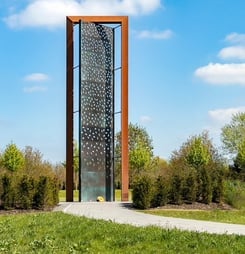
The National Law Enforcement Officers Memorial in Washington, D.C. is dedicated to peace officers killed in the line of duty from every U.S. state, the District of Columbia, U.S. territories, and federal agencies.
Names are inscribed on two curving blue-gray marble walls that are updated annually, with more than 23,000 officers honored as of the early 2020s. An official process verifies each line-of-duty death before a name is added, underscoring the memorial’s role as a national record as well as a place of remembrance.
Female Officers Are a Small but Growing Share of U.S. Law Enforcement
Women remain a minority in American law enforcement, even though their numbers have slowly increased over time. A 2019 Bureau of Justice Statistics report found that women made up about 12 percent of full-time sworn officers in local police departments in 2016, up from 8 percent in 1987.
Research cited by the National Institute of Justice has noted that female officers are often less likely to use excessive force and tend to receive fewer citizen complaints, which has fueled calls to recruit and retain more women in peace officer roles.
Body Armor Has Dramatically Increased Officer Survival Rates
The routine use of bullet-resistant vests has significantly improved survival rates for officers who are shot in the torso.
The National Institute of Justice has reported that officers who do not wear body armor are several times more likely to suffer a fatal injury when shot than those who do.
Modern soft armor standards, set by the NIJ since the 1970s, are periodically updated based on ballistic testing and real-world shooting data to keep pace with the types of firearms and ammunition officers are most likely to encounter.
Traffic Incidents Rival Assaults as a Major Cause of Line-of-Duty Deaths
While many people associate line-of-duty deaths mostly with shootings or assaults, roadway-related incidents are consistently one of the leading causes of officer fatalities in the United States.
Data compiled by the National Law Enforcement Officers Memorial Fund show that since 2010, a substantial share of line-of-duty deaths have involved traffic crashes, struck-by incidents, or vehicle pursuits.
This has led agencies to adopt stricter pursuit policies, emphasize high-visibility apparel, and increase training in roadside safety to reduce preventable deaths.
Critical Incident Stress Can Affect Surviving Officers for Years
Experiencing the death of a colleague in the line of duty can trigger long-lasting psychological effects for surviving peace officers, including symptoms of post-traumatic stress, anxiety, and depression.
The U.S. Department of Justice and organizations such as the International Association of Chiefs of Police recommend critical incident stress management, peer support programs, and access to mental health professionals to address these issues.
Studies cited by the DOJ have found that timely debriefings and ongoing support can significantly reduce long-term psychological harm among officers exposed to traumatic incidents.
Police Memorials Are Common in Democratic Countries Around the World
Honoring fallen peace officers with permanent memorials is not unique to the United States. Countries such as Canada, the United Kingdom, Australia, and New Zealand maintain national memorials that list the names of officers killed in the line of duty, often located in national capitals or near major government buildings.
For example, the Canadian Police and Peace Officers’ Memorial on Parliament Hill in Ottawa and the UK Police Memorial at the National Memorial Arboretum both serve as annual gathering points for remembrance ceremonies involving families, colleagues, and national leaders.