Red Hand Day
Illuminating the plight of young lives ensnared in conflict, advocating for awareness about the use of child soldiers.
Hundreds of thousands of children have had their lives and innocence stolen after being recruited or forced into armed conflict.
While public attention often focuses on the image of a child holding a weapon, the reality is broader and, in many ways, harder to see: children are used as guards, scouts, messengers, informants, cooks, porters, and in other support roles that still place them in constant danger.
They may be coerced into violence, separated from family, denied education, and subjected to severe physical and psychological harm.
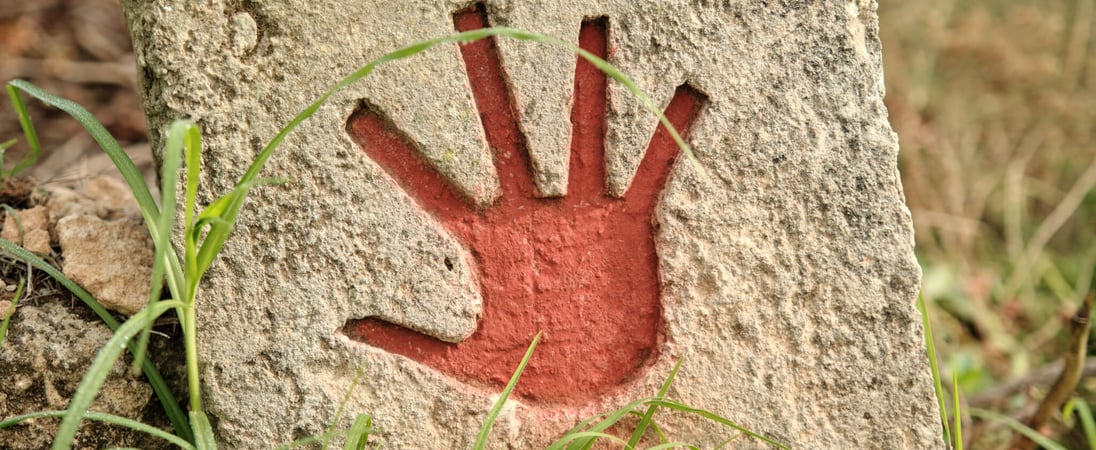
Red Hand Day, also known as the International Day Against the Use of Child Soldiers, exists to keep that reality from fading into the background. It centers on a simple, striking symbol, a red handprint, to advocate for prevention, protection, release, and long-term support for children affected by armed conflict.
Red Hand Day Timeline
1977
Additional Protocols to the Geneva Conventions
States adopt Additional Protocols I and II, which prohibit the recruitment and participation in hostilities of children under 15, laying an early humanitarian-law basis for protecting children in armed conflict.[1]
1989
UN Convention on the Rights of the Child
The UN General Assembly adopts the Convention on the Rights of the Child, whose Article 38 requires states to refrain from recruiting children under 15 into their armed forces or using them in direct hostilities.[2]
1996
Machel Report on Children and Armed Conflict
Graça Machel presents a landmark UN study documenting the widespread use of child soldiers and calling for stronger international standards and monitoring to protect children in war.[3]
1998
Coalition Adopts the Red Hand Symbol
The Coalition to Stop the Use of Child Soldiers adopts the red hand as a unifying symbol in its global campaign to end the recruitment and use of children in armed forces and groups.[4]
25 May 2000
Adoption of the Optional Protocol on Child Soldiers
The UN General Assembly adopts the Optional Protocol to the Convention on the Rights of the Child on the involvement of children in armed conflict, raising the minimum age for compulsory recruitment and direct participation in hostilities to 18.[5]
12 February 2002
Optional Protocol Enters into Force
The Optional Protocol on the involvement of children in armed conflict entered into force, becoming a binding international standard; by 202,2 it has been ratified by more than 170 states.
February 2007
Adoption of the Paris Principles and Commitments
Governments, UN agencies, and NGOs meet in Paris to adopt the Paris Principles and Commitments, comprehensive guidelines for preventing recruitment, securing release, and supporting the reintegration of children associated with armed forces or armed groups.[6]
History of Red Hand Day
The use of children in conflict is not a new phenomenon, but modern international law and human rights standards make clear just how unacceptable it is.
Children cannot meaningfully consent to military recruitment, and conflict environments intensify vulnerability through fear, hunger, the loss of caregivers, and the collapse of community protection systems.
Armed actors exploit these conditions in predictable ways: offering money or food, promising safety, manipulating beliefs, threatening families, or forcibly abducting children.
Importantly, the term “child soldier” does not refer only to children who fight. Internationally recognized definitions describe children associated with armed forces or armed groups in a wide range of roles, including domestic labor and sexual exploitation.
This broader definition matters because it challenges a damaging myth: that only children who carry weapons are affected. Many children are harmed without ever being on the front line, and they still deserve recognition, protection, and support.
Red Hand Day grew out of global advocacy efforts to end these practices and strengthen accountability. In the late 1990s, the Coalition to Stop the Use of Child Soldiers adopted the red hand as a symbol of resistance and solidarity.
A red handprint is intentionally childlike and impossible to ignore. It communicates, without needing translation, that childhood is being marked by violence, and it calls on adults to take responsibility for protecting children from war.
This advocacy coincided with major legal developments. A key milestone was the Optional Protocol to the Convention on the Rights of the Child on the involvement of children in armed conflict, often shortened to the Optional Protocol or OPAC.
It was adopted by the United Nations in 2000 and entered into force in 2002. The protocol strengthens protections by raising standards around recruitment age and participation in hostilities, reflecting a growing international consensus that children under 18 should not be used in warfare.
The day became associated with the protocol’s entry into force and developed into an ongoing campaign: collecting red handprints, attaching names and messages, and delivering them to decision-makers. The handprints function as a public petition, but also as a teaching tool.
They give both young people and adults a tangible way to say, “This is not acceptable,” and to urge governments and armed actors to comply with international norms.
Over time, the campaign has aimed for large-scale participation. Coalition partners and supporter organizations have set ambitious goals for collecting handprints, including efforts to gather them by the hundreds of thousands and, in some campaigns, to reach the symbolic milestone of one million.
These totals are not just symbolic. Scale signals political attention. A mass of handprints becomes a visual reminder that behind every policy debate are individual children with interrupted lives.
Red Hand Day also fits within a wider framework of child protection and humanitarian work. Ending the use of child soldiers involves multiple stages, each with its own challenges:
- Prevention: reducing the factors that make children vulnerable, such as poverty, lack of schooling, family separation, and insecurity.
- Release and demobilization: negotiating the handover of children, verifying ages and identities, and moving them out of dangerous areas.
- Reintegration: supporting children as they return to family or alternative care, reenter education, and rebuild social ties, often while managing stigma and trauma.
- Accountability and reform: strengthening laws, monitoring systems, and professional military standards that reduce the risk of underage recruitment.
Reintegration is where many well-intentioned discussions become stalled, because it is long-term, complex, and not easily summarized. A child who has lived under rigid command structures may struggle with trust and authority.
Some have injuries or chronic health needs. Others have lost years of schooling and require tailored educational support.
Many return to communities that fear them, misunderstand them, or blame them. Effective programs often combine psychosocial care, family tracing, education, vocational training, and community reconciliation. When this support is missing, children may remain vulnerable to re-recruitment, exploitation, or homelessness.
Red Hand Day helps keep attention on the full arc of the issue, from prevention to reintegration. It is not only about condemning armed groups, but also about insisting that recovery resources are available so that released children are not left to cope alone.
How to Celebrate Red Hand Day
Observing Red Hand Day can be both creative and practical. The day’s symbolism is simple enough for children to engage with, yet serious enough to support deeper learning and responsible action.
Celebrations work best when they balance visibility with respect for the children affected. The goal is not to shock or sensationalize, but to inform, build empathy, and encourage meaningful support.
A thoughtful approach often includes three elements: learning, sharing, and doing. Learning means understanding what child recruitment looks like beyond the stereotype.
Sharing means bringing that knowledge into schools, community spaces, and workplaces. Doing means taking a concrete action that supports prevention, protection, and reintegration.
Make Every Red Hand Count
Creating a red handprint is the signature activity for a reason: it is accessible, memorable, and instantly recognizable. The simplest version uses washable red paint on paper, but the activity can be adapted in many ways depending on the setting, resources, and age group.
To make the activity more meaningful, participants can add a short message beside the handprint. Rather than vague slogans, messages can focus on specific commitments such as “Protect education during conflict,” “No recruitment under 18,” or “Support reintegration and schooling.” This keeps the activity aligned with the core goals of prevention, protection, and recovery.
Community groups can also turn handprints into a more structured event:
- School or youth group display: Create a wall of handprints in a hallway or common area, paired with brief educational captions explaining the different ways children are used in conflict (such as scouting, portering, domestic labor, or forced marriage). Captions should avoid graphic detail and focus on clear, age-appropriate explanations.
- Letter and handprint pairing: Combine each handprint with a short letter to a local representative urging support for child protection funding, refugee services, trauma-informed education, or policies that strengthen safeguards against exploitation.
- Art-based fundraiser: Host a gallery-style display where participants contribute handprint art on small canvases or posters. Funds raised can support reputable organizations working on child protection, demobilization, or education in conflict-affected regions.
- Moment of reflection: In a group setting, a brief reading or statement about children’s rights can help participants understand the seriousness of the symbol without turning the event into a performance.
For organizers, practical choices matter. Use non-toxic, washable paint. Provide wipes and access to water. Offer alternatives for participants who prefer not to use paint, such as red ink pads, cut-paper hand shapes, or digital handprints printed on paper. Accessibility ensures the message reaches as many people as possible.
Many Red Hand Day campaigns emphasize collecting handprints and presenting them to decision-makers. This can happen at multiple levels, from a school principal or city council to regional or national officials.
Even when handprints remain part of a local display, they still serve an important purpose: they create a public conversation that is far harder to ignore than a private opinion.
Raise Awareness About Child Soldiers
Awareness is not just about repeating a statistic or sharing a dramatic image. Effective awareness-building improves understanding and reduces harmful assumptions. For Red Hand Day, that means highlighting a few essential truths:
- Children are used in many roles beyond combat, and those roles are still dangerous.
- Recruitment is often coercive, but it can also rely on manipulation and false promises.
- Girls are affected as well, frequently in ways that are less visible and more heavily stigmatized.
- Release is only the beginning; reintegration takes time, community support, and sustained resources.
Social media can constructively amplify Red Hand Day when it focuses on education and action. Sharing a red handprint image can be paired with a short explanation of the symbol and a clear, practical suggestion, such as encouraging trauma-informed support in schools, promoting child protection policies, or supporting organizations that work on rehabilitation and education.
Offline awareness is just as important:
- Host a discussion group: A community center, workplace, or student organization can organize a session on children’s rights in conflict. Keeping the discussion grounded in prevention and reintegration helps participants avoid oversimplified narratives.
- Invite an expert speaker: A child protection professional, educator trained in trauma-informed approaches, or humanitarian worker can provide real-world context. If a speaker is not available, a facilitated discussion using reputable educational materials can be equally effective.
- Use responsible language: Avoid implying that children who were forced into armed groups are inherently dangerous. Many are victims of coercion who survived under extreme pressure. Awareness should reduce stigma, not reinforce it.
- Connect the issue to practical supports: Conversations can include how schools support displaced children, how communities can welcome refugees, and why mental health services and stable education are critical for recovery.
Finally, awareness can include a thoughtful look at consumer habits and misinformation. Conflicts are shaped by complex systems, and simplistic narratives often lead to performative outrage rather than meaningful engagement.
Red Hand Day is most effective when it channels concern into informed, steady support for child protection, education, and rehabilitation.
By keeping the symbol visible and the message specific, Red Hand Day helps communities speak up for children who should never have been placed in armed conflict in the first place, and for those working to bring them home and support their rebuilding.
Red Hand Day FAQs
What does international law consider a “child soldier”?
Under international standards such as the Paris Principles, a “child soldier” is any person under 18 who is recruited or used by an armed force or armed group in any capacity, including fighters, cooks, porters, messengers, spies, or for sexual purposes; it is not limited to children who carry weapons or fight on the front line. [1]
At what age is it illegal to recruit or use children in armed conflict?
International law makes it a war crime to conscript, enlist, or use children under 15 in hostilities, and broader treaties such as the Optional Protocol to the Convention on the Rights of the Child and the ILO Worst Forms of Child Labour Convention require states and non‑state armed groups to prohibit any recruitment or use of children under 18 in armed conflict. [2]
How widespread is the use of child soldiers today?
The exact number is unknown, but UN monitoring has verified tens of thousands of cases in recent years, with more than 105,000 children estimated to have been recruited and used in armed conflict between 2005 and 2022, and annual UN reports still document thousands of new cases across more than 20 countries. [3]
Are girls affected by child soldier recruitment in the same way as boys?
Girls are widely recruited and may make up a substantial share of children associated with armed forces and groups; they can serve as fighters or in support roles but are also at high risk of sexual violence and exploitation, and they are often overlooked by programs that focus mainly on boys who carry weapons.
Why do armed groups recruit children instead of adults?
Armed groups recruit children because they are easier to manipulate, can be threatened or indoctrinated, may be separated from family protection, and often live in extreme poverty or displacement where schooling and livelihoods have collapsed, making military involvement appear to be a means of survival. [4]
What happens to children after they leave armed groups?
Former child soldiers typically go through disarmament, demobilization, and reintegration processes that aim to separate them from armed groups, reunite them with families when possible, provide education or job training, and offer psychosocial support to address trauma, though long‑term community acceptance and protection from re‑recruitment remain major challenges. [5]
Is using child soldiers always considered a war crime?
Conscripting, enlisting, or using children under 15 in hostilities is explicitly defined as a war crime under the Rome Statute of the International Criminal Court and customary international humanitarian law, and commanders who order or knowingly tolerate such practices can be held individually criminally responsible. [6]
Also on ...
View all holidays
Hug Day
Spread comfort, connection, and joy - one simple embrace can brighten someone’s day.


National Plum Pudding Day
Savor a delightful holiday dessert, rich with tradition and warm memories, as it brings a taste of nostalgia to your table.

Darwin Day
This visionary naturalist revolutionized science with his groundbreaking theory of evolution, changing the way we view the world around us.
We think you may also like...
Take Down Tobacco National Day of Action
Informing young people about tobacco dangers sparks healthier choices, shielding futures from addictive pitfalls with knowledge empowerment.