St. Jean Baptiste Day, also known as Fête nationale du Québec, is a vibrant celebration of Québécois culture and identity, with deep roots in French-speaking communities in Canada. It blends pageantry, music, and community spirit into a big, bright expression of language and heritage that feels equal parts heartfelt and festive.
This special day unites people across Quebec and beyond with gatherings that showcase the rich traditions of French Canadians. It is a time for joyful meetups, colorful parades, and lively concerts that spotlight local creativity, while familiar symbols like blue-and-white flags and fleur-de-lis motifs add a strong visual thread of pride and belonging.
How to Celebrate St. Jean Baptiste Day
Parade Extravaganza
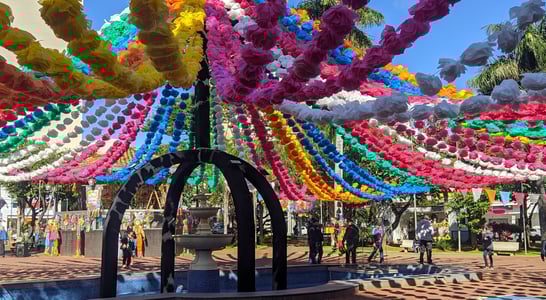
Dive into the day with a lively parade. Imagine colorful floats, marching bands, community groups, and costumed performers moving through streets lined with waving flags and smiling spectators. Parades often feel like a rolling snapshot of local culture, mixing traditional references with modern humor, music, and design.
To make parade-watching more fun, plan it like an event instead of a quick stop. Bring water, snacks, and something to sit on if the route gets crowded. When the drums start, the energy becomes contagious, and cheering for a favorite float or a particularly enthusiastic dance troupe is practically a civic duty. For families, it can be a great way to introduce kids to French-language songs, local symbols, and the idea that culture can be celebrated out loud.
Picnic in the Park
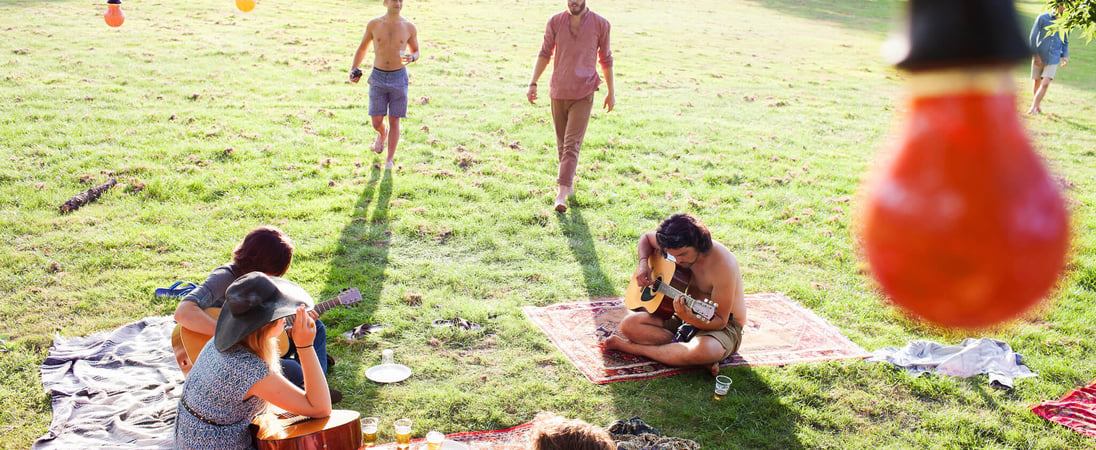
Pack a picnic and head to a local park. Under the blue sky, enjoy sandwiches, fresh fruit, and delicious treats while soaking up the buzz of nearby festivities. A picnic works well for small groups because it is flexible: people can drop in, share food, and wander off to catch a performance without anyone feeling locked into a schedule.
For a Québécois-inspired spread, foods that travel well tend to shine. Think cheeses, crusty bread, fresh berries, and a few sweet treats tucked into containers. If the gathering is larger, make it potluck-style so everyone contributes something, even if it is just sparkling drinks or a bag of chips.
Add a deck of cards, a frisbee, or a simple scavenger hunt for fleur-de-lis shapes and blue-and-white decorations, and it becomes a full afternoon instead of just lunch on the grass.
Fireworks Fiesta
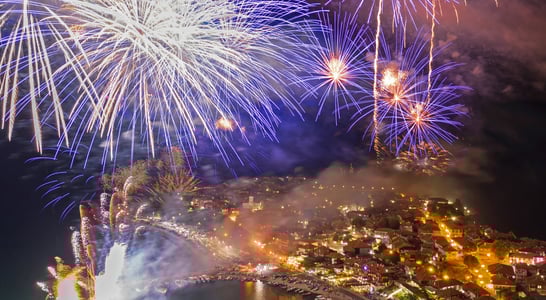
End the day with a bang by watching a stunning fireworks display. Fireworks light up the night sky in dazzling color, and the crowd’s collective “ooh” and “aah” is part of the show. In many places, fireworks serve as a grand finale after concerts and community events, giving the celebration a clear high point that feels both dramatic and friendly.
A good fireworks plan is mostly about comfort and safety. Choose an open viewing area, arrive early enough to avoid the tightest crowds, and keep an eye on children and pets who may be startled by loud sounds.
A light jacket and a small blanket can go a long way once the temperature drops after sunset. For people celebrating at home, a “fireworks-style” moment can still happen with string lights, sparklers where permitted, or a playlist that builds to a big finale.
Traditional Tunes
Dance and sing along to traditional Québécois music. Many communities host concerts featuring folk songs and local bands, and the music often blends older influences with contemporary styles. Fiddle-forward reels, call-and-response choruses, and foot-tapping rhythms are common, but modern celebrations also spotlight rock, pop, and singer-songwriter traditions that grew from the same cultural soil.
For a more immersive experience, build the day around sound. Start with a playlist of French-language music, then learn a few simple choruses so everyone can join in when a familiar song comes up. If there is dancing, it does not have to be formal.
A living room dance floor or a backyard speaker setup can be enough to capture the spirit. The point is participation: St. Jean Baptiste Day tends to feel most authentic when people sing along rather than simply listen.
Crafty Creations
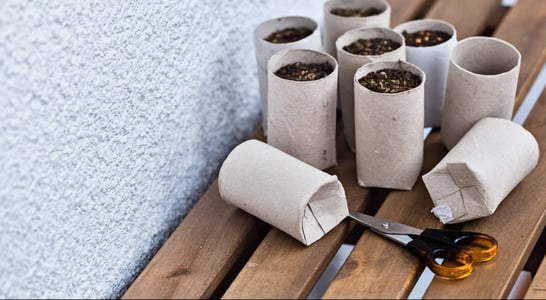
Unleash creativity with fun arts and crafts. Kids and adults alike can make paper flags, banners, or even floral crowns, adding a personal touch to celebrations and giving everyone something to wave, wear, or hang up.
This is also an easy way to include people who are not parade-goers or late-night firework fans. Set up a simple craft station with blue and white paper, markers, glue sticks, and ribbon. Make fleur-de-lis shapes using templates, or cut out stars and stripes that nod to historic flag traditions.
Older kids might enjoy designing posters with French phrases that celebrate community and friendship. For adults, a more “crafty but useful” option is decorating reusable cups, picnic containers, or tote bags in blue-and-white patterns, turning the party supplies into keepsakes.
Community BBQ
Join a neighborhood barbecue and savor grilled delights. These gatherings bring neighbors together for food and conversation, which is a big part of why the day feels so unifying. A shared meal turns the celebration from something people watch into something people build together.
A great BBQ is less about fancy recipes and more about rhythm: a simple menu, plenty of napkins, and a plan for dietary preferences so everyone feels welcome. Classic grill options work well, along with easy sides like salads, corn, or roasted vegetables.
If poutine appears, it usually earns an enthusiastic round of approval, but the spirit is what matters: warm hospitality, easy conversation, and the delightful chaos of someone always trying to find the ketchup.
To add a St. Jean Baptiste twist, incorporate French-language name tags or table signs, or play a light game where guests teach each other favorite expressions and regional slang. A celebration centered on language does not have to be formal to be meaningful.
Historical Tours
Explore Quebec’s rich history with a guided tour. Many historical sites and museums offer programming connected to St. Jean Baptiste Day, and even a self-guided walk can turn into a mini adventure when people know what they are looking at.
The day is not only about fun; it also invites reflection on how communities maintain identity through language, art, and shared memory.
A good historical tour focuses on themes rather than trivia. Look for stories about early settlement, the growth of French-language institutions, and the evolution of civic life in French Canada.
If a tour is not available, create one at home: choose a documentary, read a short biography of an important cultural figure, or cook a traditional dish while discussing how food carries history forward. Even small acts like practicing French pronunciation or learning a folk song can feel like a living history lesson.
Blue and White
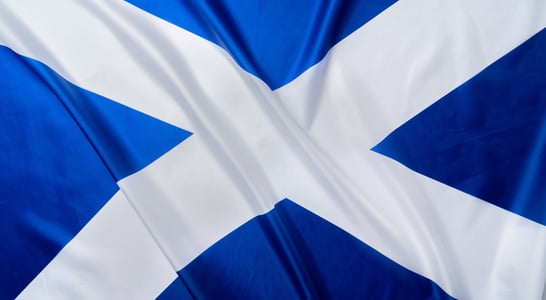
Dress in blue and white, the colors of Quebec’s flag, and join the sea of festive outfits. These colors quickly signal togetherness, whether the celebration happens at a huge public event or a small gathering. Add a scarf, a hat, face paint, or a simple ribbon pinned to a shirt, and the outfit becomes a tiny declaration of pride.
Decorations can follow the same theme. Blue-and-white streamers, tablecloths, and paper lanterns can transform a backyard, apartment, or community room into a celebration space.
For something a little extra, mix in fleur-de-lis patterns on napkins, banners, or handmade signs. The visual identity is part of the fun: it makes the day feel like a shared experience, even when people celebrate in different ways.
Why Celebrate St. Jean Baptiste Day
The day honors Saint John the Baptist, long recognized as the patron saint of French Canadians. Over time, the observance has grown beyond a purely religious feast day into a wider cultural celebration, offering a moment to appreciate French language, Québécois arts, and community ties that have been carefully maintained over generations.
One reason the celebration resonates is that it is both collective and personal. Large public events like parades and concerts create a sense of shared identity, while smaller traditions like family meals, music at home, or handmade decorations allow people to express that identity in their own style.
In that way, St. Jean Baptiste Day can work for many kinds of celebrants: long-established families, newcomers learning about French-Canadian traditions, and anyone who appreciates a good public party with real cultural meaning behind it.
The celebration also highlights how language lives outside classrooms and official settings. French is heard in speeches, song lyrics, jokes, and chants, not as a lesson but as a living, social experience. That matters because cultural confidence often grows through everyday use: singing together, telling stories, and passing expressions from one generation to the next.
St. Jean Baptiste Day has also come to symbolize resilience and unity within the Francophone community in Canada. It recognizes the ongoing work of maintaining cultural institutions, supporting local artists, and keeping traditions vibrant without freezing them in time.
The result is a celebration that feels rooted and modern at once, where folk influences can share the stage with contemporary music, and where historic symbols can appear alongside new creative interpretations.
St. Jean Baptiste Day Timeline
Christian Feast of the Nativity of Saint John the Baptist
The Western Christian Church consolidated earlier midsummer bonfire customs into the Feast of the Nativity of Saint John the Baptist on June 24, giving religious structure to long‑standing solstice celebrations.
Midsummer Customs Cross the Atlantic to New France
With the founding of Quebec City and early French settlement along the St. Lawrence, colonists brought with them the June 24 feast and its fires, adapting Old World Saint John’s Eve practices to the North American landscape.
Religious Observance in Colonial Parishes
By the eighteenth century, parish celebrations on June 24 in New France typically included Mass and evening bonfires, embedding the feast of Saint John the Baptist in the social and spiritual calendar of rural French‑Canadian communities.
From Devotional Feast to Patriotic Gathering
In nineteenth‑century Lower Canada, the traditional church holiday begins to take on a civic tone as French Canadians use June 24 gatherings to affirm language, culture, and shared identity under British rule.
Growth of Parades and Public Pageantry
Through the late 1800s, June 24 observances expanded beyond liturgy to include parades, banners, choirs, and allegorical floats, turning the day into a major public expression of French‑Canadian culture in Quebec’s cities and towns.
History of St. Jean Baptiste Day
St. Jean Baptiste Day, also known as Fête nationale du Québec, has deep historical roots that reflect layers of tradition rather than a single starting point. Its timing aligns with long-standing midsummer celebrations in Europe, including customs associated with the summer solstice.
Fires, songs, and outdoor gatherings were common ways to mark the season, and those festive habits provided a natural foundation for later observances.
As Christianity spread through Europe, the Church incorporated many seasonal customs into the calendar of saints’ days, and June 24 became associated with the nativity of Saint John the Baptist.
That connection helped shape the celebration into a recognized feast, while keeping the familiar elements that people already loved: music, community gatherings, and the glow of bonfires that made midsummer nights feel special.
French settlers carried these traditions to North America, where they took root in French-speaking communities. Over time, the day became a marker of identity as well as faith, especially as French Canadians sought ways to gather, affirm shared values, and encourage cultural continuity.
In that context, St. Jean Baptiste Day began to take on a more civic and patriotic character, serving as a public moment of togetherness and cultural affirmation.
A key milestone came in the early 19th century through the efforts of Ludger Duvernay, a journalist and organizer who promoted French-Canadian solidarity. He helped organize a notable banquet in Montreal in 1834, drawing inspiration from the idea that a community could strengthen itself through a shared public celebration. T
hat banquet is often remembered as a turning point because it framed the day not only as a religious observance, but as an organized cultural event with a clear communal purpose.
From there, groups such as the Saint-Jean-Baptiste Society formed to support and promote French-Canadian culture, encouraging public ceremonies and larger gatherings.
As the celebration grew, it increasingly featured the elements many people recognize today: speeches, songs, banners, parades, and the kind of crowd energy that turns a cultural event into a signature annual tradition. Bonfires remained part of the imagery and practice in many places, echoing the older midsummer roots while fitting naturally into a night of music and celebration.
In the 20th century, the day continued evolving alongside Quebec’s changing social and political landscape. The tone became more broadly civic, and the celebration came to be widely understood as a statement of Québécois identity, language, and cultural pride.
Modern festivities often emphasize music and public arts programming, with performances that range from traditional to contemporary, reinforcing the idea that culture is something people actively create, not just preserve.
Today, St. Jean Baptiste Day stands as a proud symbol of Québécois identity and French-Canadian heritage. It is a celebration that carries its history openly, but it is not trapped by it. Between parades, concerts, shared meals, and blue-and-white displays, the day continues to offer a lively way for communities to gather, sing, and show that belonging can be both meaningful and very loud.