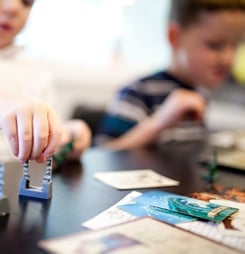

Tabletop gaming is something that has touched the lives of millions of people from all over the world. The phenomenon is now getting its own day in recognition of the joy that it brings to people’s lives.
Tabletop gaming is not a new phenomenon, but it has morphed considerably. Tabletop games like Clue and Monopoly used to dominate, but now it has expanded significantly, particularly into the fantasy realm.
How to Celebrate International Tabletop Games Day
If you’re wondering how to celebrate International Tabletop Day, then you’ve come to the right place. There are all kinds of things you can do. Take a look at the following:
Set Up a Store Page
The organizers of TableTop Day have a page where retailers can claim or set up a store page and let people in their community know that they are a venue for International Tabletop Day. Using these pages, you can attract people from far and wide to come together at your premises and play tabletop games against each other.
Check Out the Day on Facebook
If you’re an individual, getting involved is easy. Just hop onto the International Tabletop Day Facebook page and look for places in your local area where you can join other tabletop gaming fans. There’s a good chance that your local store or even a cafe will be hosting some kind of gaming event.
Join the Fun Online
You can watch professional tabletop gamers duking it out over popular internet gaming platforms, like Twitch and YouTube Live, and share your thoughts with the rest of the community.
If you love tabletop gaming, then you’re not alone. It’s something that thousands of people all over the world love to do. With International Tabletop Games Day, you can find like-minded people and explore your favorite tabletop games together!
International Tabletop Games Day Timeline
Royal Game of Ur Popularizes Early Board Gaming
Archaeologists uncover the Royal Game of Ur in Mesopotamian tombs, one of the oldest known tabletop board games, showing that structured, competitive play around a shared board has been part of human culture for millennia.
Chess Evolves into Its Modern Form in Europe
Rules of chess were transformed in late medieval Europe, including the powerful modern moves of the queen and bishop, turning a slow strategy pastime into a dynamic, widely played tabletop game that spread across social classes.
Monopoly Ushers in the Age of Mass-Market Board Games
Inspired by Lizzie Magie’s 1903 “Landlord’s Game,” Monopoly is commercialized by Parker Brothers in 1935, becoming a global hit and demonstrating the commercial potential of modern family board games sold through toy and department stores.
Clue (Cluedo) Brings Narrative Mystery to the Table
British designer Anthony Pratt’s murder-mystery game Cluedo, released as Clue in North America in 1949, introduces players to deductive reasoning and character-driven storytelling in a boxed tabletop format that proves enduringly popular.
Dungeons & Dragons Launches the Role-Playing Game Genre
Gary Gygax and Dave Arneson published Dungeons & Dragons, blending miniatures wargaming with collaborative storytelling and character progression, effectively creating the tabletop role-playing game hobby and inspiring countless later designs.
Settlers of Catan Sparks the Eurogame Boom
Klaus Teuber’s The Settlers of Catan, first published in Germany in 1995, popularizes “Eurostyle” board games with resource trading, indirect conflict, and strong strategic depth, helping to ignite a worldwide resurgence in hobby tabletop gaming.
Board Game Cafes and Modern Hobby Scene Expand Globally
From the early 2000s onward, board game cafes and dedicated hobby stores spread through cities worldwide, offering large libraries of modern tabletop games and communal play spaces that help transform board gaming into a mainstream social hobby.
History of International Tabletop Games Day
Tabletop games proliferated on the PC. The original Diablo, Warcraft and Command and Conquer set the standard on the computer. But there’s been a movement back to real-world gaming thanks to a cluster of Dungeon and Dragons-like games taking physical form. Physical games have depth and complexity, and they allow players to interact with each other in person, not over an internet connection.
International Tabletop Day was founded in 2013 as a project of Boyan Radakovich of Geek and Sundry. It was started as a chance to formally recognize the movement and the healthy sense of competition and sportspersonship that it brings. The idea is to bring people to the table and get them to play against each other.
International Tabletop Day is also an opportunity for players to remember why they got into playing tabletop games in the first place. It’s all about pitting yourself against strangers and finding ways to survive through to the next turn.
People love Tabletop gaming because it gives them a chance to connect with people in their local communities. Many cafes now offer large tables specially designed to allow people to bring their tabletop games and play against one another. There is an increasing number of community events too, all of which help people indulge their passion for the activity.
International Tabletop Games Day Facts
Board Games Evolved From Moral Lessons To Mass Entertainment
Modern board games grew out of 19th-century parlor games, many of which were designed to teach moral or religious lessons rather than pure strategy or fun.
In the United States, early commercial successes such as “The Mansion of Happiness” (1843) and “The Game of Life” (1860) reflected ideals about hard work and virtue, paving the way for later mass‑market titles.
As printing technologies improved and leisure time expanded in the late 19th and early 20th centuries, board games shifted toward secular entertainment and mass-produced family pastimes.
The Eurogame Revolution Changed How Games Are Designed
Beginning in the 1990s, a wave of “Eurogames” from Germany and other European countries introduced new design priorities that reshaped the tabletop hobby worldwide.
Games like “Settlers of Catan” (1995) emphasized indirect interaction, low player elimination, and multiple paths to victory, with elegant rules and shorter playing times than many American conflict-based games.
This style influenced a generation of designers and helped create the modern “hobby board game” market that now reaches far beyond traditional family titles.
Tabletop Role‑Playing Games Help Build Social And Emotional Skills
Tabletop role‑playing games such as Dungeons & Dragons have been used by educators and therapists to support social skills, emotional regulation, and collaboration.
Studies and clinical case reports describe how structured role‑play at the table encourages communication, perspective‑taking, problem‑solving, and shared decision‑making, which can be especially helpful for adolescents and neurodivergent players.
Practitioners in fields like psychology, education, and library science have documented successful use of these games in groups to foster confidence and social connection.
Board Games Can Boost Cognitive Function Across The Lifespan
Research suggests that regularly playing board and card games is associated with better cognitive performance and a reduced risk of cognitive decline in later life.
Longitudinal studies in aging populations have found that people who frequently engage in mentally stimulating leisure activities, including tabletop games, tend to show slower decline in memory, processing speed, and overall thinking skills, even when controlling for education and baseline health.
This has led some public health researchers to recommend social games as one part of a “brain‑healthy” lifestyle.
Dungeons & Dragons Helped Shape Modern Fantasy Culture
First published in 1974, Dungeons & Dragons is widely credited with defining the tabletop role‑playing genre and influencing fantasy storytelling in video games, novels, and film. Its mix of cooperative storytelling, open‑ended character creation, and dice‑driven rules inspired later titles from computer RPGs like “Baldur’s Gate” to mainstream series such as “The Elder Scrolls.”
Many fantasy tropes that feel “standard” today, such as experience levels, character classes, and hit points, were popularized and systematized through Dungeons & Dragons.
The Global Board Game Market Has Surged In The 21st Century
Tabletop games have become a significant worldwide business, backed by hobby communities and mainstream consumers alike.
Market research estimates place the global board games sector in the multibillion‑dollar range, with steady year‑over‑year growth driven by hobby stores, crowdfunding platforms, and mass retail.
Analysts note that cooperative games, legacy campaigns, and licensed titles based on films or video games are among the fastest‑growing segments, reflecting how tabletop gaming now overlaps with other entertainment industries.
Tabletop Games Are Increasingly Used In Classrooms And Libraries
Educators and librarians have been incorporating modern board and role‑playing games into lesson plans, after‑school clubs, and makerspaces to teach everything from math and history to teamwork and literacy.
Professional organizations such as the American Library Association have highlighted how tabletop games can support information literacy and community building, and many school districts now maintain dedicated game collections.
Structured gameplay encourages students to experiment, negotiate rules, and think strategically in a low‑stakes environment.