The Day the Music Died
Buddy Holly, Ritchie Valens, and the Big Bopper — their timeless music continues to inspire fans, over 60 years after their untimely deaths.
Early in the days of Rock ‘n Roll, the popular style of music that emerged in the United States in the mid-1950s, a tragic and fatal plane crash was the cause of death for three famous musicians as well as their pilot.
On February 3,1959, Ritchie Valens, Buddy Holly and J.P. Richardson were on an airplane as their bands were touring across the Midwest.
Running into a thick winter storm over Iowa, their plane went down in a cornfield and the three musicians were all killed, along with pilot Roger Peterson. Rock ‘n Roll fans all over the US grieved the loss of these men, with several songs and movies being made in the years following.
The Day the Music Died Timeline
1955
Buddy Holly Forms Rock and Roll Identity
After opening for Elvis Presley in Lubbock, Buddy Holly shifts from country to rock and roll, beginning the songwriting and band sound that will define his influence on later artists.
February 25, 1957
“That’ll Be the Day” Recorded
Buddy Holly and the Crickets record “That’ll Be the Day” at Norman Petty’s studio in Clovis, New Mexico, creating a hit that becomes a cornerstone of early rock and roll.
May 27, 1958
Ritchie Valens Signs with Del-Fi Records
Teen guitarist Richard Steven Valenzuela, renamed Ritchie Valens, signs with Del-Fi Records in Los Angeles, launching the brief career that will make him rock’s first major Latino star.
October 1958
“La Bamba” Brings Mexican Folk into Rock
Ritchie Valens records and releases “La Bamba” as the B-side to “Donna,” transforming a traditional Mexican folk song into a rock and roll standard and opening doors for Chicano rock.
August 1958
“The Big Bopper” Breaks Through with “Chantilly Lace”
Texas disc jockey J.P. “The Big Bopper” Richardson scores a national hit with “Chantilly Lace,” helping popularize humorous, personality-driven rock and roll and the DJ-turned-star image.
February 3, 1959
Iowa Plane Crash Claims Three Rock Pioneers
Buddy Holly, Ritchie Valens, and J.P. “The Big Bopper” Richardson die in a Beechcraft Bonanza crash near Clear Lake, Iowa, abruptly ending three influential careers in early rock music.
October 24, 1971
“American Pie” Coins “The Day the Music Died”
Don McLean releases the single “American Pie,” whose lyrics memorialize the 1959 crash as “the day the music died,” cementing the tragedy’s place in American musical and cultural memory.
How to Observe The Day the Music Died
Looking for ideas to show appreciation for The Day the Music Died? Here are some great ideas for celebrating the lives of these incredible musicians:
Listen to Songs from the Musicians who Died
In honor of The Day the Music Died, take some time to celebrate the musical genius of the three men, Ritchie Valens, Buddy Holly and J.P. Richardson.
- La Bamba by Ritchie Valens (1958). Covering a Mexican folk song, this is one of the most popular adaptations and is now listed as one of Rolling Stone’s 500 Greatest Hits of All Time.
- That’ll Be the Day by Buddy Holly and the Crickets (1957). Recorded with a different band a year prior, it wasn’t until this recording that the song became super popular.
- Chantilly Lace by The Big Bopper (1958). Recorded by J.P. Richardson, also known as The Big Bopper, this song has a super catchy tune and lyrics that pay homage to a big-eyed girl.
- Oh Boy! by Buddy Holly and the Crickets (1957). Part of the album The “Chirping” Crickets, this song has fun lyrics.
Visit Clear Lake, Iowa
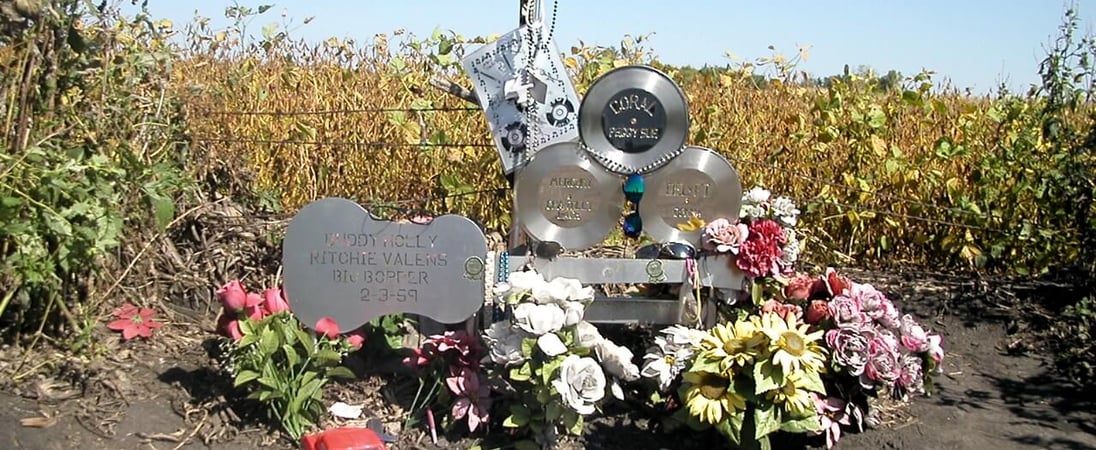
Many people like to pay respect to the four men who died in the 1959 plane crash by visiting the site on February 3 each year.
Perhaps this would be a good way to celebrate The Day the Music Died by taking a memorial trip to the site and having a vigil with candles and a moment of silence.
Watch a Film About the Musicians
Whether it’s a documentary or a fictional retelling, try watching one of these movies that tells the story of the musicians from The Day the Music Died:
- The Buddy Holly Story (1978)
- La Bamba (1987)
- The Day the Music Died (1999)
History of the Day the Music Died
More than a decade after the plane crash with these beloved musicians, songwriter Don McLean immortalized the men in his song, American Pie, which included the lyrics “the day the music died”.
Today, The Day the Music Died is observed to pay respect to these musicians and the general culture of rock ‘n roll music in the 1950s.
It can be enjoyed as a time to remember those who paved the way and pushed music toward the edges more than a half century ago.
Facts About The Day the Music Died
Buddy Holly Helped Define the Modern Rock Band
Buddy Holly was one of the first major rock and roll artists to regularly record and tour with a stable, self-contained group—two guitars, bass, and drums—rather than as a frontman backed by interchangeable session players.
This configuration, used with his band The Crickets, became the template for countless rock bands that followed, from 1960s garage groups to British Invasion acts and beyond.
A Teenager Pioneered Chicano Rock in Less Than a Year
Ritchie Valens’s entire professional recording career lasted only about 11 months, yet in that time he became widely recognized as the first Chicano rock and roll star.
By electrifying a traditional Mexican folk song from Veracruz into the rock hit “La Bamba,” sung entirely in Spanish, he created an early blueprint for blending Latin rhythms and language with mainstream rock that later influenced generations of Latino and Chicano artists.
“La Bamba” Brought Spanish-Language Vocals Onto U.S. Pop Charts
When Ritchie Valens released his rock adaptation of “La Bamba” in 1958, it became one of the earliest Spanish-language songs to reach the U.S. pop charts.
At a time when English dominated American radio, its success demonstrated that bilingual and Spanish-only performances could resonate with national audiences, opening cultural space later occupied by Latin rock, Tejano, and Latin pop stars.
The Big Bopper Helped Invent the Music Video Concept
J.P. “The Big Bopper” Richardson was not only a disc jockey and singer; he also conceived and produced a series of short filmed performances of contemporary songs he called “music videos.”
Created in 1958 for use on coin-operated video jukeboxes, these clips anticipated the promotional format that would become central to the music industry decades later with television channels like MTV.
A Winter “Package Tour” Exposed Gaps in Music Travel Safety
The 1959 Winter Dance Party tour that Holly, Valens, and Richardson were on used a grueling schedule of one-nighters across the Midwest, with long overnight trips on an inadequately heated bus.
The hardship of that ground travel led Holly to charter the small Beechcraft Bonanza that crashed, and the Civil Aeronautics Board later cited the pilot’s lack of an instrument rating and poor weather briefings—issues that highlighted how ad hoc and unsafe travel arrangements for touring musicians could be in the pre-jet era.
Buddy Holly’s DIY Approach Foreshadowed the Modern Singer-Songwriter
Unlike many 1950s pop stars who relied on publishers and producers, Buddy Holly routinely wrote or co-wrote his own material, played lead guitar, and exerted unusual control over arrangements and studio production.
This self-contained creative model directly influenced later rock and pop artists—particularly in the U.K., where John Lennon and Paul McCartney cited Holly as a key example of writing and performing one’s own songs in a band context.
Ritchie Valens Offered Rare Mainstream Representation for Mexican Americans
Growing up in Pacoima, a working-class Mexican American neighborhood in Los Angeles, Ritchie Valens brought his community’s musical influences—mariachi, ranchera, rhythm and blues—into his rock songs.
At a time when very few Latinos appeared in national popular music, his bilingual performances and chart success provided early representation for Chicano youth, who saw their cultural heritage reflected in a rapidly changing American soundscape.
The Day the Music Died FAQs
What were some of Buddy Holly’s key musical innovations that influenced later rock musicians?
Buddy Holly helped establish the model of a self‑contained rock band in which the singer and band members wrote and performed their own material.
He experimented with recording techniques such as overdubbing and double‑tracking vocals and used more varied song structures and harmonies than many contemporaries.
Prominent artists, including members of the Beatles and the Rolling Stones, have cited his songwriting, guitar style, and band format as important influences on their own work.
How did the structure of early rock and roll tours affect musicians’ working conditions in the 1950s?
Early rock and roll package tours often required musicians to travel long overnight distances by bus between venues on tightly packed schedules with little rest.
Accounts from the period describe poorly heated or unreliable buses, winter travel in harsh conditions, and limited access to medical care when performers became ill.
These conditions reflected a broader entertainment industry pattern in which emerging rock acts faced demanding itineraries and modest support compared with their growing popularity.
Also on ...
View all holidays
National Golden Retriever Day
These friendly dogs are a popular breed for families and service work, known for their loyalty, love of people, and enthusiasm for life.

Doggy Date Night
Pets bring so much joy and quality to the lives of pet owners that it’s important to make sure those pups are feeling loved and cared for!

National Women Physicians Day
Throughout history, trailblazing women have broken down barriers in medicine, paving the way for future generations of female healers.

We think you may also like...
Stephen Foster Memorial Day
Get ready to tap your feet! The songwriter who gave us "Oh! Susanna" and "Camptown Races" has a story as catchy as his tunes.