World Fiddle Day is an annual music day created to celebrate and to teach the playing of bowed string instruments throughout the world by conducting participatory and inclusive events.
World Fiddle Day happens once a year and is meant to celebrate everything that everyone loves about the chirpy, fun and feisty art of fiddle music!
The fiddle is a bowed string musical instrument, used by the players in all genres including classical music. The fiddle is always known to be something positive, with all the songs and notes it produces high energy, entertaining, and bringing something positive. Making the room dance, wherever the sound of a fiddle is played.
Around the world, this day is celebrated with dancing, music, and of course plenty of fiddle playing!
How to Celebrate World Fiddle Day
Get Fiddlin’
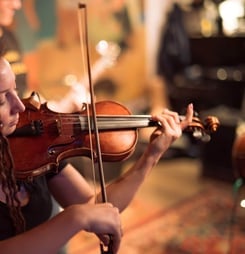
If you ever learned how to play the violin in school, or you frequently play it either for pleasure or for work, today is a great day to get out your fiddle and play a couple of tunes! Perhaps play a little for friends or family, or show your children how to play some simple themes. If you do not own one, or do not know how to play it, then this could be a great time to learn.
Listen to a Fiddler
If you aren’t lucky enough to have learned how to play this string instrument, you can celebrate its day by listening to some of the fantastic performances by string artists easily found on Youtube or Spotify. Add a spring to your daily commute with some Mozart, Barber or Brahms!
Learn to Play the Fiddle
It is always fun and engaging to learn a new musical instrument, so perhaps today you could take a trial lesson learning how to play? Who knows – by the time the next World Fiddle Day comes along, you could be able to play along with everyone else who is fiddling away!
Learn Fun Facts About Fiddles
- When it comes to building a high-quality fiddle, it can take as many as 200 hours for craftsmen to handcraft a professional fiddle, showing that for a relatively simple looking and fun instrument, a lot of craft and workmanship has to go into building one.
- Traditional fiddle strings were made of pig, goat, horse, or sheep intestine. Today they are made from steel or aluminium over a nylon core.
- Now, the last fiddle fact that you may want to take down for your next game of trivia, is that the fastest fiddler/violinist on record is Ben lee who played ‘Flight of the Bumblebee’ in just over a minute in 2010. He played an average of 13 notes each second for a total of 810 notes in all. Now that is pretty impressive, so now the fiddle has been explained, what about the day?
Whatever you get up to, have a great World Fiddle Day!
World Fiddle Day Timeline
Early Medieval Fiddles Emerge
Bowed string instruments such as the Byzantine lira and European rebec appeared, providing key ancestors of the modern violin and folk fiddle.
Birth of the Violin in Northern Italy
Instrument makers in Cremona and Brescia developed the first recognizable violins, establishing the basic form still used for violins and fiddles today.
Stradivari Elevates Violin Craft
Cremonese luthier Antonio Stradivari refines violin design and construction, creating instruments later prized by both classical violinists and traditional fiddlers.
Fiddle Becomes a Core Folk Instrument
Across Ireland, Scotland, England, and Scandinavia, the fiddle became central to dance music, accompanying reels, jigs, and other social dances in rural communities.
Hardanger Fiddle Develops in Norway
Norwegian makers created the Hardanger fiddle with sympathetic strings and rich decoration, giving regional dance music its distinctive resonant sound.
Fiddle Shapes Early American Music
European and African American fiddlers in colonies and the young United States provided music for gatherings and dances, helping form early American folk and country styles.
From Country Dances to Barn Dances
As communities spread across North America, the fiddle remains the preferred dance instrument, driving square dances, barn dances, and hoedowns in frontier and rural life.
History of World Fiddle Day
Even though World Fiddle Day was created in 2012, it gained popularity all over the world within a few years. The day was founded by Caoimhin Mac Aoidh, a professional fiddler from Donegal in Ireland. The day was birthed from a deep respect for one of the most expert and revered violin makers in history.
This month was chosen to coincide with the anniversary of the death of the Italian violin craftsman Antonio Stradivari’s way back in 1737. Stradivari is today considered the most significant creator of violins in history, with his surviving instruments today seen as the most prized and finest ever created.
Although he also made the larger string instruments cellos and violas, it’s the violins that he lovingly crafted that he is most well-known and remembered for. Though only a couple of hundred of his works still exists, they have been known to capture some huge prices at auction and are especially sought-after amongst professional violin players.
More About the Fiddle
Now that we know about the day, let’s get a better idea of the fiddle that is being celebrated! The fiddle is a four-stringed musical instrument of the string family, also often referred to as a small type of violin.
Like the violin, it is also played with a bow. The terms fiddling or fiddle playing actually refer to a style of music, most commonly folk music. The origins of the name ‘fiddle’ are not known but is believed to be derived from an early violin or the Old English word ‘fithele’.
The fiddle is common to English folk music, Irish folk music, Scandinavian music, Austrian, French, Hungarian, Polish, American, Latin American, African, and even Australian music. There is no difference between the fiddle and small violin aside from the name and type of music the instrument is used for.
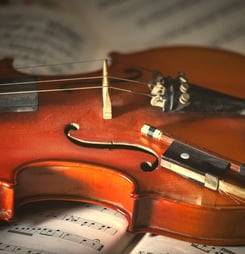
A fiddle has many parts including the neck, fingerboard, tuning pegs, scroll, pegbox, bridge, soundhole, strings, fine tuners, tailpiece, bass bar, soundboard, chinrest, button, backplate, and bow. The earliest fiddles (or violins) were derived from the bow instruments from the Middle Ages.
The Fiddle’s Journey Through Music and History
The fiddle is more than just an instrument. It carries centuries of tradition, cultural exchange, and musical innovation.
From its early beginnings to its role in shaping entire music styles, these facts reveal how the fiddle became a powerful voice across different times and communities.
Fiddles Evolved from Medieval Bowed Instruments
The modern fiddle or violin traces its roots to medieval bowed instruments such as the rebec and the Byzantine lyra, which spread across Europe along trade and pilgrimage routes.
By the early 16th century, Italian makers in cities like Brescia and Cremona refined these earlier designs into the violin family, standardizing features like the arched top, f‑holes, and tuning in fifths that define the instrument fiddlers still play today.
The Fiddle Was the Workhorse Instrument of Early American Dance
In 18th and 19th-century North America, the fiddle became the primary instrument for social dancing, especially in rural communities where pianos and brass bands were impractical or too expensive.
Its small size, strong projection, and ability to play melody and rhythm made it ideal for reels, jigs, and square dances, and many itinerant fiddlers built local reputations traveling from settlement to settlement providing music for community gatherings.
African American Fiddlers Helped Shape Early American Music
Historical records from colonial America show that enslaved and free Black musicians often played the fiddle at plantations, taverns, and public events, sometimes even being hired out by enslavers for their musical skills.
These African American fiddlers blended European dance tunes with African rhythmic ideas, influencing the development of early American folk, country, and later blues traditions in ways that scholars are still uncovering from court documents, newspaper ads, and travelers’ accounts.
The Hardanger Fiddle Uses Hidden Strings to Create Its Echoing Sound
Norway’s Hardanger fiddle (hardingfele) is distinguished by a set of sympathetic strings that run underneath the fingerboard and resonate when the main strings are played.
This construction gives the instrument its shimmering, echo‑like tone, which is closely associated with traditional Norwegian dances such as the springar and halling, and is often enhanced by extensive inlay, ink decorations, and carved dragon or animal heads on the scroll.
Norwegian Fiddle Traditions Are Recognized by UNESCO
The traditional music and dance associated with the Hardanger fiddle are considered so culturally significant that “Setesdal traditional music and dance,” which prominently features the instrument, has been inscribed on UNESCO’s Representative List of the Intangible Cultural Heritage of Humanity.
This recognition highlights not just the fiddle itself but the living traditions of performance, transmission, and local identity that surround it in rural southern Norway.
Stradivari’s Violins Show Remarkable Acoustic Consistency
Scientific studies of instruments attributed to Antonio Stradivari have found that many share similar patterns of plate thickness and wood density, suggesting that he applied highly controlled workmanship rather than relying on chance.
Modern acoustical measurements and CT scans indicate that this consistency in construction contributes to the characteristic projection and tonal balance that make Stradivari’s violins and fiddles so prized by performers centuries after they were built.
Fiddles Often Use Horsehair and Exotic Woods
A traditional fiddle bow is strung with horsehair, typically from the tail of horses living in cold climates, because the hair’s microscopic scales grip the string effectively when coated with rosin.
The instrument itself is usually made from spruce for the top and maple for the back, ribs, and neck, while high‑end bows historically relied on pernambuco wood from Brazil, a material so heavily exploited that international trade in it is now regulated to protect remaining tree populations.