
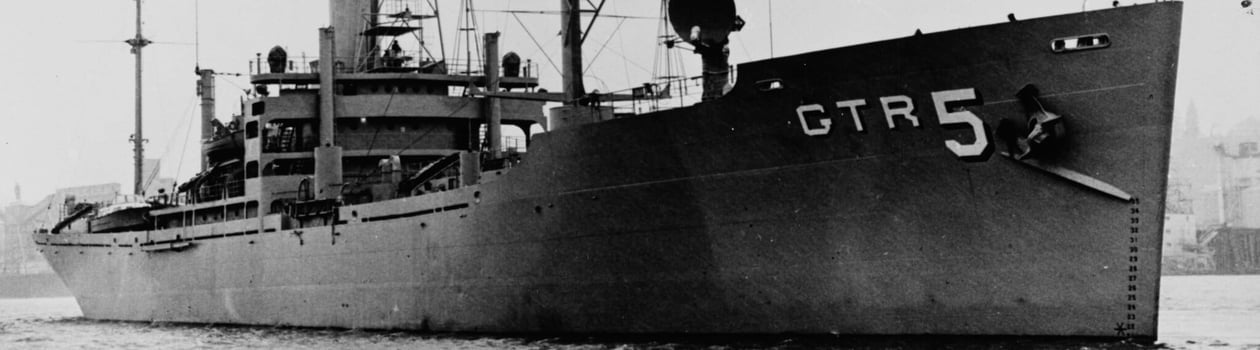
USS Liberty Remembrance Day honors the 34 crew members killed and the 174 wounded when the U.S. Navy technical research ship USS Liberty was attacked while operating in international waters during the 1967 Six-Day War. It is also a day to recognize the determination of those aboard who fought fires, flooding, and severe structural damage long enough to keep the ship afloat and care for shipmates in the middle of an unfolding emergency.
The observance is, first and foremost, about people. It makes space to remember individual lives, the families who carried grief and uncertainty afterward, and the survivors who lived with lasting injuries. It also encourages thoughtful learning about a naval incident that remains complicated, frequently discussed, and emotionally charged for many who study it.
How to celebrate USS Liberty Remembrance Day
A respectful observance can be quiet and personal or shared with others. One of the simplest options is also one of the most meaningful: pause for a moment of silence and reflect on the crew’s service, the lives lost, and the long-term impact that trauma and serious injury can have on survivors and their loved ones.
Some people choose to mark the day with a small remembrance gathering. This might include reading the names of the 34 men who died, sharing brief biographical notes, or inviting a veteran or historian to speak about naval service and what shipboard emergencies demand of a crew. A ceremony does not need elaborate staging to be sincere. A few spoken words, a folded flag, and a commitment to remember can be enough.
Learning can also be a form of tribute. Reading about the ship’s mission and the realities of intelligence work at sea helps put the event in context, without turning the day into an argument. The USS Liberty was not a traditional front-line combat ship. It was outfitted with specialized communications and signals intelligence equipment, which meant the crew’s everyday work was technical, persistent, and largely unseen. Understanding that difference clarifies why the ship was there and why its vulnerability during a sudden, sustained assault mattered so much.
A practical act of service can be another way to honor the crew. Supporting veterans and military families through local, reputable organizations, writing notes of appreciation, or volunteering time in a community program brings remembrance into everyday life. It keeps the focus on care, not controversy.
It may also help to center the human skills that kept the ship afloat. Damage control at sea is exhausting and dangerous even in routine conditions. During an attack, it becomes an all-hands fight against fire, smoke, flooding, loss of power, and disrupted communications. Observing the day can include learning about basic damage-control principles, first aid, and crisis coordination, then reflecting on what it took for sailors to do those jobs while wounded and under threat.
Visit Arlington National Cemetery
Arlington National Cemetery is maintained by the U.S. Army and includes a USS Liberty Memorial that commemorates the casualties of the 1967 incident.
A visit to a memorial can be a grounded way to connect with history. Names carved into stone cut through abstraction, bringing the story back to individuals with families, friends, and futures interrupted. Visitors often choose a quiet walk, reading each name slowly and considering the ages and roles of the men who served aboard the ship. Any gesture of remembrance should follow posted guidelines and respect the solemn purpose of the site.
For those who cannot travel, the intention can still be honored. Setting aside a small space at home, lighting a candle, or reading personal accounts from crew members and families can echo the same purpose. The day is ultimately about remembering people, not only recounting an incident.
USS Liberty Remembrance Day Timeline
Keel Laid for Future USS Liberty
The hull that would become USS Liberty is laid down as SS Simmons Victory, a World War II–era Victory ship, at Oregon Shipbuilding Corporation, forming the basis for her later conversion into a signals intelligence vessel.
Conversion to Technical Research Ship Begins
The U.S. Navy acquires SS Simmons Victory for conversion into USS Liberty (AGTR-5), outfitting her with advanced electronic surveillance gear as part of a growing Cold War program of seaborne signals intelligence collection.
USS Liberty Commissioned into U.S. Navy
USS Liberty is officially commissioned as a Belmont-class technical research ship, joining a small fleet tasked with gathering communications and electronic intelligence in international waters near global flashpoints.
Six-Day War Erupts in the Middle East
War breaks out between Israel and neighboring Arab states, prompting U.S. intelligence agencies to deploy collection platforms such as USS Liberty to monitor communications and military movements in the volatile Eastern Mediterranean.
Attack on USS Liberty in International Waters
Israeli aircraft and torpedo boats attack USS Liberty off the Sinai Peninsula, killing 34 crew members and wounding 171 others, in one of the deadliest attacks on a non-combatant U.S. Navy ship and a lasting source of controversy.
U.S. Navy Court of Inquiry Concludes
The U.S. Navy Court of Inquiry submits its report on the Liberty incident, accepting Israel’s explanation of mistaken identity while survivors and some officials later criticize the inquiry as incomplete and overly narrow in scope.
Investigations, Reparations, and Ongoing Debate
Israeli and U.S. reviews, congressional inquiries, and eventual Israeli compensation payments to families and the U.S. government address legal and diplomatic fallout, even as disputes over intent and accountability continue for decades.
History of USS Liberty Remembrance Day
USS Liberty Remembrance Day grew out of the need to recognize a specific loss of life and the enduring effects of a single, devastating day at sea. The USS Liberty was attacked on June 8, 1967, during the Six-Day War, while it operated in international waters in the Mediterranean. In the two-hour, multi-wave assault, 34 crew members were killed and 174 were wounded among the 294 men aboard.
At the time, the USS Liberty was a U.S. Navy technical research ship assigned to collect signals intelligence. That mission typically involves monitoring and analyzing communications, a role that depends on specialized equipment and trained personnel. It is work that is often quiet, continuous, and easily misunderstood from the outside. The Liberty’s appearance and capabilities reflected that mission, with extensive antenna arrays and internal spaces dedicated to communications and analysis rather than heavy offensive armament.
Accounts of the attack describe repeated strikes by aircraft and torpedo boats that left the ship badly damaged. Beyond the immediate casualties, the crew faced secondary dangers that can be just as lethal at sea: uncontrolled fires, ruptured compartments, and flooding that threatens buoyancy and stability. In that kind of emergency, every minute is a calculation. Sailors must suppress fire while preventing electrical hazards, keep passageways open for evacuation and medical care, and maintain enough ship function to communicate and navigate.
The Liberty’s survival depended on the discipline and coordination of its crew. Damage control is not a single heroic act. It is dozens of exhausting tasks performed under pressure: sealing compromised areas, shoring bulkheads, moving the wounded, treating burns and shrapnel injuries, clearing debris, and improvising when equipment fails. Remembering the USS Liberty includes honoring the competence and courage behind those actions, not only the tragedy that required them.
The historical record surrounding the incident is intertwined with the realities of wartime confusion and the limits of real-time communication. Reports indicate that the ship was sent guidance to move farther from the conflict area, but the message did not reach the Liberty until after the attack. In military operations, timing can be decisive. A delayed instruction can turn a cautious plan into a catastrophic outcome. Radio conditions, routing procedures, and the sheer friction of crisis response can all contribute to delays that seem inexplicable in hindsight.
Officially, Israel stated that the attack was a mistake and that the USS Liberty was misidentified. Israel issued apologies and, over time, payments were made to the United States related to the loss of life, injuries, and damage to the ship. For many families and survivors, those steps acknowledged harm but did not necessarily settle every emotional and factual question they carried forward. Even when governments reach a formal resolution, individuals still live with the physical consequences of wounds, the strain of recovery, and the lasting weight of memory.
The incident has also remained the subject of enduring dispute. Some survivors and other observers have argued that the attack was intentional, citing factors such as the length of the assault and the ship’s markings. Others emphasize the fog of war, the speed of decision-making, and the possibility of misidentification in a tense operational environment. These competing interpretations have helped keep the Liberty in public discussion for decades.
USS Liberty Remembrance Day does not require a single view of every unresolved detail to be meaningful. It is possible to acknowledge that the event remains debated while still centering what is not in dispute: there was a heavy loss of American life, many were seriously wounded, and a crew endured an extreme emergency with determination. For an observance rooted in respect, the focus can remain on remembrance, service, and careful attention to the human cost of conflict.
The day also serves as a reminder of how vulnerable any ship can be when circumstances shift quickly. Even outside a declared battle, sailors can find themselves in danger with little warning. The Liberty’s story highlights the importance of clear identification procedures, reliable communication, and strong emergency readiness. It also highlights the human side of readiness, the willingness to keep working the problem while systems fail and shipmates need immediate care.
For many who observe USS Liberty Remembrance Day, the purpose is straightforward: to speak the names, remember the wounded, and recognize a crew that refused to give in to disaster. It is a solemn commemoration, but it is also an affirmation that individual service and sacrifice should not be forgotten.
USS Liberty Remembrance Day FAQs
How did the USS Liberty incident influence modern rules for identifying ships in conflict zones?
The attack on the USS Liberty is frequently cited in naval and legal analyses as a case study in the dangers of misidentification at sea.
In its aftermath, both the United States and Israel reported tightening procedures for visual and electronic identification of vessels, including more stringent rules on confirming flag, hull markings, and radar signatures before engaging.
More broadly, the incident reinforced existing principles under the law of armed conflict and the San Remo Manual on International Law Applicable to Armed Conflicts at Sea, which require commanders to take all feasible precautions to verify that a target is military and not neutral before opening fire.
Navies have since invested heavily in improved surveillance, secure communications, and standardized identification protocols to reduce the risk of similar tragedies. [1]
What protections do international humanitarian law and the law of the sea give to neutral or non-combatant vessels like the USS Liberty?
Under the law of armed conflict at sea, neutral and non-combatant vessels are protected from attack unless they are directly participating in hostilities or clearly contributing to an enemy’s military action.
The San Remo Manual and customary international law require belligerents to distinguish at all times between military objectives and civilian or neutral shipping, and to refrain from attacks when there is doubt about a vessel’s status.
The United Nations Convention on the Law of the Sea (UNCLOS) also affirms freedoms of navigation in international waters and requires due regard for the rights and safety of other states’ ships.
When incidents occur, states are expected to investigate, provide explanations, and offer reparation if they are responsible for wrongful harm. [1]
Why is the USS Liberty incident often described as controversial even after multiple official investigations?
The incident remains controversial because different investigations reached differing interpretations, and some evidence has been released only gradually.
Israeli and U.S. military inquiries in the late 1960s concluded the attack was a case of mistaken identity during the intense fighting of the Six-Day War.
However, some crew members, intelligence officials, and later commentators have argued that the ship’s markings and flag should have been identifiable and that key questions about decision-making, radio communications, and aerial reconnaissance were never fully resolved.
Declassified U.S. National Security Agency materials and subsequent historical studies have provided more context but not a single account that all parties accept, which has allowed debate about intent and accountability to persist.
How did the USS Liberty incident affect U.S.–Israeli military and intelligence cooperation?
Publicly, both governments treated the attack as a tragic mistake and worked to restore relations, which limited long-term diplomatic damage.
Israel paid compensation for the loss of life and damage, and the United States maintained its political and military support for Israel, which actually deepened in the following decade.
At the operational level, however, historians note that the incident prompted more formal communication channels, clearer rules about the proximity of U.S. intelligence collection to Israeli combat operations, and more explicit coordination to avoid friendly fire in crowded conflict zones.
The episode is often cited in scholarship as an example of how close allies can experience severe incidents yet still expand strategic ties while trying to reduce operational risks. [1]
What role did intelligence-gathering ships like the USS Liberty play during the Cold War, and what risks did they face?
Signals intelligence ships in the Cold War, such as the USS Liberty, were used to intercept communications, radar emissions, and other electronic signals from nearby conflicts and rival powers.
Operating close to coastlines and active warzones allowed them to collect valuable real-time information on military movements, weapons systems, and command structures.
That mission profile also created significant hazards: these vessels were often lightly armed, highly visible, and sometimes mistaken for combatants or suspected of espionage by regional powers.
Incidents involving the U.S. Navy, the Soviet Navy, and other states show that such ships could face harassment, collision risks, or even attack, which is why later decades saw a shift toward satellites, aircraft, and more distant offshore platforms for many intelligence tasks.
How are incidents like the USS Liberty used in training for modern naval officers and military lawyers?
Naval academies and staff colleges frequently use historical cases, including the USS Liberty, to teach officers about rules of engagement, target identification, and civil-military decision-making.
The incident helps illustrate how stress, time pressure, incomplete information, and communication failures can lead to catastrophic errors, even among professional forces.
Military legal training also uses such cases to explore state responsibility, the duty to investigate alleged law-of-war violations, and the processes for providing reparations.
By studying detailed timelines, radio logs, and inquiry findings, officers are encouraged to think critically about how to prevent misidentification and how to respond when incidents occur.
What options do survivors and families generally have when a warship is mistakenly attacked by an allied state?
When a warship is attacked in error by an ally, claims are usually handled at the state-to-state level rather than by individuals suing foreign governments directly.
Under international law, the state whose forces caused the harm may acknowledge responsibility, offer a formal apology, and negotiate compensation for deaths, injuries, and material losses.
Survivors and families typically pursue recognition, benefits, or additional inquiries through their own government’s military and veterans’ systems, such as disability benefits, pensions, and memorialization.
In some cases, domestic courts have limited jurisdiction because foreign states enjoy sovereign immunity, which is why diplomatic negotiations and political advocacy often become the primary channels for seeking accountability and redress.


You may also like
Navy Reserve Birthday
The Navy Reserve Birthday is a special occasion that honors the dedication and service of the Navy Reserve, a force built for flexibility, expertise, and readiness. This day celebrates the vital contributions of Reserve Sailors who support the active-duty Navy. These reservists step in to fill critical capability gaps, reinforce units...
- Australia
- Canada
- United Kingdom
- and 1 more

Don’t Give Up the Ship Day
Honor perseverance with Don’t Give Up the Ship Day, celebrating Captain James Lawrence’s famous naval rallying cry and the timeless spirit of resilience.
Remember the Maine Day
Remember the Maine Day is a remembrance day centered on the U.S.S. Maine, a U.S. Navy battleship whose sudden destruction in Havana Harbor claimed the lives of 266 sailors. The event became more than a single maritime tragedy: it shaped public opinion, altered diplomacy, and helped set the stage for...
National Pearl Harbor Remembrance Day
A solemn remembrance of a pivotal historical event that forged resilience and unity in the face of adversity, inspiring generations.
National days and holidays on June 8

Vivid Sydney
Vivid Sydney is a dazzling celebration that transforms the city into a vibrant playground of lights, music, and creativity. For weeks, iconic landmarks and urban spaces glow with stunning light installations and 3D projections, captivating both locals and tourists. This festival draws millions of visitors each year, offering an enchanting...

National Best Friends Day
National Best Friends Day honors the deep bond between besties, inspiring people to show gratitude, share memories, and celebrate friendship in all its forms.
- Australia
- Canada
- United Kingdom
- and 1 more

The Big Lunch
The Big Lunch is a beautiful day filled with community spirit. This annual event is like an enormous block party, where the tantalizing fragrances of home-cooked delicacies mingle with music and laughter. The event means sharing meals. It also means making new - or renewing - heartwarming connections. As...

National Upsy Daisy Day
National Upsy Daisy Day celebrates waking up with gratitude, positivity, and kindness, inspiring people to greet the morning with a cheerful, can-do attitude.
Seize Every Day
Sign up to get reminders, recommendations and guides.