World Bonobo Day
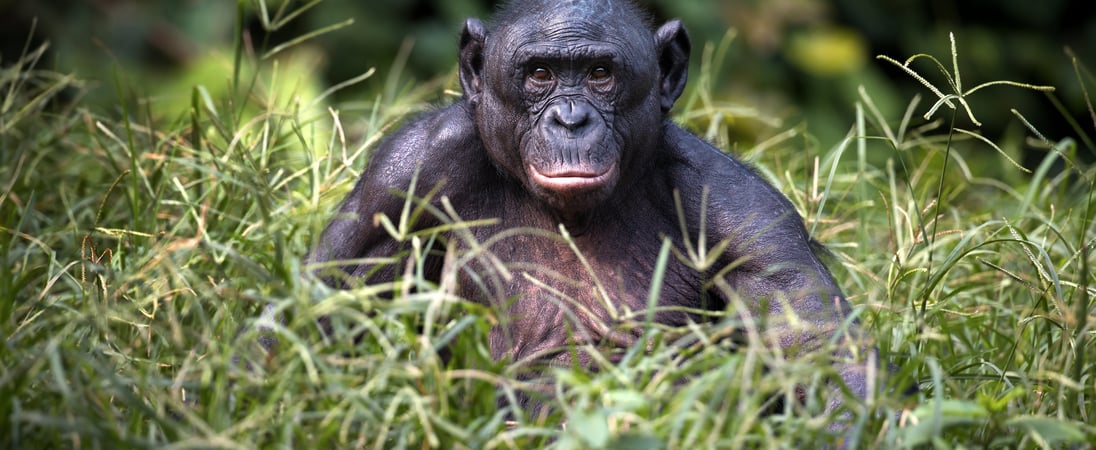
World Bonobo Day shines a spotlight on one of humanity’s closest animal relatives: the bonobo. These endangered great apes are famous for their social intelligence, affection-heavy friendships, and a group dynamic that tends to favor cooperation over chaos.
Often nicknamed “hippie chimps,” bonobos have become a symbol of how empathy, sharing, and strong social bonds can be powerful survival tools in the wild.
By highlighting their plight, the event encourages efforts to preserve their rainforest home and support long-term initiatives that protect this gentle species from extinction.
It also nudges people to look a little closer at the everyday choices that shape forests, wildlife trade, and the future of species that cannot simply move somewhere else when their habitat disappears.
How to Celebrate World Bonobo Day
Throw a Bonobo-Themed Party
Why not throw a party that celebrates bonobos in style? A bonobo-themed gathering can be playful on the surface and quietly educational underneath, which is very on-brand for an animal that mixes fun with social purpose.
Decorate the space with photos or illustrations of bonobos, leafy rainforest colors, and simple signage featuring bonobo behaviors like grooming, food sharing, and group travel.
To keep things engaging, add a “bonobo fact station” where guests can pick up bite-sized facts throughout the event, such as how bonobos live in fission-fusion communities (subgroups that split and reunite), or how friendships between females can shape group decisions.
For snacks, lean into the bonobo menu. Bonobos are primarily frugivores, meaning fruit is a major part of their diet, along with leaves, seeds, and other plant foods. A fruit-forward spread works well: sliced tropical fruit, fruit skewers, smoothies, or frozen fruit pops.
For a more thematic twist, label dishes with habitat-inspired names like “Congo Canopy Salad” or “Forest Floor Trail Mix.” The goal is to make it informative and fun for all ages, with conversation starters that lead naturally to the bigger topic of conservation.
Adopt a Bonobo
For a more personal connection, consider adopting a bonobo through a reputable conservation organization.
Many groups offer symbolic adoptions that support veterinary care, habitat protection, rescue and rehabilitation, community partnerships, and field research. They often include updates or profiles that make the support feel tangible.
It’s also a meaningful way to talk about conservation in concrete terms. A symbolic adoption can spark questions like: What does it take to protect one individual bonobo and the forest it needs? How do sanctuaries handle nutrition, enrichment, and social grouping for a species that is deeply social?
That curiosity is valuable because it turns “awareness” into ongoing attention, the kind that keeps conservation work funded and visible.
Spread the Word on Social Media
Turn social media into a bonobo appreciation zone, but keep it useful. Bonobos are charismatic, and that makes them easy to share, yet it helps to pair cute clips with practical context.
Share posts that introduce what makes bonobos distinct from chimpanzees, such as their generally more tolerant social interactions and strong female alliances. Include the basics that people often do not know: bonobos live only in the Democratic Republic of the Congo, their habitat is rainforest, and their population is threatened by habitat loss and hunting.
Posts can also highlight how bonobos’ slow reproductive rate makes population recovery difficult, since they cannot quickly “bounce back” from losses the way some smaller animals can.
If posting videos or photos, choose content that shows natural behaviors respectfully, avoiding anything that encourages the exotic pet trade or depicts wildlife handling as casual entertainment.
A thoughtful caption can point people toward legitimate conservation work and away from misinformation, which is surprisingly common around great apes.
Watch a Bonobo Documentary
If learning more is the goal, a documentary screening is a great way to swap assumptions for real insight. Bonobos are often reduced to a single talking point, but good documentaries show the broader picture: mother-infant bonds, feeding strategies, communication, play, cooperation, and the way groups navigate tension.
To make it more than passive viewing, pair the screening with a mini discussion afterward. Topics can include how primatologists identify individuals, what “habituation” means in wildlife research, and why ethical filming matters.
Another worthwhile discussion point is the difference between a bonobo in a protected forest, a bonobo in a threatened landscape, and a bonobo in a sanctuary. Each setting involves different challenges, and understanding that complexity helps people appreciate why conservation is a long game, not a quick rescue mission.
Support Bonobo-Friendly Products
World Bonobo Day is also a reminder that conservation is connected to ordinary consumption. Bonobo habitat is rainforest, and rainforest protection is influenced by demand for materials that can drive deforestation or forest degradation.
Make a habit of choosing products that reduce pressure on forests. In general terms, this can mean buying fewer disposable goods, choosing longer-lasting items, looking for responsible sourcing claims where relevant, and supporting businesses that take sustainability seriously rather than treating it as a marketing accessory.
Small changes are not a substitute for policy or on-the-ground conservation, but they do help align daily life with the kind of world bonobos need: one where intact forests are worth more standing than cleared.
Donations to credible conservation organizations can fit here too, especially those that fund community-led forest protection, ranger support, sanctuary care, and education programs. The most bonobo-friendly approach tends to be the one that recognizes people living near bonobo habitat as essential partners, not obstacles.
World Bonobo Day Timeline
1928
First Distinct Specimens Collected
Skulls collected near Bolobo on the Congo River lead scientists to suspect a great ape different from common chimpanzees.[1]
1933
Bonobo Recognized as a Separate Species
German anatomist Ernst Schwarz formally describes Pan paniscus, distinguishing bonobos from chimpanzees based on cranial differences.[2]
1954
Name “Bonobo” Enters Scientific Use
Researchers Heinz Heck and Hans Tratz popularize the name “bonobo,” likely derived from a misspelling of the Congolese town Bolobo on a shipping crate.[3]
1973
First Long-Term Field Study at Wamba
Japanese primatologists establish a permanent research site at Wamba in the Congo rainforest, launching systematic study of wild bonobo behavior and society.[4]
1994
Lola ya Bonobo Sanctuary Founded
Ingrid Newkirk and Claudine André help establish Lola ya Bonobo near Kinshasa, creating the world’s first sanctuary dedicated exclusively to orphaned bonobos.[5]
2002
Lomako–Yokokala Faunal Reserve Created
The Democratic Republic of the Congo gazettes the 3,625 km² Lomako–Yokokala Faunal Reserve, giving legal protection to a major block of bonobo habitat.[6]
2023
Study Reveals Bonobo Cross-Group Cooperation
A study highlighted by Harvard Gazette shows bonobos readily cooperate and share with non-group members, deepening understanding of their peaceful social behavior.[7]
History of World Bonobo Day
World Bonobo Day raises awareness about the endangered bonobo species and the conservation work needed to protect it. It began in 2017, created to focus attention on bonobos as a unique great ape with an unusually cooperative social system and a very limited natural range.
The date is commonly observed on February 14, a deliberate nod to the bonobo’s reputation for using closeness and affiliation to keep the peace within their groups.
Bonobos (Pan paniscus) are one of the closest living relatives to humans, along with chimpanzees. That biological closeness is part of the reason they capture public imagination, but it also raises the stakes. Great apes tend to reproduce slowly, require large territories, and depend on complex social learning. When their populations are disrupted, recovery is difficult.
World Bonobo Day helps translate that scientific reality into a public message: protecting bonobos is not only about saving a “cute animal,” it is about safeguarding a highly intelligent species whose survival depends on stable forests, reduced hunting pressure, and long-term community-supported conservation.
A major driver behind the day’s visibility has been the conservation community, including organizations focused specifically on bonobos and their habitat. Groups such as the Bonobo Conservation Initiative have helped elevate public understanding of bonobos while supporting on-the-ground work that blends habitat protection with community empowerment.
Other wildlife and primate-focused organizations have also promoted the observance, reflecting a shared recognition that bonobo conservation benefits from collaboration rather than competition for attention.
The broader conservation message behind World Bonobo Day is grounded in the realities of bonobo geography and ecology. Bonobos are found only in the Congo Basin region, and their home is largely defined by dense rainforest ecosystems.
When those forests are fragmented by logging, agriculture, or infrastructure, bonobo communities can become isolated. Isolation makes it harder for groups to maintain healthy genetic diversity and increases the risk that local declines become permanent losses.
In addition, hunting remains a serious threat in many areas, whether driven by commercial trade, local need, or the instability that can accompany poverty and limited access to resources.
World Bonobo Day also highlights the bonobo’s remarkable social behavior, not as a gimmick, but as a legitimate scientific and conservation talking point. Bonobo groups are often described as female-centered, with strong relationships among adult females shaping social stability.
Grooming plays a major role in bonding, stress reduction, and relationship repair, just as it does in many primates. Bonobos are also known for using a variety of affiliative behaviors to defuse tension, which has contributed to their reputation for being less aggressive than chimpanzees overall.
That said, “peaceful” does not mean “simple.” Bonobo society is complex, full of negotiations, alliances, and shifting friendships, and their social intelligence is part of what makes them so compelling to study and protect.
Importantly, the day is not meant to romanticize bonobos into a cartoon version of themselves. Instead, it uses their distinctive social style to draw people in, then encourages deeper learning about what they need to survive.
Conservation messaging can be a balancing act: it must be engaging enough to spark interest, accurate enough to respect the science, and actionable enough to avoid leaving people with only a warm feeling and no next step.
World Bonobo Day has grown as a platform for that kind of engagement, encouraging education, fundraising, and community events that support bonobo-focused work.
Another theme often associated with World Bonobo Day is the connection between habitat protection and human well-being. Rainforests store carbon, regulate water cycles, and support biodiversity that includes countless plant and animal species beyond bonobos.
Efforts that protect bonobo habitat can also strengthen local livelihoods when they include community priorities, sustainable income options, and respect for land stewardship.
Many modern bonobo conservation strategies reflect this integrated approach, recognizing that lasting protection depends on aligning conservation goals with the needs and rights of the people who live alongside bonobos.
Since its launch, World Bonobo Day has helped bring bonobos out of the shadow of their more widely known relatives. Many people can picture a chimpanzee or a gorilla instantly, but bonobos have historically received less attention, despite being equally fascinating and equally vulnerable.
This observance helps correct that imbalance by making bonobos easier to recognize, easier to understand, and harder to ignore.
The day also underscores an uncomfortable truth: a bonobo’s gentle nature cannot protect it from chainsaws, snares, or illegal trade. Awareness matters because it influences what gets funded, what gets taught, and what people demand from companies and decision-makers.
By encouraging participation through learning, sharing, and support, World Bonobo Day strengthens the public side of conservation, which is essential for keeping long-term work going.
In the end, World Bonobo Day is a celebration of an extraordinary ape and a practical reminder that survival is not guaranteed, even for species so closely related to humans.
Protecting bonobos means protecting forests, reducing hunting pressure, supporting ethical conservation partnerships, and choosing curiosity over indifference when the topic of endangered wildlife comes up.
Also on ...
View all holidays
National Organ Donor Day
The selfless act of giving the gift of life can bring hope and healing to those in need. It's a remarkable legacy that transcends time and spreads compassion.



National Cream-Filled Chocolates Day
Indulge in the luxurious taste of smooth and rich chocolate with a delightful surprise waiting for you inside every bite.