While it can take on a variety of different forms, puppetry involves creating animation from inanimate objects, with the purpose of telling a story. Puppetry has been used for thousands of years to communicate ideas theatrically, whether in a comedic, dramatic, political or tragic fashion.
World Puppetry Day is here to celebrate the creativity, art and impact that puppeteers and puppetry can have on humankind!
World Puppetry Day Timeline
Documented Puppet Theater in Ancient Greece
Classical writers such as Herodotus and Xenophon describe traveling showmen who manipulated jointed figures, providing some of the earliest written evidence of European puppetry.
South Asian String and Shadow Puppetry Traditions
Literary references in Sanskrit epics and regional traditions indicate that India developed sophisticated string and shadow puppet theaters that became part of religious and folk performance.
Rise of Wayang Puppet Theater in Java
Indonesian wayang, especially the leather shadow puppets of wayang kulit, emerges as a court and temple art used to present stories from the Ramayana and Mahabharata.
Punch, Pulcinella, and Popular European Street Puppetry
From Italy’s Pulcinella to England’s Mr. Punch, glove-puppet characters spread across Europe, becoming satirical street entertainment that commented on politics and everyday life.
Founding of UNIMA, a Global Puppetry Network
Puppeteers meeting in Prague established the Union Internationale de la Marionnette (UNIMA), one of the world’s oldest international theater organizations dedicated to puppetry.
The Muppets Launch a New Era of Television Puppetry
Jim Henson’s Muppets debuted on local American television and later on programs like Sesame Street, blending hand puppetry with television techniques and transforming puppetry’s global profile.
How to Celebrate World Puppetry Day
Get involved and have tons of fun for World Puppetry Day! Celebrating this day can be filled with all sorts of fun activities and plans that pay honor and respect to the world of puppetry. Get started with some of these ideas:
Make a Puppet Show with Kids
Whether teachers, parents or community leaders, those who are involved with kids can certainly encourage the celebration of and participation with World Puppetry Day. It could be something as simple as letting a group of kids create sock puppets, write a script and put on a show. (Don’t forget to make a video so the puppeteers can see how well they did!) Or it could be something more elaborate that takes many months to prepare and the show is performed on World Puppetry Day.
Learn How to Be a Puppeteer
Those who enjoy drama and theater but who don’t necessarily want to be the center of attention or on stage, might want to consider learning how to become a puppeteer. It’s a bit of a niche career and may work just as well as a hobby, but the world of puppetry is still alive and well in many communities around the world.
Get involved with World Puppetry Day by signing up for a course at an arts college, or do some online research to find a mentor that can help with developing the skills needed for mastering the art of puppetry. New York City is a great place to be able to gain access to all sorts of different versions of puppetry.
Puppetry is an extremely labor intensive art form. Some important factors involved in puppetry are good hand-eye coordination, physical stamina, creativity and passion. Some puppeteers even develop their own character personas or write their own scripts. It’s a fun and interesting aspect of the arts to be involved with.
Watch Puppets on Film
It’s no surprise that the art of puppetry also made the transition from live theater to film in the early 1900s. Over more than a century, the art form of puppetry has often been captured on film and video so that it can be shared with people all over the world. Have fun celebrating World Puppetry Day with some of these:
- The Muppet Movie (1979). Muppets, created by Jim Henson, are a combination of “marionettes” and “puppets”. From their debut on Sesame Street to The Muppet Show to many box office hits, the Muppets offer a beloved cast of characters with tons of humorous and learning adventures.
- Labyrinth (1986). This fantasy and adventure film stars live actors Jennifer Connelly and David Bowie (who also composed much of the music), as well as a wide variety of amazing muppets by Jim Henson.
- Lamb Chop’s Special Chanukah (1995). Beloved television entertainer and ventriloquist, Shari Lewis, was most famous for her puppet friend, Lamb Chop, and this made-for-television holiday movie is a delight.
- The Dark Crystal (1982). Another Jim Henson and Frank Oz fan favorite, this fantasy adventure follows two puppets on their quest to overthrow evil and bring the world back into balance.
Attend a World Puppetry Day Puppet Show
While not all communities offer access to puppet theaters, many of them do! Check at the local library or in an online community calendar to see what kinds of puppetry events are on throughout the year. Then book tickets to go see a puppet show with friends and family just for fun!
World Puppetry Day FAQs
History of World Puppetry Day
Puppetry can find its roots as far back as 500 BC when Ancient Greeks would use a form of puppetry, but some historians believe it might date even further back – to 2000 BC or longer. Some evidence suggests that Ancient Egyptians made wooden puppets that were animated with strings, or made them from clay or ivory and moved them with the use of wires.
Puppets have often been used to not only simply tell stories to children, but they have been used as a form of theater to address the ideas, needs and interests of societies around the world. Whether through hand puppets, marionettes, water puppets, stick puppets, or even shadow puppets, puppetry is a unique way for writers and puppeteers to express themselves through story.
Throughout the years and in modern times, puppets have ranged from rudimentary (think sock puppets) to extremely complicated. For instance, Indonesian wayang theater includes intricately formed sticks that work to tell stories through shadow puppetry, while India has a rich tradition of string puppetry.
One of the most famous stories of a puppet, The Adventures of Pinocchio, was written by Italian author Carlo Collodi from Florence, Tuscany. The story from 1883 is about a puppeteer who makes a marionette puppet out of magic wood and it comes to life.
Although puppetry is an ancient art form that can be traced back thousands of years, World Puppetry Day is a much more recent event that started in this century. The original idea for World Puppetry Day came from an artist in the puppet theaters of Iran, named Javad Zolfaghari. The idea came about in 2000 but it took a little while to develop and implement the plan.
The first World Puppetry Day event took place in 2003. The day is sponsored by the Union Internationale de la Marionette (UNIMA), which is a charity that is affiliated with the United Nations Educational, Scientific and Cultural Organization (UNESCO).
Today, World Puppetry Day is here to encourage appreciation for the art of puppetry, as well as the storytellers, puppeteers, script writers and puppet makers behind this style of theater!
Strings, Shadows, and Stories: The Cultural Power of Puppetry
Across continents and centuries, puppetry has been far more than entertainment. From epic storytelling in India to philosophical shadow theater in Indonesia and the precise collaboration of Japanese bunraku, these traditions reveal how puppets have preserved history, shaped values, and brought complex ideas to life for audiences of all kinds. The following facts explore how puppetry became a powerful cultural voice around the world.
Ancient Indian String Puppets Drew on Epic Literature
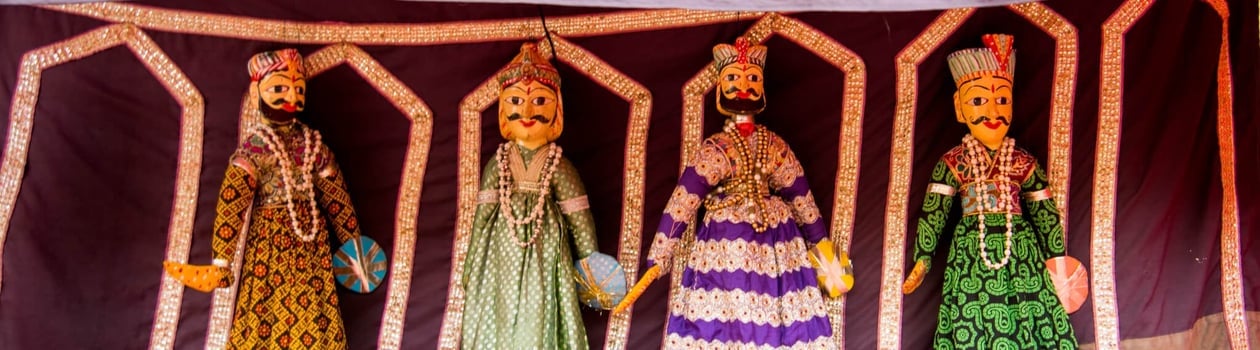
In India, string puppetry, known as kathputli, appears to have been closely tied to oral storytelling traditions surrounding the Sanskrit epics, the Mahabharata and the Ramayana.
Scholars note that itinerant puppeteers in Rajasthan developed elaborate marionette characters based on kings, warriors, and clowns from these epics, and that performances helped transmit mythological narratives and social values to largely illiterate rural audiences well into the twentieth century.
Wayang Kulit Helped Preserve Javanese Philosophy Under Colonial Rule
Indonesia’s wayang kulit, a form of shadow theater that utilizes buffalo-hide puppets, has served as a powerful vehicle for sustaining Javanese philosophy and ethics throughout centuries of outside influence, including Dutch colonial rule.
The dalang, or puppeteer, traditionally adapted episodes from the Mahabharata and Ramayana to comment on politics, morality, and social change, so that a single all-night performance could function as both religious instruction and subtle political critique.
Japanese Bunraku Developed as a Highly Collaborative “Triple Art”
Classical Japanese bunraku is sometimes called a “triple art” because it requires three specialized disciplines working in perfect coordination: the main and assistant puppeteers, the chanter who voices all characters, and the shamisen musician who shapes rhythm and mood.
By the eighteenth century in Osaka, each full-length bunraku play could run for hours and required teams of three puppeteers per figure, with apprentices spending a decade or more before being allowed to operate a puppet’s expressive head and right hand.
Vietnamese Water Puppetry Grew Out of Rice-Paddy Floods
Vietnam’s water puppetry (múa rối nước) originated in the Red River Delta, where farmers used flooded rice paddies as impromptu stages during the monsoon season.
Performers stand waist‑deep behind a screen, manipulating lacquered wooden figures on long poles under the water’s surface so that dragons, fishing boats, and acrobats seem to skim and splash across the pond while stories celebrate village life, harvest rituals, and historical legends.
Pulcinella’s Journey Shaped Europe’s Most Famous Street Puppet Show
The rowdy British seaside show “Punch and Judy” traces its ancestry to Pulcinella, a masked trickster from sixteenth‑century Italian commedia dell’arte.
When traveling Italian performers brought Pulcinella to London in the 1600s, the character evolved into Mr. Punch, whose slapstick battles with authority figures became a staple of itinerant glove‑puppet shows and an enduring symbol of popular, irreverent street theater in Britain.
“Pinocchio” Helped Legitimize Puppetry as Serious Children’s Literature
Carlo Collodi’s “Le avventure di Pinocchio,” first serialized in 1881 and published as a book in 1883, was unusual for its time in treating a puppet as a psychologically complex protagonist rather than a mere comic prop.
The story’s blend of moral allegory, social satire, and fantasy helped move children’s literature away from simple didactic tales and into richer narrative territory, later inspiring generations of puppet‑based theater and film adaptations worldwide.
Jim Henson’s Muppets Revolutionized Television Puppetry Techniques
When Jim Henson began working in American television in the 1950s and 1960s, most puppets were designed for small, proscenium‑style stages.
Henson instead built soft, flexible “Muppets” specifically for the television camera, using foam rubber and fabric that allowed wide mouth movement and subtle eye focus, and he coordinated performance with precise monitoring of what viewers saw on screen.
This camera‑conscious approach, later showcased on “Sesame Street” and “The Muppet Show,” redefined how puppetry could function in modern broadcast media.