Benjamin Harrison Day
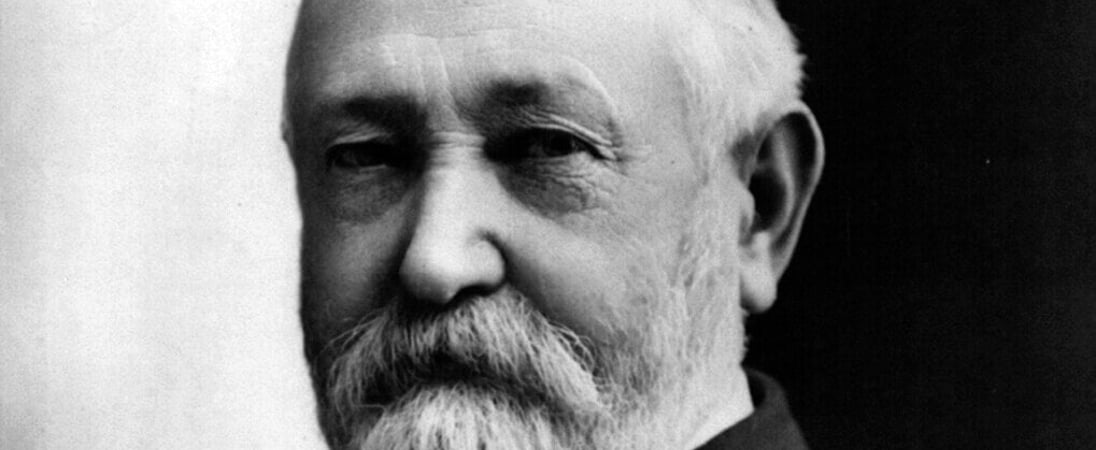
Benjamin Harrison Day offers a spirited reason to revisit a president who often gets overshadowed by louder personalities of his era.
As the only U.S. president elected from Indiana, Benjamin Harrison has long been a point of pride for history fans who enjoy a story with a strong sense of place, a bit of Victorian polish, and plenty of civic-minded grit.
The celebration is closely tied to Harrison’s historic home in Indianapolis, now preserved as a museum where visitors can step into the rhythms of late-19th-century life.
Walking through a well-kept Victorian residence, surrounded by period rooms and family artifacts, makes Harrison feel less like a name in a textbook and more like a working professional with a demanding public life and a surprisingly modern set of national challenges.
Through engaging programs, costumed interpretation, and educational activities, the day helps translate Harrison’s legacy into something tangible.
It highlights him not only as a president, but as a lawyer, Civil War veteran, party leader, and public servant who lived at the intersection of rapid industrial change and an expanding federal government.
The festivities often lean into Harrison’s emphasis on duty, law, and citizenship. That focus gives Benjamin Harrison Day an “active remembrance” flavor.
Instead of simply admiring a figure from the past, participants are nudged to think about what responsible civic life looks like in any era.
More than a tribute to a single individual, this observance can serve as a playful but meaningful prompt: learn something concrete, talk about what good government requires, and consider how everyday decisions add up to the kind of country Harrison believed citizens should help build.
How to Celebrate Benjamin Harrison Day
Celebrating Benjamin Harrison Day can be fun and meaningful, offering a blend of history and hands-on activities. The best celebrations keep one foot in the past and one in the present: they savor the quirks of a Victorian household while exploring the big questions of citizenship, leadership, and national priorities.
Visit the Presidential Home
Spending time in Harrison’s historic home in Indianapolis is one of the most direct ways to understand who he was. A preserved house does what a monument cannot: it restores a sense of scale.
Walking through lived-in rooms helps visitors imagine how a prominent family moved through daily life, what comfort looked like in the late 1800s, and how closely public duty and private life were intertwined for a nationally known figure.
House museums are rarely just about furniture. The most effective ones use everyday objects to tell layered stories. Campaign materials reveal how elections were actually run. Personal belongings soften the distance between history and humanity.
Room layouts show how hosting guests could double as political work, with social life serving public aims. When interpreters or reenactors are present, simple questions often lead to the most revealing details, such as how households handled food, heating, clothing, and communication long before modern systems existed.
A visit becomes richer when approached with a few guiding ideas:
- Harrison as a working professional: the pace of paperwork, meetings, and correspondence.
- Harrison as a family man: how home life adapted around public responsibility.
- Harrison as a man of his era: what the house shows about technology, status, and social norms.
Even people who usually say they “don’t like museums” often enjoy historic homes. Instead of displays behind glass, the experience feels like stepping into a story already underway, with traces of daily life still quietly in place.
Host a History-Themed Picnic
A history-themed picnic is an easy, relaxed way to make the day feel tangible. The key is to keep it simple. A few well-chosen details can suggest the late 19th century without turning the meal into a homework assignment.
Food can take its cues from familiar American comfort dishes that would have been common at the time: straightforward sandwiches, seasonal fruit, sturdy salads, biscuits, pickles, lemonade, or a plain cake.
Absolute accuracy matters less than the overall feel. Choose foods that are recognizable, practical, and a little old-fashioned, the kind that suit a “Victorian picnic” mood.
Atmosphere comes from small, intentional choices:
- Use a fabric tablecloth instead of a disposable paper.
- Bring a vintage-style drink dispenser or a classic thermos.
- Add a simple “menu card” listing who brought what, just as a playful touch.
Lawn games that were popular in the period, like croquet or horseshoes, fit naturally and keep conversation flowing with a bit of friendly rivalry.
If children are involved, easy games such as sack races or scavenger hunts can be tweaked with light historical themes, for example, by looking for items that symbolize government, service, or community life.
Dive into His Speeches
Benjamin Harrison Day is also a good moment to dip into primary sources without feeling overwhelmed. Rather than wrestling with a long document from start to finish, it works better to choose a few short excerpts and focus on what they reveal: the tone of the writing, the worries of the period, and the assumptions that shaped public discussion.
Benjamin Harrison was involved in debates that still feel recognizable today, even though the historical setting was very different. Readers can explore themes such as:
- Veterans’ affairs and the obligations a nation has toward those who served.
- The expanding role of the federal government during a period of rapid economic growth.
- Civil rights arguments and how equality and citizenship were framed in public language.
- Conservation and the early steps toward federal protection of land and natural resources.
To make the reading social and engaging, try a simple “living room forum.” One person reads a short passage aloud. Another puts it into plain language. Then the group tackles two guiding questions: What problem was Harrison addressing, and how might people debate a similar issue today?
This kind of activity keeps the emphasis on interpretation rather than memorization. It helps history feel less like a collection of facts and more like a series of real decisions, made by real people, with echoes that still matter.
Pay Your Respects
Visiting Crown Hill Cemetery to leave flowers at Harrison’s gravesite is a quiet, reflective way to mark the day. Cemeteries often function as open-air history books: names, dates, and inscriptions can spark curiosity about family networks, migration, war service, and civic leadership.
A respectful visit does not require ceremony. A short pause, a simple bouquet, or even a handwritten note of appreciation can be enough. Some visitors choose to reflect on one specific value associated with Harrison, such as civic duty, and then turn that reflection into action later, perhaps by volunteering, registering to vote, or participating in a community meeting.
For those who cannot visit in person, paying respects can still be meaningful from afar. Sharing a thoughtful tribute, reading a short biographical account, or watching an educational program about Harrison can achieve the same spirit: attention, learning, and gratitude rather than mere nostalgia.
Create a Time Capsule
A time capsule works especially well for Benjamin Harrison Day because it naturally links past, present, and future in one shared activity. Harrison lived during a period of rapid national change, and creating a capsule encourages people to think about how today’s choices and concerns might be understood decades from now.
The strongest time capsules are intentional rather than crowded. Instead of adding random objects, it helps to choose a clear theme. Since Benjamin Harrison is often connected with ideas of citizenship and public service, a useful focus is “what a responsible community looks like today.”
Items might include:
- A letter explaining what citizenship looks like in everyday life.
- A short list of community issues that matter most right now.
- A small object that represents modern communication or daily routines.
- A photograph of the neighborhood or place where the capsule is created.
- A copy of a local service or community pledge, signed by everyone involved.
Families can add structure by setting simple rules: each person contributes one item and one written explanation. Those explanations often become the most meaningful part of the capsule, because they preserve values and priorities, not just physical things.
Schools or clubs can turn the activity into a group project, pairing it with a conversation about how public service has evolved since Harrison’s time and which responsibilities have stayed surprisingly constant.
Benjamin Harrison Day Timeline
1852
College Graduation Launched Public Career
Benjamin Harrison graduated from Miami University in Ohio, a classical education that prepared him for law, public service, and future leadership in Indiana and the nation.
1854
Move to Indianapolis and Start of Legal Practice
After passing the Ohio bar, Harrison moved to Indianapolis to begin practicing law, laying the groundwork for his prominence in Indiana’s political and civic life.
1862–1865
Civil War Service and Rise to General
Harrison joined the 70th Indiana Infantry as a second lieutenant, was quickly promoted to colonel, led his regiment in multiple campaigns, and was brevetted as a brigadier general, thereby strengthening his reputation for duty and leadership.
1874–1875
Construction of the Delaware Street Home
Harrison and his wife, Caroline, built their 16-room Italianate house on North Delaware Street in Indianapolis, a family residence that later became a focal point for his political life and historical interpretation.
1881–1887
Service as U.S. Senator from Indiana
Chosen by the Indiana General Assembly, Harrison served in the U.S. Senate, argued cases before the Supreme Court, and gained national stature that positioned him for the presidency.
March 3, 1891
Forest Reserve Act Signed into Law
As president, Harrison signed the Forest Reserve Act, empowering presidents to set aside public lands as forest reserves and launching a new federal role in the conservation of forests and watersheds.
July 2, 1890
Sherman Antitrust Act Enacted Under Harrison
During Harrison’s administration, Congress passes and he signed the Sherman Antitrust Act, the first federal law aimed at curbing monopolies and promoting fair competition in the national economy.
History of Benjamin Harrison Day
Benjamin Harrison Day developed as a way to highlight Indiana’s singular connection to the presidency and to encourage public interest in a leader who represented the state on the national stage.
While Harrison is widely recognized as the 23rd president of the United States, the observance places special emphasis on his local roots and the idea that national leadership does not come from nowhere. It grows out of communities, schools, professions, and everyday civic life.
Harrison’s biography offers plenty of material for commemoration because it includes several roles that resonate with different audiences. Before reaching the White House, he built a reputation as a lawyer and public figure, and he also served in the Civil War.
That military service became an enduring part of his public image and shaped how people remembered him, especially in communities where veterans’ service was honored publicly and frequently.
As president, Harrison led during a complicated period of American history. The country was dealing with rapid economic change, fierce political competition, and debates about the proper reach of federal authority.
It was also an era marked by questions of rights, representation, and the responsibilities of citizenship. A day devoted to Harrison, therefore, naturally expands beyond personality and into the civic themes his career touched, including public service, national unity, and the ongoing work of democratic government.
The Benjamin Harrison Presidential Site in Indianapolis has played a central role in keeping his story accessible. Historic houses do more than preserve architecture. They preserve context.
By interpreting Harrison’s home life alongside his public life, the site can show how a president’s leadership was shaped by relationships, routines, and the practical realities of the time. Educational programs, guided tours, and special events make it easier for students and families to understand the late 19th century without needing specialized background knowledge.
Public ceremonies connected to Harrison also help explain why remembrance matters. Wreath-laying traditions, including commemorative events at his burial site in Crown Hill Cemetery, reflect a common American practice of honoring leaders through formal gestures of respect.
These ceremonies tend to be structured, symbolic, and deliberately simple, signaling that public service is worthy of public acknowledgment. They also underscore the way Harrison is remembered in connection with military service and civic responsibility.
Over time, Benjamin Harrison Day has evolved into a blend of historical interpretation and civic reflection. Rather than focusing only on a list of accomplishments, the observance encourages people to think about how leadership works: how laws are shaped, how institutions respond to change, and how citizens participate in public life.
That approach keeps the day from becoming a static memorial. It becomes an invitation to learn, discuss, and practice the kind of engaged citizenship that Harrison often emphasized.
By centering on a tangible place, a preserved home, and the traditions of public remembrance, Benjamin Harrison Day remains approachable. It can be celebrated through a museum visit, a book discussion, a family project, or a moment of respect.
The common thread is curiosity paired with civic spirit, a combination that feels fitting for a president who built his reputation on duty, discipline, and public-minded work.
Surprising Facts About Benjamin Harrison
Benjamin Harrison’s life and presidency are full of lesser-known details that reveal his character, priorities, and impact on the United States.
From his unusual choices during the Civil War to major decisions that reshaped the country’s political and economic landscape, these facts highlight moments that often get overlooked but help explain why his legacy still matters today.
-
Civil War Veteran Who Turned Down a Field Command
Benjamin Harrison entered the Civil War as a recruiter for the 70th Indiana Volunteer Infantry and was commissioned a colonel, but he declined an offer to command a regiment until he had personally helped raise it, believing it would be wrong to lead men who did not know him.
His unit went on to fight in major campaigns like Atlanta, and Harrison was brevetted a brigadier general for his conduct at Resaca and Peachtree Creek.
-
Record‑Setting Wave of New States
During Benjamin Harrison’s single term, six western territories became states, the largest number admitted under any one president: North Dakota and South Dakota (both November 2, 1889), Montana (November 8, 1889), Washington (November 11, 1889), Idaho (July 3, 1890), and Wyoming (July 10, 1890).
This burst of statehood helped complete the political integration of the trans‑Mississippi West into the Union.
-
Pensions That Helped Create the “Billion‑Dollar Congress”
Harrison championed Union veterans and signed the Dependent and Disability Pension Act of 1890, which granted pensions to many Civil War veterans and their dependents regardless of whether their disabilities were wartime‑related.
Combined with other spending, the law helped push federal expenditures over $1 billion for the first time in peacetime, provoking critics to label Congress the “Billion‑Dollar Congress.”
-
First Federal Antitrust Law Against Monopolies
In 1890, Harrison signed the Sherman Antitrust Act, the first federal statute aimed at curbing monopolies and combinations “in restraint of trade.”
Although early enforcement was uneven, the law became the foundation for later landmark cases against powerful corporations and still underpins U.S. competition policy more than a century later.
-
An Early, Failed Push for Federal School Funding
As a senator, Harrison supported the Blair Education Bill, a sweeping proposal in the 1880s to send federal money to public schools, with funds distributed to states according to illiteracy rates and a large share destined for the South.
The bill, which would have required fair funding for Black schools to qualify, repeatedly passed the Senate but died in the House, and broad federal aid to primary and secondary education did not become law until 1965.
-
A Conservation President Before It Was Popular
Harrison’s administration quietly became a turning point in federal land conservation, setting aside roughly 22 million acres as forest reserves and signing legislation that created or expanded key national parks.
On October 1, 1890, he approved the act establishing Yosemite National Park and, the same day, enlarged Sequoia National Park and created what is now Kings Canyon’s predecessor, General Grant National Park.
-
An Italianate Victorian Home Preserved as a Landmark
Benjamin Harrison’s Indianapolis residence, begun in 1874 and completed in 1875, is a 16‑room Italianate Victorian brick house that reflected the aspirations of a rising Midwestern lawyer rather than a future president.
Now a National Historic Landmark, the home has undergone extensive restorations, including a major project supported by a Save America’s Treasures grant, to preserve its 19th‑century character and original furnishings.
Benjamin Harrison Day FAQs
What were Benjamin Harrison’s most important domestic policy priorities as president?
Historians note that Benjamin Harrison focused heavily on economic regulation, veterans’ benefits, and civil rights enforcement.
His administration signed the Sherman Antitrust Act of 1890, the first major federal law aimed at curbing business monopolies, and the McKinley Tariff, which sharply raised import duties to protect American industry.
Harrison also backed the Dependent Pension Act, which greatly expanded federal pensions for Union Civil War veterans and their families.
He supported legislation to better protect African American voting rights in the South, although these efforts failed in Congress and were not effectively enforced at the time. [1]
How did Benjamin Harrison approach civil rights and voting rights for African Americans?
Benjamin Harrison publicly supported stronger federal protection for African American voting rights, building on the Reconstruction Amendments.
He endorsed the Federal Elections Bill, sometimes called the Lodge Bill, which would have allowed federal supervision of congressional elections in the South to combat voter intimidation and fraud.
The proposal passed the House but died in the Senate after intense opposition, and Harrison’s administration ultimately did not secure lasting civil rights protections. Historians often describe his stance as more sympathetic than many contemporaries but limited in practical results. [2]
Why is the Sherman Antitrust Act associated with Benjamin Harrison’s legacy?
The Sherman Antitrust Act, signed by Benjamin Harrison in 1890, is often seen as one of the earliest federal attempts to address the power of large corporations and trusts.
Although early enforcement was inconsistent and sometimes even turned against labor unions, the law later became a powerful tool for breaking up monopolies in the early 20th century.
Because it provided the legal framework for future antitrust cases, scholars frequently list it as a key part of Harrison’s long‑term impact on American economic policy. [3]
How did Harrison’s administration change the role of the federal government in the economy?
Under Benjamin Harrison, federal spending and economic involvement expanded noticeably.
The McKinley Tariff and related legislation raised protective tariffs to historic levels, while generous veterans’ pensions and other programs pushed the peacetime federal budget over one billion dollars for the first time.
Supporters saw these moves as protecting American workers and honoring Civil War service, while critics labeled the 51st Congress the “Billion‑Dollar Congress” and argued that high tariffs contributed to economic strain leading up to the 1893 depression.
This period is often cited as a step toward a more activist federal state.
What role did Benjamin Harrison play in the admission of new U.S. states?
Benjamin Harrison presided over a major wave of statehood that reshaped the American West. During his single term, six territories became states: North Dakota, South Dakota, Montana, Washington, Idaho, and Wyoming.
Historians point out that these admissions reflected both population growth and partisan politics, since most of the new states were expected to favor Harrison’s Republican Party.
The rapid expansion helped complete the continental map of the United States and increased the political influence of the trans‑Mississippi West. [4]
How did Benjamin Harrison influence American foreign policy and the U.S. Navy?
Benjamin Harrison’s administration is often described as an early step away from strict isolation and toward a more assertive American presence abroad.
Guided by his Secretary of State, James G. Blaine, Harrison supported the First International Conference of American States (the Pan‑American Conference) to encourage closer political and economic ties in the Western Hemisphere.
He also backed a significant modernization and expansion of the U.S. Navy, shifting from older wooden vessels to more modern steel warships. These choices laid the groundwork for the global reach the United States would develop in the decades after his presidency.
In what ways did Benjamin Harrison’s Indiana background shape his public service?
Benjamin Harrison built his career in Indiana as a lawyer, Civil War officer, and politician, and that regional experience shaped his national outlook.
He practiced law in Indianapolis, served as the city’s attorney, and gained statewide prominence as Indiana’s Supreme Court reporter before becoming a U.S. senator. His Civil War service as a colonel and brevet brigadier general in an Indiana regiment informed his later commitment to veterans’ pensions.
Scholars at the Miller Center and state historians argue that his Midwestern legal background and veterans’ advocacy helped define his emphasis on the rule of law, civic duty, and support for former soldiers once he reached the White House.
Also on ...
View all holidays

World Obesity Day
Maintaining a healthy weight can be a challenge, but a balanced diet and regular exercise can improve physical health and mental wellbeing.