
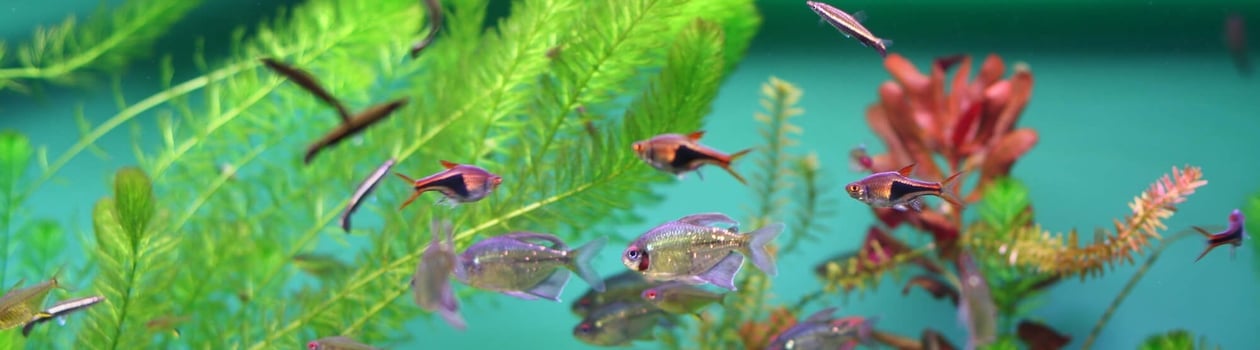
They’re a source of simple, peaceful joy. The bubble of the aerator, the soft hum of the filter, the gentle dance of the fish around the habitat that’s been built for them, and the slow, determined glide of an algae snail across the stones at the bottom of the tank. Inside that clear rectangle is a tiny world with its own routines and rhythms, whether it’s decorated with sunken castles, smooth river rocks, or a lush underwater jungle of plants.
Clean Your Aquarium Day is a nudge to remember a truth every aquarist learns sooner or later: that tiny world is alive, and it runs on balance. A clean-looking tank is not always a healthy tank, and a spotless tank can be unhealthy if it’s cleaned the wrong way.
The goal is not to sterilize an aquarium into a sparkling glass box. It’s to support a stable ecosystem where fish can breathe easily, beneficial bacteria can do their important invisible work, and waste does not pile up into a slow-motion disaster.
How to Celebrate Clean Your Aquarium Day
Celebrating Clean Your Aquarium Day can be as simple as doing the maintenance that tends to get postponed: a partial water change, a little algae cleanup, and a check-in with the equipment that keeps everything running. The most fish-friendly approach is usually steady, gentle upkeep rather than a dramatic teardown.
A good starting point is gathering a few dedicated supplies that are used only for aquarium care: a bucket that never sees soap, an algae pad or scraper suited to glass or acrylic, a siphon or gravel vacuum, and a clean cloth for wiping the outside of the tank. If tap water is used for refilling, a water conditioner is also essential, because chlorine or chloramine that’s safe for people can be dangerous for fish and invertebrates.
Before any hands go in the tank, it helps to wash and rinse hands thoroughly and avoid lotions or soaps that can leave residue. Then, for safety, unplug or turn off electrical equipment such as heaters, filters, and lights before water is removed. (An air stone can be helpful for oxygenation if the filter will be off for a bit, but the main idea is to prevent running equipment dry or exposing cords and plugs to splashes.)
Focus on the “big three”: water, glass, and gunk
- Do a partial water change (not a full drain).
Many established aquariums do well with routine partial water changes, commonly around 10% weekly or about 25% every other week. This refreshes minerals, dilutes nitrates, and removes dissolved waste that can’t be scooped out with a net. Large, sudden water changes can stress fish by quickly shifting temperature and water chemistry, so a moderate change is usually the sweet spot for regular care.
When refilling, matching temperature matters. A sudden chill or heat wave, even if it lasts only a minute, can be a shock. A simple thermometer check in the refill bucket helps keep things stable. - Clean the inside glass the smart way.
Algae on the glass is a normal part of aquarium life, especially in tanks with bright lights or nutrient-rich water. An algae pad, magnetic cleaner, or scraper can remove it without chemicals. Household glass cleaners are a no-go, even if the tank is empty, because residue can linger in seams and corners.
A handy trick is to wipe the glass before siphoning, so loosened algae and debris can be removed during the water change rather than floating around like confetti. - Vacuum the substrate instead of rinsing it to death.
That layer of gravel, sand, or small stones is where food crumbs and fish waste like to hide. A gravel vacuum uses siphon action to pull debris out while the substrate tumbles and settles back down. It looks dramatic the first time it’s done, but it’s one of the most effective ways to keep water quality from slowly sliding downhill.
Rather than trying to vacuum every square inch in one go, it can be gentler to work in sections. That keeps the tank stable and avoids disturbing too much at once, especially in planted tanks where roots crisscross the bottom like tiny spaghetti.
Decorations, rocks, and plants: clean, don’t perfume
The original idea of moving fish to a temporary container and doing a full wipe-down can work for major overhauls, but it’s often unnecessary for routine cleaning and can create extra stress. For normal maintenance, fish can typically remain in the tank while the aquarist works around them.
If décor items need attention, they can be removed and scrubbed with a dedicated brush or toothbrush. A thorough rinse is usually enough. Soap and detergents are risky because even small residues can irritate gills or harm sensitive tank inhabitants.
The same goes for rocks and ornaments. If a decoration is so encrusted that it seems to demand chemicals to look “new,” it may be worth reconsidering whether it needs to be that pristine. A little patina is not automatically a problem. The aquarium’s residents do not award style points for shininess.
Live plants deserve special care. A gentle swish in old tank water can remove debris without damaging delicate leaves. Dead or melting leaves can be trimmed, which helps prevent extra decay from adding nutrients that algae loves.
Filter care: where “clean” can go wrong
The filter is both a mechanical cleaner and a biological powerhouse. While it’s tempting to replace filter media to make things fresh, beneficial bacteria live in that media and help process waste through the nitrogen cycle. Replacing everything at once can remove too much of that bacterial colony and lead to spikes in ammonia or nitrite.
A safer routine is to swish or gently rinse sponges, pads, or other media in a bucket of removed tank water. This clears sludge while preserving much of the helpful bacteria. If a cartridge or pad truly needs replacing, it can be helpful to stagger changes or keep some established media in place so the tank doesn’t lose its biological footing.
Turn the day into a better routine
Clean Your Aquarium Day is also a great excuse to look beyond the glass and ask what’s driving the mess in the first place.
- Is there overfeeding? Uneaten food quickly becomes waste. Feeding smaller amounts that are consumed promptly can reduce buildup dramatically.
- Is the tank overstocked? More fish means more waste and higher oxygen demand. A crowded tank may look lively, but it can become difficult to keep stable.
- Is the light schedule too generous? Long lighting periods can encourage algae. A consistent, moderate light cycle often helps.
- Is water testing being ignored? Even basic tests for ammonia, nitrite, and nitrate can provide early warnings. Clear water can still contain invisible problems.
If nothing else, a simple, fish-safe clean on Clean Your Aquarium Day is a step toward a tank that stays calmer and healthier all year long.
Clean Your Aquarium Day Timeline
Earliest written reference to ornamental goldfish
A Chinese manual from the Ming dynasty, Shan Hai Cun, describes keeping brightly colored carp and goldfish in basins for enjoyment rather than food, an early step toward decorative home aquaria.
Jeanne Villepreux-Power builds experimental glass aquaria
French marine biologist Jeanne Villepreux-Power designs some of the first purpose-built glass containers for observing and studying marine animals, laying the groundwork for controlled aquatic environments in captivity.
Robert Warington formulates the “aquarium principle”
British chemist Robert Warington publishes his work showing that aquatic plants and animals can coexist in a balanced glass vessel if stocking levels are controlled, providing the scientific basis for stable aquariums.
World’s first public aquarium opens at London Zoo
The Zoological Society of London opens the Fish House in Regent’s Park, the first public aquarium, which sparks an “aquarium craze” and inspires people to keep smaller display tanks at home.
The First American Aquarist Society was founded in New York
Aquarium enthusiasts in New York City established the first aquarist society in the United States, soon followed by other clubs and journals that spread knowledge on fishkeeping and tank care.
Gunther Eheim introduces an early external aquarium filter
German engineer Gunther Eheim develops one of the first practical external suction filters for home aquariums, improving water circulation and cleanliness and making fishkeeping more reliable.
Undergravel filters popularize routine tank maintenance
In the United States, the undergravel filter becomes the dominant home-aquarium system, encouraging hobbyists to combine mechanical and biological filtration with regular gravel cleaning and water changes.
History of Clean Your Aquarium Day
People set up aquariums for all kinds of reasons. Some want an easy-to-watch companion in a quiet room. Some enjoy aquascaping, the careful arrangement of rocks, wood, and plants into a miniature landscape. Some are fascinated by species-specific behavior, like a betta’s curiosity, a corydoras catfish’s busy scavenging, or the synchronized movement of a small school of tetras.
In many homes, though, the aquarium begins with a simple assumption: fish are low maintenance. Feed them. Top off water. Replace the filter cartridge now and then. Maybe, eventually, do a big clean.
Clean Your Aquarium Day exists as a friendly reality check to that assumption. Even a small tank is a functioning ecosystem that produces waste every day.
Fish release ammonia through their gills, and through waste, leftover food breaks down, plant leaves decay, and algae grows wherever light and nutrients meet. All of that is normal. What matters is whether the aquarium’s filtration and beneficial bacteria can process that waste fast enough to keep the water safe.
That “invisible work” is often called the nitrogen cycle. In a stable, established tank, beneficial bacteria convert toxic ammonia into nitrite and then convert nitrite into nitrate. Nitrate is less toxic than the first two, but it can still become harmful if it accumulates. Partial water changes are one of the simplest ways to keep nitrate from steadily climbing.
When cleaning is neglected, the tank can slowly drift out of balance. Waste buildup can contribute to low oxygen levels, stress, and disease. Fish might become sluggish, breathe rapidly, clamp their fins, or hover near the surface. Poor water quality can also make common illnesses harder to fight off. Ich, for example, often takes advantage of stressed fish, and while cleaning alone does not cure disease, stable conditions support recovery and resilience.
In that light, Clean Your Aquarium Day is less about a once-a-year scrub and more about the mindset behind it: responsible ownership. It’s a prompt to notice the aquarium as a living system, not just a decorative object.
The day’s message can apply to every kind of setup, from a basic freshwater starter tank to a complex saltwater reef aquarium where corals, shrimp, and delicate invertebrates depend on tight water parameters and steady maintenance.
It’s also a reminder that “clean” in aquarium terms is different from “sanitized.” A tank that has been stripped, scrubbed, and refilled from scratch may look immaculate, but it can lose the biological stability that keeps fish safe. A truly healthy aquarium often looks natural, with a bit of algae in the corners and a filter that’s doing its job quietly in the background.
There are also built-in helpers in many aquariums. Snails and algae-eating fish can reduce certain types of algae. In saltwater systems, a so-called clean-up crew of shrimp, snails, and other scavengers can pick at leftover food and detritus. Still, even the best clean-up crew can’t replace basic maintenance. They help tidy the neighborhood, but they don’t take out the trash or change the water.
In short, Clean Your Aquarium Day celebrates the caretakers behind the glass, the ones willing to roll up their sleeves, grab a bucket, and keep that miniature world thriving.
Clean Your Aquarium Day Facts
Balanced Aquariums Began as a 19th‑Century Scientific Experiment
The idea that fish and aquatic plants could live together in a self‑sustaining glass tank grew out of experiments in the 1840s and 1850s.
Chemist Robert Warington showed that when plants and animals were kept together, plants supplied enough oxygen and absorbed waste so that the water did not need constant replacement, laying the scientific foundation for modern home aquariums.
Glass Tanks Evolved From Slate‑Bottomed, Wood‑Framed “Living Cabinets”
Early Victorian aquariums looked very different from the seamless glass rectangles common today.
Many had a single glass viewing pane at the front, with wood or metal sides, a slate bottom, and heat supplied from beneath, reflecting both technological limits and the desire to display aquatic life like a living cabinet of curiosities.
Silicone Sealant Transformed Home Aquarium Design in the 1960s
Until the mid‑20th century, most aquariums relied on heavy metal frames and tar or putty to keep panes watertight, which limited their size and shape.
The commercial use of silicone sealant in the 1960s allowed strong, frameless, all‑glass tanks that were lighter, clearer, and easier to maintain, helping home fishkeeping become far more accessible.
Watching Fish Tanks Can Lower Heart Rate and Blood Pressure
Research at the University of Plymouth found that people who watched a large public aquarium showed measurable reductions in heart rate and blood pressure, along with self‑reported improvements in mood.
The benefits increased as more fish were added, suggesting that a lively, healthy tank can be especially calming for viewers.
Beneficial Bacteria Make Fish Waste Less Toxic
In a healthy aquarium, colonies of nitrifying bacteria convert toxic ammonia from fish waste first into nitrite and then into the less harmful nitrate.
Because these microbes live on filter media, gravel, and decorations, expert guidelines stress rinsing equipment in tank water rather than tap water, which can kill bacteria and destabilize water quality.
Over‑Cleaning a Tank Can Be as Dangerous as Neglect
Veterinary guidance notes that replacing all the water or scrubbing every surface at once can strip away beneficial bacteria and shock fish with sudden chemical changes.
Most modern care recommendations favor partial water changes and gentle cleaning on a regular schedule, which removes debris without collapsing the biological balance of the tank.
Public Aquariums Helped Turn Fishkeeping Into a Popular Hobby
When the “Aquatic Vivarium” opened at London’s Regent’s Park Zoological Gardens in 1853, it became the world’s first public aquarium and a sensation with Victorian crowds.
Exhibits like this sparked widespread fascination with underwater life and inspired middle‑class households to set up smaller versions at home, starting the modern aquarium hobby.
Clean Your Aquarium Day FAQs


You may also like
National Catch and Release Day
Imagine a bright, sunny morning by a crystal-clear river. Anglers gather, rods in hand, ready to cast their lines. It’s National Catch and Release Day, and the air buzzes with excitement. Families and friends, from beginners to seasoned pros, share tips and tricks for a successful catch. Everyone is eager to...
- United States
Fish Tank Floorshow Night
Fish Tank Floorshow Night is an evening dedicated to making your aquarium the star of the show. Instead of quietly admiring fish from afar, people gather to celebrate these aquatic creatures through creative displays, music, and even dancing. The idea is to highlight the vibrant, colorful world within the tank...
- Canada
- International
- United Kingdom
- and 1 more

Aviation Maintenance Technician Day
Honor the unsung heroes who keep planes safe. Aviation Maintenance Technician Day celebrates skilled technicians, aviation safety, and the legacy of Charles Edward Taylor.
- United States

National Zoo and Aquarium Month
Facilitating immersive experiences to educate and inspire conservation efforts for diverse ecosystems and endangered species.
- United States
National days and holidays on June 18

World Tapas Day
Enjoy an array of small dishes or appetizers in place of a big meal in order to thank the country of Spain for introducing the world to tapas.
- Spain

National Internet Cat Day
Celebrate National Internet Cat Day by sharing memes, videos, and photos that honor internet-famous felines and highlight their joy, comfort, and stress relief.
- United States

National Black America’s Day of Repentance
Discover the meaning of National Black America’s Day of Repentance, a sacred pause for prayer, fasting, healing, and spiritual renewal through reflection.
- United States

National Splurge Day
Celebrate National Splurge Day by treating yourself or someone you love to guilt-free indulgence, joyful upgrades, and well-deserved luxury and relaxation.
- United States
Seize Every Day
Join free for personalised recommendations, email reminders and exclusive guides. Never miss a day.