
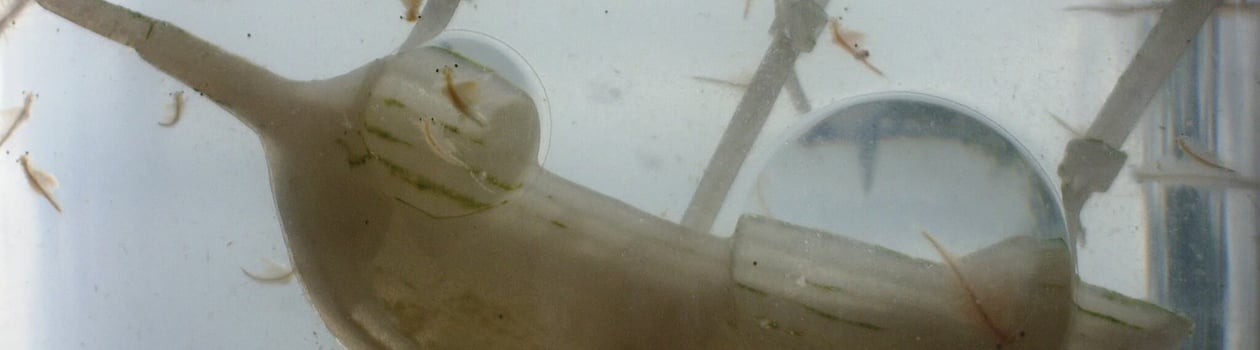
National Sea Monkey Day is a day dedicated to celebrating this much-loved childhood ‘pet’.
Most people have very happy memories of mail ordering their first Sea Monkeys and awaiting the delivery of the shipment of these magical seeming sea creatures!
How to Celebrate National Sea Monkey Day
Acquire Some Sea Monkeys
If you love the idea of celebrating National Sea Monkey Day by buying yourself a set of Sea Monkeys to hatch and care for, you might be wondering where you can buy them.
The good news is that today you can order Sea Monkeys online, as well as buying them from toy stores. Sea Monkeys are available to buy online and have shipped directly to your home.
Teach the Kids
National Sea Monkey Day can also be used as an opportunity to educate children on the importance of caring for ‘pets’ properly and teach them about the responsibility that comes with ‘pet’ ownership.
Sea Monkeys make great first pets as they’re easy to care for and look after but still require lots of attention. Why not celebrate National Sea Monkey Day by educating your children more about ‘pet’ care?
These little guys have orbited the earth and even gone to the moon, telling us a lot about how life survives in space. So have your own amazing Sea-Monkey kit by buying some today!
More About Sea Monkeys
Popular in the ’60s and ’70s, Sea Monkeys are a ‘pet’ that almost every child had at one point or another. They kept going right through the ’80s and ’90s too.
Usually, the arrival of Sea Monkeys came with a special mini aquarium that could be used to hatch your Sea Monkeys, and then once they had hatched, the aquarium-like tank could be used for them to live and grow in.
What actually are Sea Monkeys? Sea Monkeys are a special type of Artemia—also known as brine shrimp—that are super small. How did they get their name? Sea Monkeys got their name from the fact that they have a monkey-like tail shape, making them look like monkeys of the sea instead of traditional shrimp.
Sea Monkeys are sold as eggs that can then be added to water in their aquarium-like tank, along with water and a variety of specialist chemicals to encourage them to hatch.
If you were a comic book fan as a kid or a science buff, you may remember these ads existing in your favorite magazine or catalog. They were heavily marketed in the same pages as X-Ray Goggles, Magic Tricks, and chemistry sets.
They advertised the most unlikely of pets: monkeys that lived in saltwater and could easily be yours. They’d be sent to you freeze-dried and then burst into life when added to water. What you may not know is that Sea-Monkeys exploded into an amazing fortune and were loved by people everywhere.
Why Are Sea Monkeys So Famous?
These small hybrids have become famous over the years and have appeared on a variety of well-known television shows, including South Park, The Simpsons, and Desperate Housewives—they’ve become a key part of childhood culture for children across the globe.
Did you know that Sea Monkeys have even been into space? That’s right, in 1998 Sea Monkeys went into space with John Glenn onboard the Space Shuttle Discovery.
The Sea Monkeys spent nine days in space and then returned to earth, where they then hatched eight weeks later. Scientists from across the globe were amazed to see that the Sea Monkeys were unaffected by their space travels and hatched healthily.
All sorts of animals have traveled into space, but Sea Monkeys are most definitely the most unique ‘pet’ to have ever made it into outer space!
Did you know that Sea Monkeys also had their own television show? The TV show was called ‘The Amazing Live Sea Monkeys’; it focused on the lives of three microscopic Sea Monkeys called Dave, Bull and Aquarius, who were enlarged to human size by a crazy professor.
The plot of the show revolved around the comical struggles faced by the Sea Monkeys and the professor in the human world. The TV show was a great success with fans of Sea Monkeys from across the globe and gave children the opportunity to learn more about these magical creatures.
National Sea Monkey Day Timeline
First Scientific Description of Brine Shrimp
German naturalist Johann August Ephraim Goeze publishes one of the earliest scientific descriptions of brine shrimp, laying the groundwork for later classification of the genus Artemia that would eventually underpin commercial “Sea-Monkey” pets.
Discovery of Artemia Cysts’ Extreme Dormancy
Biologists studying Great Salt Lake and other hypersaline waters document that dried Artemia eggs (cysts) can survive long periods without water and then hatch when rehydrated, an early characterization of the anhydrobiosis that makes packaged “instant life” kits possible.
Ant Farm Craze Helps Inspire Novelty Science Pets
Entrepreneur Milton Levine launches the Uncle Milton Ant Farm, turning live insects in transparent habitats into a mail‑order phenomenon and proving the market for small, low‑maintenance “science pets” that would soon include aquatic brine‑shrimp kits.
Harold von Braunhut Begins Selling “Instant Life” Brine Shrimp Kits
New York promoter Harold von Braunhut starts marketing dried brine shrimp cysts as “Instant Life,” packaging the animals with mineral packets so children can hatch them at home, a direct precursor to the branded Sea‑Monkey line.
Sea‑Monkeys Brand and Artemia NYOS Developed
Working with marine biologists at the New York Ocean Science Laboratory, von Braunhut refines a hardy strain of brine shrimp later called Artemia NYOS and rebrands his kits as “Sea‑Monkeys,” tying their monkey‑like tails to memorable comic‑book style characters.
Comic Book Advertising Turns Sea‑Monkeys into a Fad
Sea‑Monkeys appear in millions of comic book ads each year, illustrated as friendly undersea families and sold by mail order, cementing the creatures as a staple of mid‑century American childhood and of the wider mail‑order novelty industry.
Brine Shrimp Cysts Fly on Space Shuttle Discovery
NASA sends brine shrimp cysts, marketed as Sea‑Monkeys, on the STS‑95 mission with John Glenn to test how well they withstand cosmic radiation; after nine days in orbit the cysts later hatch normally on Earth, demonstrating the resilience of Artemia in extreme environments.
History of National Sea Monkey Day
The history of sea monkeys starts, oddly enough, with ant farms. Milton Levine had popularized the idea of Ant-farm kits in 1956 and, presumably inspired by the success of his idea, Harold von Braunhut invented the aquatic equivalent with brine shrimp.
It was really ingenious looking back on it, and ultimately he had to work with a marine biologist to really bring it all together. With just a small packet of minerals and an aquarium, you’d suddenly have a place rich with everything your brine shrimp needed to survive.
So why sea monkeys? Because who was going to buy brine shrimp? It was all a good bit of marketing, though the name didn’t come about for nearly 5 years. They were originally called “instant life,” referencing their “just add water” nature.
But when the resemblance of their tails to monkeys’ tails was noted by fans, he changed it to ‘Sea-Monkeys,’ and so it’s been ever since!
The marketing was amazing too! 3.2 million pages of comic book advertising a year, and the money just flowed in the door. So what are Sea Monkeys exactly? They’re clever mad scientists, really.
Sea Monkeys don’t (or didn’t) exist in nature before they were created in a lab by hybridization. They’re known as Artemia NYOS (New York Ocean Science) and go through anhydrobiosis, or hibernation, when they are dried out. Then, with the right mixture of water and nutrients, they can spring right back into life!
Facts About National Sea Monkey Day
Brine Shrimp Eggs Can Survive for Years With No Water
Brine shrimp, the tiny crustaceans behind Sea-Monkeys, produce dormant eggs called “cysts” that can survive completely dry for many years and then resume development once rehydrated.
In this state, known as cryptobiosis, their metabolism becomes almost undetectable, allowing the embryos to withstand extreme desiccation, lack of oxygen, and temperature swings that would be lethal to most animals.
Champions of Extreme Salinity
Wild Artemia brine shrimp naturally live in hypersaline lakes and salt ponds where the salt concentration can exceed that of seawater several times over.
They cope with these harsh conditions through specialized gills and salt glands that constantly excrete excess ions, which allows them to thrive in environments too salty for most fish and many other invertebrates.
Key Players in Global Aquaculture
Brine shrimp are a cornerstone of the aquaculture industry, especially for raising fish and shrimp larvae.
Their cysts can be stored dry and hatched on demand, providing a reliable live food source that is rich in protein and lipids, which has helped make large-scale cultivation of species like shrimp, seabass, and ornamental fish commercially viable around the world.
Natural Food for Flamingos and Other Birds
In salt lakes on every continent except Antarctica, dense populations of brine shrimp form a vital food source for waterbirds such as flamingos, avocets, and phalaropes.
These birds use specialized beaks or filter-feeding strategies to strain thousands of shrimp from the water, and entire bird migrations and breeding cycles in some regions are timed around seasonal booms in Artemia populations.
Model Organisms for Toxicity Testing
Because they are small, easy to hatch, and sensitive to contaminants, Artemia nauplii (newly hatched larvae) are widely used as a simple bioassay for testing the toxicity of chemicals, plant extracts, and pollutants.
The “brine shrimp lethality test” is a standard screening tool in many laboratories for quickly estimating potential environmental or pharmacological hazards before moving on to more complex studies.
Spaceflight Studies on Survival in Orbit
Brine shrimp cysts have been sent on multiple space missions to study how life copes with cosmic radiation and microgravity.
Experiments have shown that many of the cysts can still hatch successfully after orbiting Earth, providing evidence that dormant life stages can endure conditions in space better than active organisms and offering clues for astrobiology and long-term space travel research.
A Ready-Made Genetic Time Capsule
Because Artemia cysts can be stored for decades and then hatched, scientists can compare shrimp from different storage years under identical lab conditions.
This “resurrection ecology” approach lets researchers track how populations have evolved in response to environmental changes such as increasing salinity or pollution, essentially turning jars of old eggs into living records of past ecosystems.
National Sea Monkey Day FAQs
How did Sea-Monkeys become a cultural phenomenon in the 1960s?
Sea-Monkeys rose to fame thanks to comic book ads created by Harold von Braunhut.
The ads used bright imagery and bold promises, capturing children’s imaginations. Von Braunhut named them “Sea-Monkeys” for their tails, which resembled monkey tails.
Their popularity skyrocketed, and they became a nostalgic icon for many generations. The whimsical marketing, including the “Instant Life” tagline, played a huge role in their cultural impact.
Why are Sea-Monkeys called “instant pets”?
Sea-Monkeys are brine shrimp, specifically Artemia nyos, in a state of cryptobiosis.
When added to water, they “revive” almost instantly. This scientific process amazed people and made them perfect for marketing as low-maintenance pets.
What are some myths about Sea-Monkeys?
Many believe Sea-Monkeys are genetically engineered. In reality, they are selectively bred brine shrimp.
Another myth suggests they grow into large creatures or mimic human behavior due to misleading illustrations in early ads.
How do different cultures celebrate Sea-Monkey Day?
In Japan, hobbyists host “Sea-Monkey viewing parties,” complete with themed snacks like shrimp crackers. Meanwhile, enthusiasts in the U.S. share DIY aquarium upgrades to showcase their pets on social media.
Are Sea-Monkeys used in scientific research?
Yes, brine shrimp help study environmental effects on aquatic life. Scientists also use them to test water toxicity and study cryptobiosis.
How do Sea-Monkeys inspire creativity?
Sea-Monkeys have appeared in pop culture, including TV shows like The Simpsons and South Park. Artists often incorporate their quirky image into retro art and advertisements.
What are some quirky Sea-Monkey accessories?
Vintage Sea-Monkey kits included items like space-age aquariums and magnifying lenses. Modern enthusiasts add underwater castles or LED lights for a whimsical twist.
How did Sea-Monkeys travel to space?
In 1998, NASA sent Sea-Monkeys aboard the Space Shuttle Discovery. Scientists studied their resilience to cosmic radiation. The results proved their durability in extreme environments.
How do Sea-Monkeys contribute to education?
Teachers use Sea-Monkeys to explain life cycles and cryptobiosis. Their quick hatching process captivates students and simplifies biology concepts.
Are there competitive Sea-Monkey communities?
Yes! Some enthusiasts host competitions for the longest-living or most active colonies. Others showcase elaborate tank setups online for fun and recognition.



You may also like
National Sock Monkey Day
These soft, colorful, cuddly companions are a fun way to add some personality to any room — perfect for both kids and adults alike!
Monkey Day
Spend a day at the zoo with these cheeky creatures, throw a monkey-themed fancy dress party or fundraise to protect these precious primates.

National Comic Book Day
Read some comic books or enjoy any of the many television adaptations of comic book characters, from Marvel to DC and more, on National Comic Book Day.
- Canada
- Japan
- United Kingdom
- and 1 more
National Yucatán Shrimp Day
Celebrate National Yucatán Shrimp Day by savoring spicy, citrusy peel-and-eat shrimp, exploring Yucatán-inspired flavors, and honoring sustainable seafood.
National days and holidays on May 16

Cannes Film Festival
The Cannes Film Festival is one of the most glamorous and important events in the film industry. Held annually in the beautiful city of Cannes on the French Riviera, this festival draws the biggest names in cinema, from directors to actors. The red carpet is a dazzling display of style...

National Barbecue Day
Celebrate National Barbecue Day with smoky flavors, backyard grills, and global BBQ traditions that bring friends, family, and communities together.
- Australia
- Canada
- South Africa
- and 2 more

Drawing Day
Celebrate Drawing Day by unlocking creativity, exploring famous sketches, drawing with kids, and sharing art as therapy, community, and self-expression.

National Stationery Week
Sharpen your pencils and break out your fine pens, and take this excuse to use some fancy stationery. Write a loved one, find a pen pal, or even make your to-do list.
Seize Every Day
Join free for personalised recommendations, email reminders and exclusive guides. Never miss a day.