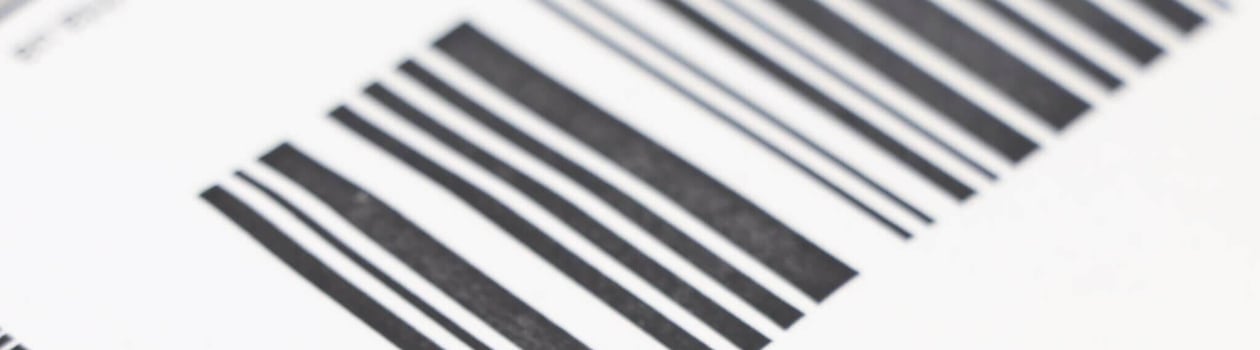
National Barcode Day celebrates the simple black-and-white lines that transformed how people buy, sell, sort, store, and ship just about everything. Before barcodes became routine, checkout lanes relied on price tags and quick fingers, and inventory counts were often a mix of clipboards, guesswork, and crossed-out corrections. A tiny printed symbol changed that by letting a scanner identify an item instantly and consistently, connecting the physical world to a digital record.
That impact reaches far beyond the grocery aisle. Barcodes help hospitals match patients to medications, warehouses find the right carton on a towering shelf, and libraries keep track of borrowed books. National Barcode Day is a nod to a quietly brilliant idea: turning a pattern of lines into a universal shortcut for accuracy.
Beyond retail, barcodes play a crucial role in various sectors. In healthcare, they ensure patients receive the correct medications.
Logistics companies use them to track packages, ensuring timely deliveries. Libraries manage vast collections efficiently with barcode systems. National Barcode Day honors this technology that quietly keeps our daily lives running smoothly.
How to Celebrate National Barcode Day
Celebrating National Barcode Day offers a chance to appreciate the technology that simplifies everyday transactions and behind-the-scenes operations. The best celebrations mix a little curiosity with a little creativity, because barcodes are both practical and oddly beautiful once someone starts noticing them.
Host a Barcode-Themed Party
Gather friends and family for a barcode-themed celebration. Decorate with bold black-and-white stripes and rectangular “label” shapes that mimic barcode layouts. Table tents can look like product tags, and place cards can be designed like mini shelf labels with a pretend item name and “SKU” number.
For activities, set up a “scan to win” game using a phone-based barcode scanning app. Place barcodes on common household items, then create a list of prompts such as “Find something with a code that starts with the same first digit as this one” or “Scan three items that are all from the same brand.” The point is not to decode anything secret, but to pay attention to how often those little symbols show up.
Food can follow the theme too. Snacks that come in classic retail packaging naturally come with barcodes, which makes them a built-in decoration. For a playful touch, party favors can be simple: sticker “barcode labels” with goofy product names like “Genuine Party Guest, Model 1.0.”
Create Barcode Art
Unleash creativity by designing art inspired by barcodes. The familiar pattern of bars and spaces can become a design element in posters, greeting cards, or even wrapping paper. Some artists enjoy the challenge of turning a barcode into a landscape or a city skyline, using the bars as buildings and the white gaps as windows.
For a more techy version, a person can generate a barcode for a meaningful number (a favorite date encoded as digits, for instance) and then stylize it with color and illustration. Another approach is collage: cut out barcodes from packaging and arrange them into a larger image, like a heart shape or a giant “BEEP” speech bubble.
Even simple experiments are surprisingly satisfying. Try drawing a barcode by hand and then scanning it. It may not scan at all, which becomes an instant lesson in why barcodes require crisp contrast, consistent spacing, and the correct proportions. When it does scan, it feels like magic, because it is proof that the design is not random decoration.
Explore Barcode History
Take time to learn about the evolution of barcodes and the practical problems they were designed to solve. Early retail systems needed a reliable way to identify items quickly, reduce manual keying errors, and keep inventory data up to date. The Universal Product Code (UPC) became the familiar symbol on consumer goods, but it is part of a larger family of standardized identifiers used across industries.
A fun way to explore the history is to follow the path of a single product. A shopper sees a barcode at checkout, but that same product was likely scanned during manufacturing, case packing, warehouse receiving, shelf replenishment, and returns. Each scan creates a data point. Put together, those data points tell a story about where an item came from and where it went.
It also helps to look at the difference between “what the barcode looks like” and “what it represents.” The bars are a way to print information, not the information itself. The code typically points to a database record that contains details such as a product name, size, and price. That separation is one reason barcodes scale so well: the printed symbol stays simple while the database can hold the complicated part.
Engage on Social Media
Share barcode celebrations online by posting photos of favorite “unexpected barcodes,” like the ones on museum tickets, shipping labels, event passes, or even loyalty cards. A clever post can highlight how the same concept appears in different forms, from classic UPC lines to modern square 2D codes.
For a slightly nerdier post, share a before-and-after comparison of a manual task that barcodes simplified. For example, show a handwritten inventory list next to a tidy spreadsheet generated from scans. Or share a “barcode spotting” photo series that focuses on design details: the quiet little numbers beneath the bars, the blank margins that help scanners, and the way the symbol is placed to avoid folds and seams.
Using the hashtag #NationalBarcodeDay makes it easy to join the conversation and see how other people are celebrating the tech that keeps daily life humming.
Organize a Barcode Scavenger Hunt
Plan a scavenger hunt where participants find items based on their barcodes. This activity mixes discovery with a practical understanding of how barcodes are used. Prompts can be as simple as “Find an item with a barcode that is slightly wrinkled but still scans,” which teaches why scanners and error-checking matter.
For a more structured hunt, group items by type of code. Many people are surprised to learn that not all barcodes are the same. A classic retail UPC looks different from a shipping label code, and both look different from a QR code. Participants can search for examples of multiple styles around the house, in a classroom, or in an office supply cabinet.
To add a cooperative twist, teams can “check in” their finds by scanning the code and writing down what the scanner reports. Sometimes it returns a number, sometimes it returns text, and sometimes it fails, which leads to a useful discussion about damaged labels, shiny packaging, and the importance of good printing.
National Barcode Day Timeline
Woodland Sketches First Barcode Concept
Inspired by Morse code and a supermarket’s need for automated checkout, Norman Joseph Woodland drew the first barcode design as lines in the sand on a Miami beach. [1]
First Barcode Patent Application Filed
Norman Joseph Woodland and Bernard Silver filed a U.S. patent application for a “Classifying Apparatus and Method,” describing both linear bars and a circular “bullseye” barcode. [1]
Woodland and Silver Barcode Patent Granted
The U.S. Patent and Trademark Office granted Patent 2,612,994 to Woodland and Silver for their barcode system, laying the legal foundation for automatic product identification. [1]
First Commercial Barcode Tests in U.S. Grocery Stores
The National Association of Food Chains sponsors trials using a circular “bullseye” barcode to automate checkout, but technical problems with printing and scanning prevent large‑scale adoption. [1]
UPC Chosen as U.S. Grocery Industry Standard
An industry committee selects IBM’s rectangular Universal Product Code (UPC), designed by engineer George J. Laurer, as the standard barcode symbol for supermarket products in the United States. [1]
First Retail Scan of a UPC Barcode
At a Marsh supermarket in Troy, Ohio, a clerk scans the UPC on a pack of Wrigley’s Juicy Fruit gum, marking the first live use of a standardized barcode at a retail checkout. [1]
Launch of Global Trade Item Number (GTIN)
GS1 introduces the Global Trade Item Number system to unify UPC, EAN, and related identifiers, enabling barcodes to represent unique product identities in a globally consistent way. [1]
History of National Barcode Day
National Barcode Day honors the innovation that revolutionized how products are identified and tracked. The best-known milestone happened on June 26, 1974, when a clerk at a supermarket in Troy, Ohio, scanned a pack of Wrigley’s Juicy Fruit gum. That first retail scan of a Universal Product Code (UPC) is often described as a small “beep” that launched a very large era of automation.
The road to that moment was longer than it looks. The barcode did not appear fully formed on a candy aisle. It grew out of a broad need shared by retailers and manufacturers: a standardized way to identify items accurately, fast, and at scale. Price tags alone could not keep up with expanding product choices, and manual entry could not deliver the speed and reliability that modern supply chains demanded. A machine-readable code promised to reduce errors, support automatic inventory updates, and make pricing systems more consistent.
Behind the UPC is a mix of invention and engineering refinement. The idea of encoding information in a scannable symbol is associated with inventors who experimented with early concepts, and later, an IBM engineer, George J. Laurer, developed the UPC symbol that became widely adopted in retail. That division of labor matters because it reflects how technology usually advances: one person imagines the solution, another figures out how to make it robust, and entire industries then agree to use it in the same way.
Standardization is what turned barcodes from a clever trick into a global infrastructure. A barcode only works smoothly when manufacturers, retailers, and logistics partners agree on formats, numbering systems, and printing requirements. That is why the bars look so consistent across products. The symbol needs to be readable by many different scanners, under many different lighting conditions, on packaging that can be glossy, curved, or slightly crumpled.
A closer look at UPC-A, the familiar retail barcode, reveals how carefully it is constructed. It typically represents 12 digits: a leading digit that indicates a numbering system, a set of digits associated with the company, a set associated with the product, and a final check digit. That check digit is not decoration. It is calculated from the other digits and helps detect common scanning or data-entry errors. In other words, the barcode contains its own small built-in skepticism, which is one reason it works so well at high speed.
As barcoding spread, so did the variety of barcode “symbologies,” which is the technical term for different barcode languages. The classic UPC is a one-dimensional (1D) code: information is stored across a single direction using bars and spaces. Warehouses and manufacturers often use other 1D codes such as Code 128, which can represent more characters and is flexible for internal tracking.
Then two-dimensional (2D) codes entered the scene, storing information both horizontally and vertically in patterns of squares or dots. QR codes, for instance, can hold far more information than a UPC and can include error correction that allows them to be read even if part of the code is damaged.
Scanning technology evolved right alongside the symbols. Early checkout lanes relied heavily on laser scanners that read 1D barcodes by measuring reflected light patterns. Many modern devices use camera-based imagers that capture a picture of the code and decode it with software. Imagers can read 1D and 2D codes, including codes displayed on screens, which is why digital tickets and phone-based passes have become so common.
In 2021, industry leaders Barcoding, Inc., Datalogic, and ScanSource established National Barcode Day to commemorate the technological milestone of the first retail UPC scan. Their collaboration helped formalize a day dedicated not to a flashy gadget, but to the steady, dependable backbone of identification and data capture.
Since its inception, National Barcode Day has been observed annually on June 26. The day serves as a reminder of the barcode’s role in enhancing efficiency and accuracy across industries that depend on clean data and fast decisions.
Each year, celebrations and educational spotlights tend to emphasize two truths at once: barcodes are everywhere, and most people rarely notice them. That invisibility is part of their success. When a barcode system works well, it disappears into the background. Items ring up correctly. A package moves to the next sorting lane. A nurse confirms the right medication. A librarian checks in a stack of returns without typing a single title.
National Barcode Day also naturally points toward the future of data capture and automation. Barcodes continue to evolve to hold richer product details, support better traceability, and connect physical goods to digital information systems. Whether a code appears as simple stripes or a compact square, the basic promise remains the same: fewer mistakes, faster processing, and a cleaner line between what something is and what the system thinks it is.
National Barcode Day Facts
Early Barcode Designs Looked More Like Targets Than Stripes
The first barcode patent, granted to Norman “Joe” Woodland and Bernard Silver in 1952, described a pattern of concentric circles that looked like a bullseye rather than the familiar vertical bars.
This circular design was intended so that a scanner could read the code from any angle, but it proved difficult to print and scan reliably, which helped drive later adoption of the simpler linear format behind the modern Universal Product Code (UPC).
How a Simple Check Digit Catches Most UPC Errors
Every 12‑digit UPC includes a final “check digit” calculated from the first 11 digits using a weighted sum modulo 10.
By multiplying digits in odd positions by three, adding the even‑position digits, and then choosing a check digit that makes the total a multiple of 10, the system can detect all single‑digit errors and most adjacent digit swaps when a code is scanned or typed, dramatically reducing pricing and inventory mistakes at checkout.
Laser Scanners Turned Barcodes into a Practical Reality
Although barcodes were conceived in the 1940s and patented in 1952, they did not become commercially useful until low‑cost lasers and photosensors arrived in the late 1960s and early 1970s.
Early supermarket scanners used a rotating laser beam and mirrors to sweep across the code, converting reflected light into an electronic signal that could be decoded in real time and making high‑volume retail scanning feasible for the first time.
Barcodes Quietly Reshaped How Companies Manage Inventory
Before automated identification, stock was tracked with handwritten forms and manual counts, which limited how often records could be updated and made errors common.
Studies of early barcode deployments in manufacturing and distribution found that scanning items at each handoff let firms shrink safety stock, reduce out‑of‑stocks, and increase warehouse throughput, because managers could finally see inventory movements in near real time instead of waiting for periodic counts.
From 1D Stripes to 2D Squares: Why QR Codes Can Hold So Much More
Traditional linear barcodes like UPC encode data in one dimension using varying bar and space widths, which limits how many characters they can hold.
Two‑dimensional symbols such as QR codes and Data Matrix arrange dark and light modules in a grid and apply error‑correcting math, allowing them to store hundreds of characters of text, URLs, or other data while still being readable even if part of the symbol is damaged or obscured.
Healthcare Safety Systems Rely Heavily on Barcoded IDs
Hospitals around the world use barcodes on patient wristbands, medication labels, and lab specimens to reduce dangerous mix‑ups.
Barcode medication administration systems require nurses to scan both the patient’s wristband and the drug package; multiple clinical studies have found that this simple double‑scan workflow can cut certain types of administration errors by more than half, improving safety without slowing routine care.
Barcodes Help Power Global Trade Through Common Product IDs
The product numbers encoded in UPC and related EAN symbols are part of the GS1 system of Global Trade Item Numbers (GTINs), which assign a unique identifier to each sellable item.
Because manufacturers, retailers, and logistics firms worldwide use the same GS1 identifiers in barcodes, customs systems, warehouse software, and retail databases can all refer to the same product records, making cross‑border commerce and global supply chains far more interoperable.
National Barcode Day FAQs
How does a barcode actually store information?
A barcode stores information by representing numbers or characters as a pattern of dark and light elements that a scanner can interpret.
In one‑dimensional barcodes such as the Universal Product Code (UPC), data is encoded in the varying widths of vertical bars and spaces, along with features like start and stop patterns, a required “quiet zone” of blank space, and a check digit that helps detect errors.
When a scanner shines light on the code, sensors measure the reflected light, convert the pattern into an electronic signal, and decoding software translates that signal back into the original identifier, which a database then uses to retrieve product or item details. [1]
What is the difference between a 1D barcode and a 2D code like a QR Code?
A one‑dimensional (1D) barcode encodes data in a single direction, using the widths and spacing of parallel bars, and typically holds a relatively small amount of numeric or simple alphanumeric data, as with UPC or EAN retail codes.
A two‑dimensional (2D) code, such as a QR Code or Data Matrix, arranges information in a grid of tiny squares or dots in both horizontal and vertical directions, which allows it to store much more data and include built‑in error correction so it can still be read even if part of the symbol is damaged.
2D codes are usually read by camera‑based scanners or smartphone cameras rather than laser scanners. [1]
How do barcodes improve safety and accuracy in healthcare?
In healthcare, barcodes are used on patient wristbands, medication packages, blood products, and laboratory specimens to ensure that the right item is matched with the right person or order.
Barcode medication administration systems, for example, require a nurse to scan both the patient’s wristband and the drug’s barcode to verify the “five rights” of medication use, which has been shown to reduce certain types of medication errors.
Similarly, barcoded labels on blood bags and lab samples support accurate identification, tracking, and recall, helping hospitals improve patient safety and regulatory compliance.
Why are barcodes so important in logistics and supply chains?
Barcodes are central to modern logistics because they give every case, pallet, and shipment a machine‑readable identity that can be captured quickly at each handoff.
Using standardized symbols defined by organizations such as GS1, warehouses and carriers scan barcodes to manage receiving, storage locations, picking, packing, and shipping, while transport hubs use them on shipping labels to route parcels and update tracking information.
This common language of identifiers improves inventory visibility, reduces manual data‑entry errors, and lets different companies in a supply chain share accurate information about where goods are and how they are moving.
If a barcode is just a number, where does all the product or customer data live?
For most systems, the barcode itself contains only a short identifier, such as a product number, shipment ID, or library card number.
The detailed information people care about, like price, description, stock level, or a borrower’s name, lives in databases that are linked to that identifier.
When a scanner reads the code, the software uses the number as a lookup key to pull the relevant record from the underlying system.
This separation means the printed symbol usually does not expose full personal or transaction histories on its own, although those can be accessed through the connected databases. [1]
Do barcodes raise privacy concerns for shoppers and patients?
Barcodes can raise privacy issues not because they hide rich personal data in the lines themselves, but because the identifiers they carry are tied to back‑end systems that may store personal or sensitive information.
For example, a product barcode scanned with a loyalty card can be linked to an individual’s purchase history, and a barcode on a hospital wristband points to a patient’s medical record.
Privacy risks depend on how organizations govern access, retention, and sharing of those linked records, so data‑protection rules and good information‑security practices are critical wherever barcodes are used with identifiable people. [1]
Are barcodes becoming obsolete now that RFID and other technologies exist?
Barcodes remain widely used despite the growth of technologies like RFID because they are simple, inexpensive to print, and supported by an enormous installed base of scanners and software.
Many retailers, manufacturers, and logistics providers use both barcodes and newer options side by side, choosing barcodes where low cost and visual readability matter, and RFID or similar systems where automatic, line‑of‑sight‑free reading or bulk scanning is needed.
Standards bodies such as GS1 continue to maintain barcode specifications as part of a broader automatic identification ecosystem rather than treating them as outdated technology. [1]


You may also like
ZIP Code Day
Visit a new ZIP (AKA Zone Improvement Plan) code, check out a map, draw your own, or gather together with your community in the same ZIP code as you.

World Product Day
Explore World Product Day, celebrating product management, innovation, and global collaboration through events, learning, and sharing real-world product stories.
- India
- New Zealand
- Nigeria
- and 2 more

Medical Coder Day
Celebrate Medical Coder Day by honoring the experts who translate medical records into accurate codes, supporting fair billing, clear data, and quality patient care.

National Logistics Day
Spend some time learning about the sector of business that keeps everything moving and organized: logistics. See how you can help, and apply it to your own life.
National days and holidays on June 26

National Beauticians Day
Get together with your friends or family and pamper yourselves, while supporting the beauticians whose training and hard work help us look our best.

World Drug Day
Understanding the dangers and effects of substances is crucial for making informed choices and protecting your health.

World Refrigeration Day
Don’t take for granted the importance of refrigeration in modern life. Consider what life without it would be, and have some gratitude for the innovators who made it possible.

Dream Big Day
Discover how Dream Big Day inspires children to explore passions, broaden horizons, and build skills for a more inclusive, opportunity-filled future.
Seize Every Day
Join free for personalised recommendations, email reminders and exclusive guides. Never miss a day.