The dragonfly is an often-underappreciated insect that pairs beauty with real ecological muscle. Sleek, shimmering, and astonishingly skilled in the air, it is also closely tied to clean freshwater habitats.
That connection makes dragonflies a natural mascot for paying attention to the ponds, streams, marshes, and wetlands that support so much life. National Dragonfly Day invites people to slow down, look closely, and celebrate one of the world’s most aerodynamic hunters while also noticing the watery places it depends on.
How to Celebrate National Dragonfly Day
Show some love and appreciation for this incredible flier with activities that require only curiosity, a little patience, and a willingness to look closely at what is happening near water. Dragonflies can be enjoyed by beginners and serious nature watchers alike, and the simplest celebration often becomes the most memorable.
Experience Dragonflies
Some people can spot dragonflies close to home, while others may need to seek out a green space with reliable water. A good starting point is any freshwater habitat, including rivers, canals, lakes, marshes, and ponds. Dragonflies spend most of their lives as aquatic young, so water is the key ingredient, and shoreline plants are a close second.
A few tips make the outing more successful and a lot more fun:
- Watch for repeated flight paths. Adult dragonflies often patrol the same section of shoreline again and again. If one keeps circling the same route, landing on the same reed, or hovering above the same patch of water, that spot is worth observing.
- Focus on shoreline edges. Dragonflies are especially drawn to the meeting point between open water and vegetation. Emergent plants provide perches, shelter, hunting areas, and places to defend territory.
- Take simple observation tools. Binoculars can help, but they are optional. A phone camera with burst mode can capture wing details that are difficult to notice while the insect is moving. A small notebook can also help record color, size, and behavior, which is often easier than identifying species immediately.
- Observe respectfully. Dragonflies are powerful fliers, but they still use a great deal of energy. Staying quiet, remaining on paths, and avoiding chasing or catching them makes the experience calmer and more successful.
To make the outing more engaging, turn it into a relaxed “dragonfly watch.” Spend a certain amount of time in one location and note what you see: how many dragonflies appear, where they land, and what behaviors they display, such as hunting, chasing, pairing, or touching the water’s surface. Even without identifying species, these observations reveal how active and complex their lives really are.
A more mindful approach can also reveal the dragonfly’s role as an indicator of habitat quality. Shorelines with healthy vegetation, clean water, and fewer disturbances often support larger dragonfly populations. Observers may begin noticing the small environmental details that matter most, such as shade, sunlit areas, wind protection, floating plants, and the presence of insects that dragonflies feed on.
Learn Fun Facts About Dragonflies
Get the whole family involved by learning about what makes dragonflies so successful. Teachers and parents can use National Dragonfly Day as inspiration for nature learning, while adults may enjoy sharing fascinating details in conversations or online posts.
- Dragonflies belong to an ancient insect lineage, with relatives that stretch far back into prehistory. Modern dragonflies are much smaller than the giant forms known from fossils, but their overall structure still feels ancient and remarkable.
- Dragonflies are highly skilled predators both as juveniles and adults. Adult dragonflies catch prey while flying, using strong mouthparts to feed on other insects. They are not dangerous to humans, though a frightened dragonfly may pinch if handled.
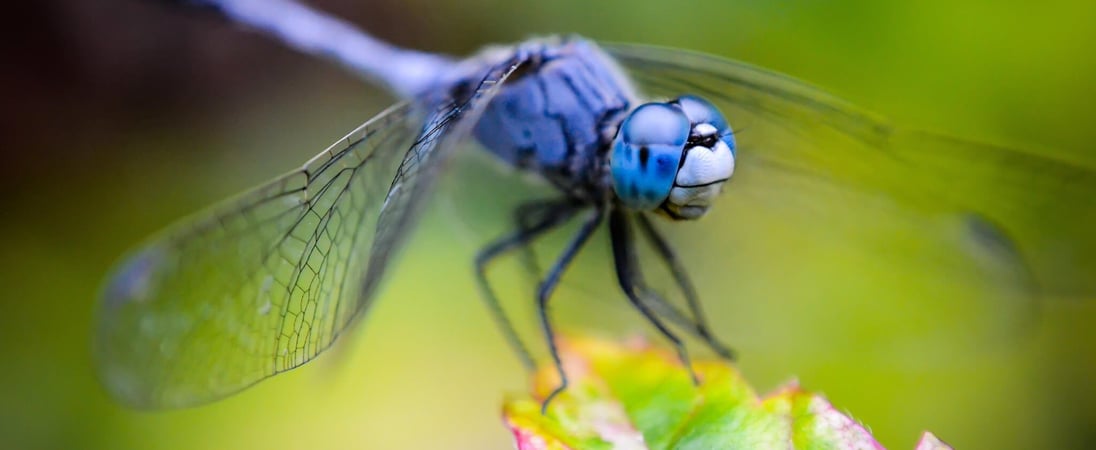
- A dragonfly’s eyes are specially adapted for hunting. Each compound eye contains thousands of tiny facets, providing a broad field of vision and allowing it to track fast-moving prey with exceptional precision.
- Their flight abilities are extraordinary. Dragonflies can hover, accelerate suddenly, change direction sharply, and stop almost instantly, movements that make them resemble miniature aircraft.
Those are the popular facts, but several deeper details make dragonflies even more fascinating:
- Most of a dragonfly’s life takes place underwater. The adult stage is short and noticeable, but before that, dragonflies live as aquatic nymphs that may spend months or even years underwater while growing and molting.
- They connect aquatic and land ecosystems. Dragonfly nymphs prey on small aquatic creatures, while adults hunt flying insects. Dragonflies themselves become food for fish, frogs, birds, and other animals, making them an important part of many food webs.
- Dragonflies and damselflies are closely related. Both belong to the order Odonata and are commonly found near water. Dragonflies usually have sturdier bodies and rest with their wings spread outward, while damselflies are slimmer and often fold their wings over their backs when resting.
- They can reveal the condition of a habitat. Since young dragonflies develop in water, many species thrive only where water quality and shoreline habitats remain healthy. A strong dragonfly population can indicate that a wetland or stream supports a rich and balanced ecosystem.
Learning these details changes the way people observe dragonflies. A hovering adult becomes the final stage of a long underwater journey. A pond filled with dragonflies becomes more than just a beautiful view. It becomes a nursery, feeding ground, and shelter for countless forms of life.
Enjoy Dragonfly Activities
National Dragonfly Day is perfect for hands-on activities. Children can enjoy crafts, coloring pages, games, and creative projects, while adults may prefer photography, journaling, or focused observation. The most rewarding activities connect creativity with real experiences outdoors.
- Create a dragonfly field sketch. The goal is not artistic perfection but careful observation. Pay attention to wing shape, posture, landing spots, and how colors shift between sunlight and shade. Even simple sketches improve attention to detail.
- Make a dragonfly journal entry. Record weather conditions, observation time, and behaviors noticed during the outing. Including small sketches of plants or perches helps connect dragonflies to their habitats instead of viewing them separately from the environment.
- Try patient nature photography. Set a simple challenge, such as capturing one perched dragonfly, one flying over water, and one image showing the surrounding habitat. Keeping a respectful distance reduces stress on the insect and often produces better photos.
- Create a life-cycle illustration. Many children only recognize adult dragonflies. Drawing the stages from egg to aquatic nymph to emerging adult makes metamorphosis easier to understand and visualize.
- Play a dragonfly-inspired movement game. One player acts as the dragonfly while another becomes a fast-moving “gnat.” The dragonfly moves in quick bursts and sharp turns, copying the sudden movements used while hunting.
- Complete a small habitat-care activity. Pick up litter near a shoreline, avoid damaging plants near the water, or discuss ways to reduce pollution and chemical runoff outdoors. Small actions help protect the environments dragonflies depend on.
For schools and community groups, dragonflies also provide an excellent interdisciplinary theme. Science lessons can explore life cycles and ecosystems, art projects can focus on iridescent colors and wing patterns, and writing exercises can encourage close observation. Even a short period spent quietly watching a pond can lead to meaningful conversations about how water quality affects wildlife.
National Dragonfly Day Timeline
Ancient Dragonfly Relatives Dominate the Skies
Fossils of huge dragonfly‑like insects in the order Meganisoptera, some with wingspans over 70 centimeters, appear in Upper Carboniferous rocks and mark the early evolutionary radiation of dragonfly relatives.
Giant Meganeuropsis Becomes an Iconic Fossil Insect
The predatory insect Meganeuropsis permiana, often described as a “giant dragonfly,” lives in what is now North America, with fossil specimens showing wingspans up to about 75 centimeters that highlight the extreme size of early aerial insects.
True Dragonflies (Anisoptera) Appear in the Fossil Record
Fossils from the Early Jurassic show insects recognizable as true dragonflies, indicating that the modern suborder Anisoptera had evolved distinct from earlier dragonfly‑like lineages and was established alongside early dinosaurs.
Dragonflies Enter Early Japanese National Myth
Japan’s oldest chronicle, the Kojiki, includes legends in which the archipelago is likened to a dragonfly and uses the poetic name Akitsushima, helping fix the dragonfly as a symbol tied to the land and imperial mythology.
Dragonflies Flourish in Japanese Art and Samurai Symbolism
During the Edo period, dragonflies were widely depicted in prints and paintings and appeared on samurai armor and sword fittings, where they were regarded as “victory insects” symbolizing courage, agility, and forward movement.
Hermann Burmeister Formalizes the Order Odonata
German entomologist Hermann Burmeister publishes a major classification of insects that recognizes dragonflies and damselflies together as the order Odonata, a framework that underpins modern scientific study of these insects.
Dragonflies Recognized as Freshwater Bioindicators
As aquatic ecology develops, researchers begin using dragonflies and damselflies to assess river, lake, and wetland health, and environmental agencies later adopt Odonata communities as sensitive indicators of water quality and habitat change.
History of National Dragonfly Day
Dragonflies themselves have an ancient history. Dragonfly-like insects and their relatives were already flying hundreds of millions of years ago, and fossil discoveries have long inspired fascination with their prehistoric origins. Although modern dragonflies are far smaller than some of the giant relatives often mentioned in popular science, they still appear perfectly designed for speed, agility, and precision.
The modern dragonfly is a remarkable example of natural engineering. Its large compound eyes detect movement from many directions, while its independently controlled wings allow hovering and rapid changes in direction. Despite their delicate appearance, dragonflies are highly effective aerial predators. Their blend of beauty and performance is one reason they capture attention even among people who are not usually interested in insects.
National Dragonfly Day, as it is commonly celebrated today, encourages people to see dragonflies as more than attractive insects near water. It highlights how their life cycle depends on freshwater habitats, especially shallow shorelines and plant-rich wetland areas where young dragonflies grow and adults feed and reproduce. In this way, dragonflies become symbols of often-overlooked places such as marshes, wetlands, and pond edges that support enormous biodiversity.
One notable formal recognition of Dragonfly Day comes from New York State in the United States, where Dragonfly Day was officially recognized through state action in 2018.
The observance focused on education and awareness, especially concerning the importance of wetlands and the role they play in supporting wildlife. This approach presented dragonflies not only as fascinating insects but also as ambassadors for conservation and environmental awareness.
That conservation message is highly practical. Dragonflies rely on freshwater habitats during their aquatic stage, and many species are sensitive to pollution, habitat destruction, shoreline vegetation loss, altered water flow, and fragmentation of wetland ecosystems.
When wetlands disappear, shorelines are cleared, or pesticides reduce insect populations, dragonflies often decline alongside many other species. Celebrating National Dragonfly Day can therefore serve both as an appreciation of a remarkable insect and as a reminder that healthy habitats depend on consistent, thoughtful care.
Even for people who never intend to identify dragonfly species by name, simply recognizing them as indicators of environmental health can change the way natural spaces are viewed. It encourages closer attention to ponds, streams, wetlands, and shorelines, inspiring people to value and protect the habitats that support life all around them.