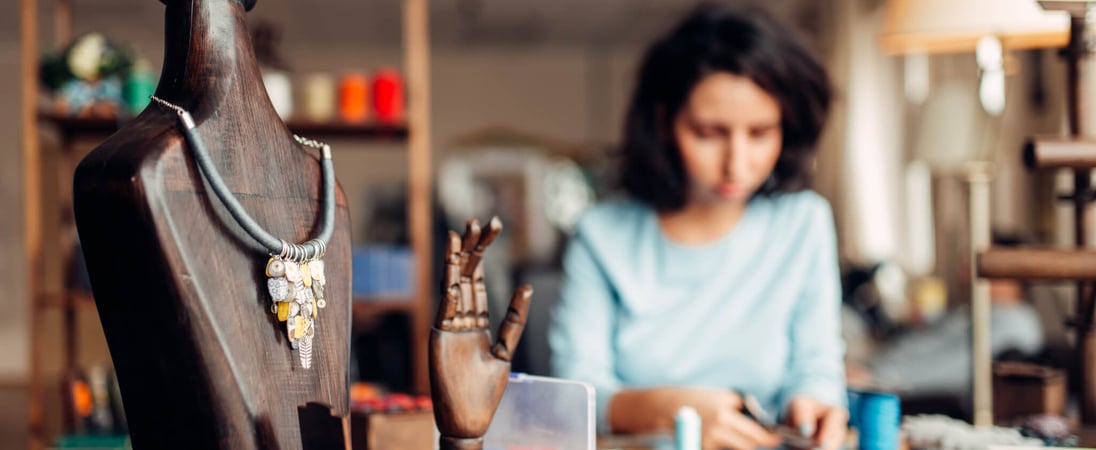
National Handmade Day
Supporting local artisans, who craft unique items with care and love, is a great way to appreciate their creativity.
Crafters and artists, painters and basket weavers, sewers and potters, and so many other talented and creative people are celebrated on this day, National Handmade Day. .
So get ready to enjoy some amazing handcrafted, handmade items and pieces of art on this delightful day!
National Handmade Day Timeline
c. 3200 BCE
Earliest specialized craftsmen in Mesopotamia
Archaeological evidence from Uruk and other Mesopotamian cities shows potters, metalworkers, and weavers producing goods by hand as full-time specialists, marking one of the first recognizably professional artisan classes.
c. 600–300 BCE
Greek and Etruscan pottery and metalwork flourish
Highly skilled potters and metalworkers in Greece and Etruria create hand-thrown ceramics and intricate bronze objects, signed by individual makers, highlighting the social prestige and economic importance of handmade luxury goods.
c. 1200–1500
Medieval craft guilds organize handmade production
In European towns, craft guilds for weavers, goldsmiths, carpenters, and other trades regulate training, quality, and prices, formalizing systems in which expertise and livelihood center on handmade work.
1764–1813
Industrial Revolution challenges traditional artisans
Inventions such as the spinning jenny and power loom transform textile production in Britain, shifting work from small craft workshops to factories and threatening the economic position of handweavers and other artisans.
1880s–1910s
Arts and Crafts movement champions handcraft
Figures like William Morris in Britain and Gustav Stickley in the United States promote simple, well-made handmade objects as an ethical and aesthetic alternative to mass-produced industrial goods.
1960s–1970s
Modern craft revival and studio craft movement
In North America and Europe, potters, fiber artists, and woodworkers establish independent studios, art fairs, and craft schools, reframing handmade objects as both functional items and collectible art.
2005
Launch of Etsy boosts global handmade marketplaces
The online platform Etsy opens as a venue for individuals to sell handmade goods, helping to popularize small-batch, artisan-made products and supporting a worldwide community of independent makers.
How to Celebrate National Handmade Day
Get involved with National Handmade Day in a variety of creative ways of your own, or get started with some of these fun ideas:
Appreciate Some Handmade Art
National Handmade Day brings the perfect reason to head over to a local craft fair or artists workshop and take a look at some beautiful creations.
Whether browsing a collection of handmade crafts or enjoying them by viewing them at an art museum, this is a great day for handcrafted items to be appreciated.
Buy Local Handmade Items
One of the most important reasons to celebrate National Handmade Day is the sustainability factor and the ability to support someone in the local community.
Small business owners are an important resource and can be supported on this day by making purchases of items that are handmade or handcrafted.
Fight against the system of human jobs being replaced by machines and choose to make purchases of beautiful and useful items that are created by hand!
Learn to Make a Handmade Craft
National Handmade Day presents a super opportunity to build into those craft making skills by taking a class to learn how to make something.
Perhaps this means signing up for a one day worship or class put on by a local artist. Or maybe it means taking a course at a local community college.
Some people might even prefer to simply watch some tutorial videos online and teach themselves.
No matter what is preferred, National Handmade Day can act as an ideal motivator for learning to make a craft!
History of National Handmade Day
When the Arts and Crafts movement of the mid-19th century became a response to the Industrial Revolution, the idea was to support local businesses, artists and cottage industries who made handcrafted and handmade items.
But even though the support of the Arts and Crafts movement has been around for many decades, National Handmade Day got its beginnings much more recently.
In fact, National Handmade Day was suggested by Amy Bierstedt of the From Scratch Farm website in 2017 and had its official celebration the following year in 2018.
In just a few short years, National Handmade Day has grown in popularity to include support from local shops as well as national companies, like Jo-Ann Fabrics.
Celebrated each year on the first Saturday in the month of April, National Handmade Day brings with it an ideal opportunity to show appreciation for those who are creative and inspirational with their handmade products.
Instead of purchasing items that are mass-produced, take time on National Handmade Day to support local artisans with their handmade crafts. It’s a wonderful way to be more sustainable and supportive of the community.
Facts About National Handmade Day
Handmade Crafts Help Local Economies Thrive
Research on craft industries shows that handmade work can be a substantial economic engine for local communities.
A study of the craft sector in Western North Carolina found that it generated more than $206 million in total direct economic impact by the mid‑2000s, while a separate analysis of the craft and maker sector in the Philadelphia region estimated tens of millions of dollars in annual contributions to local GDP and tourism.
These studies highlight how small studios, markets, and craft businesses can play an outsized role in rural and urban economic development.
Handmade Sectors Are Increasingly Recognized in Global Trade
Beyond local markets, handmade and “creative manufacturing” businesses are emerging as a distinct segment in global commerce.
A sector report on creative manufacturing and handmade products estimated that this category accounts for hundreds of billions of dollars in annual revenue worldwide and projected rapid growth as retailers seek ethically sourced, small‑batch goods.
While figures vary by source, the research reflects a clear trend toward integrating artisan-made items into mainstream global supply chains.
Craft-Making Can Boost Mental Health and Well-Being
Multiple systematic reviews of crafts-based interventions report that making things by hand can reduce symptoms of depression and anxiety and improve overall mental well-being, at least in the short term.
Participants in these studies often describe feelings of calm, distraction from worry, and a sense of achievement while engaged in activities like knitting, pottery, or paper crafts, suggesting that the repetitive, focused nature of handcrafting has tangible psychological benefits.
Handcrafting May Increase Feelings That Life Is Worthwhile
An analysis summarized by the nonprofit Caitlin’s Smiles reported that people who regularly participate in arts and crafts score higher on measures of life satisfaction and sense of purpose than those who do not, even after accounting for factors like employment.
The researchers found that crafting activities, which combine creativity, skill-building, and visible progress, can meaningfully predict how worthwhile people feel their lives are.
Craft Activities Support Students’ Mental Health
A 2025 study on university students found that engaging in “craft creation practices” such as drawing, sewing, or model-making helped reduce stress and improve mental health.
Students reported that crafting provided emotional release, a break from academic pressure, and a way to express feelings that were difficult to put into words, suggesting that handmade activities can be a useful adjunct to more formal mental health supports on campus.
Craft Traditions Are Key to Sustainable Local Development
A bibliometric analysis of research on crafts and local development concluded that traditional and contemporary handmade work is frequently linked to sustainable growth strategies.
Studies highlighted how craft production creates jobs, supports cultural tourism, and helps maintain community identity, particularly in rural and Indigenous regions where industrial employment is limited, making handmade skills a strategic resource rather than a nostalgic pastime.
Craft-Making Contains Elements That Uniquely Enhance Well-Being
Researchers studying leisure and recreation have identified specific elements of craft-making that seem to support well-being, including opportunities for problem-solving, tactile engagement with materials, visible progress over time, and the chance to connect socially with other makers.
Participants in one detailed qualitative study described these aspects as central to feelings of competence, relaxation, and belonging that they derived from their handmade hobbies.
National Handmade Day FAQs
What are the main economic benefits of buying handmade items for local communities?
Buying handmade often keeps more money circulating close to home, since many artisan businesses are micro or family enterprises that purchase supplies, pay wages, and invest within their own communities.
Studies of artisan-focused programs show that stable demand for handmade goods can support small-scale entrepreneurship, diversify income for women and rural households, and help reduce vulnerability to economic shocks when paired with fair pricing and market access.
Are handmade products really better for the environment than mass‑produced goods?
Handmade items are not automatically “green,” but they can have a smaller environmental footprint when they use low‑impact materials, generate less waste, and avoid energy‑intensive factory processes and long global supply chains.
Many artisan initiatives emphasize natural or recycled materials, low‑energy production, and durable design, which can reduce emissions and waste across the product’s life compared with fast, disposable mass‑market alternatives.
How does the Arts and Crafts movement relate to today’s interest in handmade goods?
The Arts and Crafts movement, which arose in Britain and the United States in the late 19th century, reacted against industrial mass production by valuing craftsmanship, simple forms, and honest materials.
Its ideas helped shape modern respect for artisan work, the revival of traditional skills, and the belief that thoughtfully made objects can improve everyday life, all of which underpin contemporary enthusiasm for handmade products.
What is the difference between “handmade,” “handcrafted,” and “artisan” products?
In everyday use, these terms overlap, but they emphasize slightly different things.
“Handmade” usually means an item was made primarily by hand rather than by fully automated machines. “Handcrafted” tends to highlight skill and detailed workmanship, even if a few simple tools or machines are used.
“Artisan” commonly refers to a maker with specialized training in a traditional or skilled craft, and may also signal limited production and distinctive design.
Because there is no single legal standard globally, buyers often rely on the seller’s description and certifications when they want stricter guarantees.
How can someone check if a “handmade” product sold online is genuinely made by the seller?
Shoppers can look for detailed information about materials, techniques, and production time, and can check whether a seller shows work‑in‑progress photos, studio images, or process videos that support their claims.
Independent certifications, fair‑trade labels, or membership in recognized artisan cooperatives can also provide assurance.
Consumer‑protection agencies advise buyers to be cautious of vague descriptions and to review customer feedback and return policies when authenticity matters.
Why do handmade crafts matter for cultural heritage?
Handmade crafts often carry traditional techniques, stories, and symbols that are passed down within families or communities, so each object can act as a record of local knowledge and identity.
International cultural organizations note that supporting artisans helps keep endangered skills alive, encourages younger generations to learn them, and strengthens community pride, which is why many countries promote craft traditions as part of their intangible cultural heritage.
What are some common misconceptions about the price of handmade goods?
A frequent misconception is that artisans are charging extra simply for a “label,” when most of the price reflects time, skill, and small‑batch production costs instead of large factory runs.
Another misunderstanding is that handmade should always be cheap because it is informal or home‑based, yet studies of artisan sectors show that underpricing is widespread and can push makers below a living wage.
Understanding labor hours, material quality, and the lack of economies of scale helps explain why fair prices for handmade items are often higher than mass‑produced equivalents.
Also on ...
View all holidays

National Vitamin C Day
It’s good for your immune system, it’s good for your mental health, it’s even good for your skin. Don’t neglect this crucial vitamin on Vitamin C Day.

National Chicken Cordon Bleu Day
Cheese + ham + chicken breast, breaded and fried. Chicken Cordon Bleu exists in many cultures and cuisines in different ways, so find your favorite take on it.

World Rat Day
Rat owners can take this day to pamper and love their little friends a little extra. Don’t have a rat? Visit one in a pet store, read about them, or watch Ratatouille!
We think you may also like...

World TB-303 Appreciation Day
An electronic music pioneer, its unique sound sculpted a genre that continues to resonate through the rhythms of today's tracks.

National Drive-In Movie Day
Bring snacks and drinks, comfy blankets, and of course your car and go see a new or old favorite movie at your local drive-in, from the comfort of your car.

Use Less Stuff Day
Cutting back on things, like a green champ! It's like giving Earth a high-five, all while making life simpler and cooler.

Flip a Coin Day
With a simple toss, fate dances on the edge, a moment of chance that decides outcomes, leaving everything to gravity's whim.