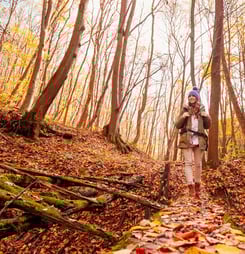

National Hike With A Geek Day is all about stepping away from screens and hitting the trails. It’s a chance for tech lovers, gamers, and anyone who spends too much time indoors to breathe fresh air, stretch stiff legs, and remember that the world is not just something that loads in a browser tab.
Instead of clicking through endless windows, people walk real paths surrounded by trees, rocks, rivers, and open skies. The day gently nudges screen-centric minds toward a different kind of refresh: the one that comes from changing scenery, changing pace, and letting the brain wander the way feet do on a switchback.
Spending time outside brings real benefits, and not just the obvious “steps were taken” checkbox. A hike can calm the nervous system, lift mood, and improve focus later. It also tends to pull people into the present moment, since roots, gravel, and uneven ground demand more attention than a treadmill. For many geeks, that shift is the point. The trail becomes a low-stakes laboratory for curiosity: identifying plants, noticing patterns in clouds, debating sci-fi plot holes, or finally explaining that one elegant algorithm to a willing audience.
Best of all, it’s even better when shared with like-minded people who enjoy a good conversation about science, coding, tabletop campaigns, space telescopes, fantasy lore, or the latest game release. National Hike With A Geek Day makes room for all of it, with the bonus feature of sunlight.
How to Celebrate National Hike With A Geek Day
National Hike with a Geek Day offers a unique opportunity to blend technology enthusiasm with outdoor exploration. Celebrating it does not require mountaineering skills or expensive gear. The spirit of the day is simple: get outside, move the body, and bring a little “geek joy” along for the walk. Here are some engaging ways to celebrate this special day:
Organize a Tech-Themed Hike
Gather friends, coworkers, or a local group for a hike where the conversation is as intentional as the route. A tech-themed hike can be as structured or as casual as the group likes. Some hikers keep it simple, using the trail time to talk about what they are building, reading, or learning. Others add prompts, like “best tool discovery,” “favorite productivity myth,” or “one feature that should exist but doesn’t.”
To keep it fun and inclusive, it helps to pick a pace that allows for talking without anyone gasping for air. A shorter loop trail or an out-and-back route with a scenic turnaround makes it easy to regroup. Bringing a few conversation starters can also prevent the common phenomenon where everyone silently checks for cell service at the same time.
For an extra geeky twist, hikers can set a theme for the day: robotics, space exploration, retro computing, fantasy maps, or game design. The trail becomes a moving meetup, and that shift in environment can make even familiar topics feel new. Many people find that tricky problems untangle themselves more easily outdoors, especially when the only notifications are bird calls.
This fusion of interests makes the hike both stimulating and enjoyable, while still keeping the main focus on being present in nature.
Explore Geocaching Adventures
Combine hiking with geocaching, a real-world treasure hunt that uses GPS coordinates to find hidden containers called geocaches. It is a natural fit for geek culture because it blends navigation, puzzle-solving, and the satisfying click of “found it” progress. It can also turn a familiar park into a new challenge, encouraging hikers to explore side paths and notice details they would normally walk past.
Geocaching works well for mixed-experience groups because the physical demand can be adjusted. Some caches are near trailheads, while others require a longer trek. A good approach is to pick a route with several potential finds so everyone gets a turn at being the “navigator,” the “spotter,” or the “logbook signer.”
A few practical considerations keep the fun from turning into frustration:
- Make sure at least one person understands the app or GPS device before starting.
- Bring a pen or pencil for signing logs, since tiny logbooks are common.
- Respect the environment by staying on established trails when possible and putting containers back exactly as found.
Geocaching adds a playful mission to the hike, which can be especially motivating for people who enjoy quest mechanics and objective-based exploration.
Conduct a Nature Photography Session
Bring a camera or smartphone and treat the hike as a photography walk. Instead of rushing to the viewpoint, participants can slow down and look for smaller wonders: the geometry of a spiderweb, patterns in bark, the way light hits a rock face, or the tiny ecosystem in a puddle. It is a surprisingly geeky activity, since it rewards observation, patience, and an appreciation for systems and detail.
Photography also encourages hikers to pause, which can make the experience feel less like “exercise” and more like “discovery.” People who enjoy gadgets can experiment with settings, lenses, or stabilization, while others focus on composition and storytelling.
After the hike, sharing photos is part of the celebration. A group can compare shots of the same scene, discuss what worked, and trade tips. Editing can be a fun follow-up activity too, whether that means adjusting color, cropping for impact, or adding subtle filters. The key is to keep it respectful of wildlife and other hikers: photos are best captured without trampling vegetation or stressing animals for the sake of a close-up.
This activity enhances observation skills and appreciation for the environment, and it leaves participants with a small gallery of “proof” that they touched grass, literally.
Host an Outdoor Coding Workshop
Take a laptop or tablet to a park or outdoor gathering spot and code with a small group. While bringing a full workstation into the wilderness is not always practical, an outdoor coding session can work beautifully at a picnic table near a trailhead or in a shady spot after a hike. The goal is not to create the perfect development environment. It is to combine mental play with fresh air, and to treat coding as a craft that can happen anywhere.
An outdoor coding workshop can be organized around beginner-friendly activities:
- A short “build something tiny” challenge, like a simple game, a data visualization, or a small automation script.
- Pair programming, where one person writes while another reviews and suggests.
- A show-and-tell, where participants demo projects and share what they learned.
Planning helps here. Charging devices ahead of time and keeping the session brief prevents it from becoming a battery anxiety marathon. It also helps to set expectations around connectivity. Offline-friendly tasks, like working from local files or practicing algorithms, keep the workshop enjoyable even without reliable internet.
The change of scenery can spark creativity, and the informality can make technical learning feel less intimidating. Plus, it is hard to doomscroll when the screen is full of code and the background soundtrack is wind in the leaves.
Plan a Stargazing Night Hike
If conditions allow, an evening hike that ends with stargazing can deliver a particularly memorable version of the “geek meets outdoors” theme. Astronomy invites wonder, and it pairs nicely with the quiet, slowed-down rhythm of a night walk.
Safety and planning matter more at night. A good night hike uses a well-known, easy trail and includes reliable lights, warm layers, and a clear turnaround plan. Once settled at a safe viewing area, stargazing apps can help identify constellations, planets, and notable stars. Some groups enjoy turning it into a mini learning session, with one person sharing a few fun facts about what is visible.
A stargazing hike also supports different kinds of geeks. The optics enthusiasts can bring binoculars, the science-minded can discuss light-years and spectra, and the storytellers can share myths associated with constellations. Even people who are usually glued to a screen often find it refreshing to look up at a view that cannot be zoomed, paused, or swiped away.
This blend of hiking and astronomy offers a serene and educational experience under the night sky, and it captures the spirit of curiosity that ties tech culture to the natural world.
National Hike With A Geek Day Timeline
Romantic-Era Walking for Pleasure
European writers and artists begin promoting long country walks as a way to seek beauty, introspection, and escape from industrializing cities, laying cultural foundations for recreational hiking.
Thoreau’s “Walking” Essay
Henry David Thoreau delivers and later publishes his essay “Walking,” arguing that wandering in wild nature is essential for physical and spiritual health, influencing American attitudes toward purposeful walking outdoors.
First Alpine Club in the United States
The Appalachian Mountain Club and similar 19th‑century hiking and mountaineering clubs organize group walks, map routes, and promote trail building, helping turn hiking into a structured social and recreational pastime.
Creation of the U.S. National Park Service
The National Park Service is established to conserve scenery and wildlife while providing public enjoyment, and it gradually develops and maintains extensive trail systems that make hiking accessible to ordinary visitors.
High-Accuracy GPS Opens to the Public
The U.S. government turns off “Selective Availability,” dramatically improving civilian GPS accuracy and enabling hobbyists to use handheld receivers to navigate precisely through forests, fields, and trails.
First Modern Geocache is Hidden
Oregon GPS enthusiast Dave Ulmer hides a bucket in the woods and posts its coordinates online as a test of the newly accurate GPS system, unintentionally launching a new tech-enabled outdoor treasure-hunting pastime.
Evidence Grows for Nature’s Cognitive Benefits
Psychologist Marc Berman and colleagues publish experimental work showing that walking in natural environments improves memory and attention more than urban walks, supporting theories that time in nature restores overloaded minds.
History of National Hike With A Geek Day
National Hike with a Geek Day began in 2017, created by Mendel Kurland and the group Hiking with Geeks. The idea was straightforward: invite people who identify as geeks, including tech workers, gamers, and science enthusiasts, to step away from their screens and spend time outdoors with other curious minds.
The timing made sense. Modern work and entertainment often revolve around devices, and many people in technical fields spend long hours sitting. Even hobbies associated with geek culture, such as gaming, coding, streaming, and online communities, tend to be indoor-focused. That does not mean geeks dislike nature. It just means nature often loses the scheduling battle against deadlines, comfort, and the gravitational pull of the next episode.
Hiking with Geeks formed around the belief that the outdoors can be more welcoming when it comes with community. For someone who is new to hiking, it can feel intimidating: unfamiliar gear, unfamiliar etiquette, and the sense that everyone else already knows what they are doing. A geek-centered group flips that script. It replaces performance pressure with shared interests and friendly conversation, making the trail feel less like a test and more like a gathering.
In its early life, the day also benefited from public recognition. A city proclamation in Seattle helped amplify the message that hiking is for everyone, including people who might not match the stereotypical image of an outdoors enthusiast. That kind of spotlight matters, because it reinforces the day’s central argument: curiosity and adventure are not separate categories. They are two sides of the same personality trait.
As the concept spread, more people began organizing meetups, inviting coworkers, and building their own traditions around the event. The “geek” label proved flexible in the best way. It welcomed programmers and engineers, yes, but also readers, collectors, science fans, makers, role-players, and anyone who gets delightfully passionate about learning. On the trail, that passion turns into lively conversation and a sense of camaraderie that can be hard to manufacture in a conference room.
Over time, National Hike with a Geek Day has shown that the outdoors is not reserved for elite athletes or wilderness experts. It can be a park loop, a nature trail, or a hillside path. The point is participation, not intensity. The day encourages balance: keep the intellectual curiosity, keep the fandoms, keep the love of technology, but give the body and mind a different kind of input for a while.
In a way, the day celebrates a classic geek strength: the ability to become genuinely fascinated by a subject. National Hike With A Geek Day simply suggests a new subject to obsess over for a few hours, such as a wildflower’s structure, the physics of a waterfall, the surprising quiet of a forest, or the satisfying engineering of a well-built trail.
Facts About National Hike with a Geek Day
Green Exercise Boosts Mood More Than Indoor Workouts
Psychologists use the term “green exercise” for physical activity in natural settings, and multiple reviews have found that even brief walks in parks or forests reduce stress, anger, and fatigue more than comparable activity indoors or in built-up urban areas, while also improving mood and self-esteem.
Nature Walks Can Quiet the Brain’s “Worry Center”
In a Stanford study, people who took a 90‑minute walk in a natural area showed reduced activity in a region of the brain linked with rumination and depression risk, compared with those who walked next to a busy road, even though both groups got similar amounts of exercise.
Short Bouts of Walking Help Counteract Sedentary Screen Time
Large meta-analyses show that adults who sit for long periods, such as during computer work or gaming, have higher risks of early death and cardiovascular disease, but about 30–40 minutes a day of moderate activity like brisk walking or hiking can substantially reduce those risks, even if overall sitting time remains high.
Hiking in Green Spaces May Sharpen Working Memory
Experimental research has found that people with depression performed better on working-memory tests after a walk in nature than after an equally long walk along city streets, suggesting that natural environments may restore certain cognitive functions more effectively than urban settings.
Tech Workers Face Especially High Sedentary Time
Public health data show that people in computer-based occupations are among the most sedentary, and the World Health Organization estimates that physical inactivity contributes to up to 5 million preventable deaths per year worldwide, highlighting the importance of regular movement breaks away from screens.
Geocaching Turned GPS Into a Global Outdoor Game
Geocaching began in 2000, soon after the U.S. government improved civilian GPS accuracy, and has since grown into a worldwide hobby with millions of hidden “caches” listed online, blending mapping technology, problem-solving, and hiking for a strongly tech-oriented community.
How “Geek” Evolved From Sideshow Act to Tech Identity
Historically, “geek” was a term for a carnival performer who did shocking acts and earlier still meant a fool or simpleton, but by the late twentieth century dictionaries began recording newer senses describing people deeply interested or skilled in computers, science, or niche fandoms, often used today as a badge of pride rather than an insult.