National Virtual Vacation Day
Exploring new destinations, cultures, and flavors from the comfort of your own space, letting your wanderlust loose without leaving home.
Get out of town without having to leave home? Yes, please! National Virtual Vacation Day celebrates “travel” that’s more convenient, more affordable, and far less tiring.
It’s a playful reminder that curiosity does not require a boarding pass and that a change of scenery can be as simple as a screen, a headset, or even a well-planned imagination workout.
How to Celebrate National Virtual Vacation Day
Check out some of these ideas for celebrating National Virtual Vacation Day:
Take a Virtual Vacation
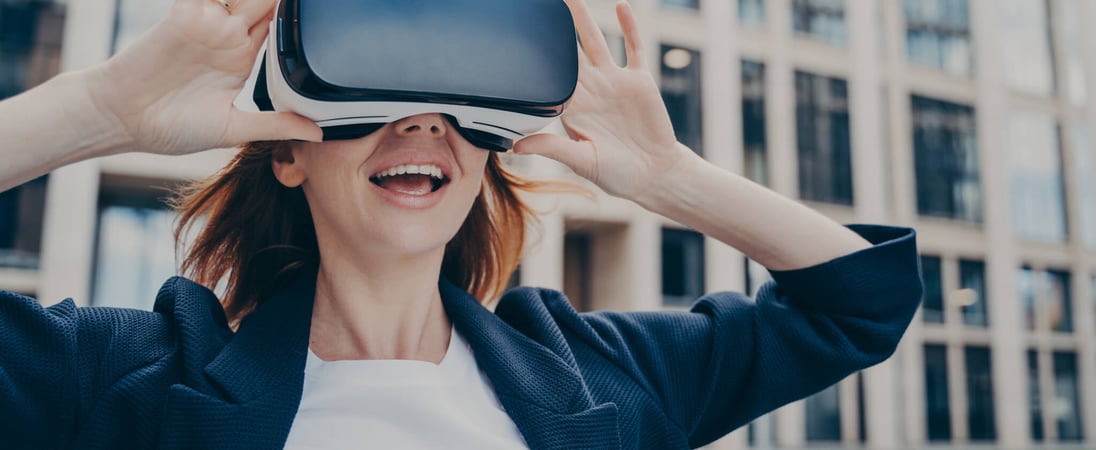
Taking a virtual vacation can look different for everyone. For some, it means diving into a fully immersive Virtual Reality (VR) experience with a headset and controllers. These setups can feel surprisingly physical, even while the body stays comfortably on the couch.
One moment you might be kayaking through a canyon, the next strolling along a lively street as ambient sounds move around you in full 360 degrees. The most effective VR travel experiences convince the brain to pause and reconsider, creating that pleasant sensation of being somewhere else, even though the living room carpet is still under your feet.
To make a VR escape feel smoother and more enjoyable, it helps to treat it like a real trip:
- Clear a safe space. A small area of open floor helps avoid accidental bumps into tables, chairs, or lamps.
- Adjust comfort settings. Many VR platforms include options that reduce motion sickness, such as teleport movement or a steady visual horizon.
- Use quality audio. Headphones add depth by capturing subtle details like ocean waves, distant conversations, or the quiet echo of a gallery.
- Keep sessions short. Several 10–20 minute visits often feel more refreshing than one long session, especially for beginners.
Virtual travel does not have to rely on VR technology. A more hands-on, low-tech version can take the form of a home “destination day” built around research and sensory details.
Travel books and brochures still hold their charm, especially when combined with livestreams, walking tour videos, or photo collections. Choosing a place and creating a simple itinerary can recreate the rhythm of real travel, including sights, sounds, flavors, and a bit of cultural background.
Some simple ways to make the experience feel like a true getaway:
- Build a destination playlist. Traditional music, local artists, or ambient street recordings help set the mood.
- Learn a few local phrases. Basic greetings, thank-yous, or practical questions add a fun travel-like touch.
- Prepare a themed snack or meal. Even a simple dish inspired by regional flavors can enhance the atmosphere.
- Adjust lighting and décor. Soft lighting for a city evening, bright light for a beach feel, or small props like maps and postcards.
- Create a souvenir. Print a favorite image, sketch something from a virtual museum, or write a short postcard-style reflection.
Leaning into imagination can make the experience even more enjoyable. Some people like editing photos to create playful albums of themselves “visiting” the location.
Others prefer writing an honest travel-style journal about what caught their attention, what surprised them, and what they might want to experience in person one day. The goal is the mental escape, not the passport stamp.
Choose from Virtual Vacation Tours
After setting up VR equipment, travelers can explore a wide range of tour providers, with options that seem almost endless. Even without VR, many experiences are available through 360-degree video, interactive maps, livestreams, and guided recordings.
The most engaging virtual tours offer more than visuals. Like a skilled tour guide, they provide structure and storytelling so the experience feels intentional rather than like random browsing.
A few suggestions for choosing a virtual tour that truly satisfies the travel urge:
- Pick a theme, not just a destination. Art, wildlife, architecture, food culture, gardens, historic districts, or scenic rail journeys can shape a more memorable experience.
- Look for guided narration. Commentary helps maintain focus and adds context that makes each scene more meaningful.
- Balance landmarks with everyday life. Pair a famous attraction with a street walk or café view to create a more authentic sense of place.
In celebration of National Virtual Vacation Day, here are a few destinations that work especially well for virtual exploration:
- The Louvre in Paris, France. This experience allows visitors to explore world-famous works, including the Mona Lisa, without walking miles through crowded halls.
Virtual access makes it possible to slow down and study details like brushwork, sculpture surfaces, and gallery layouts. For art lovers who find museums physically tiring, it offers a relaxed and rewarding alternative. - Great Wall of China. This tour combines remarkable architecture with sweeping natural scenery. Virtual views reveal how the wall follows mountain ridges and dips through valleys, helping viewers understand its enormous scale. Pairing the experience with a short documentary or map overview adds valuable context.
- San Diego Zoo. Animal enthusiasts can observe a wide variety of species from home. Virtual wildlife viewing often includes close-up perspectives that would be difficult to achieve in person. It also provides a quieter, more relaxed way to watch animal behavior without crowds or time pressure.
To extend the experience, consider creating a “virtual travel day” with several short stops:
- Morning: a museum or historical landmark
- Afternoon: a nature scene, reef dive, or mountain panorama
- Evening: a city walk with a nightlife atmosphere or a scenic train journey
Inviting friends or family can make it even more enjoyable. A group chat, shared viewing session, or video call turns individual exploration into a social activity, complete with conversation, snack breaks, and friendly debates about the next destination.
National Virtual Vacation Day Timeline
1838
Stereoscope Brings Distant Places Home
Charles Wheatstone unveils the stereoscope, an optical device that lets viewers see paired images in 3D, hinting at armchair travel long before digital virtual vacations.
1968
First Head‑Mounted Display for Virtual Viewing
Computer scientist Ivan Sutherland and colleagues created “The Sword of Damocles,” an early head‑mounted display that overlays simple graphics, laying groundwork for immersive virtual environments.
1994
“Virtual Tour” Concept Debuts at Dudley Castle
British company Arup creates a computer‑generated walkthrough of the 1550 Dudley Castle for a museum exhibit, coining the term “virtual tour” and pioneering digital site visits.
2001
Google Street‑Level Imaging Research Begins
Google quietly starts work on street‑level imaging projects that evolve into Google Street View, later allowing users to visually “walk” through cities worldwide from their screens.
2007
Google Street View Opens Global Streets to Armchair Travelers
Google launches Street View in several U.S. cities, giving people an interactive way to explore neighborhoods and landmarks remotely and inspiring new forms of casual virtual tourism.
2014
Commercial VR Headsets Spark Consumer Virtual Travel
After Facebook acquires Oculus VR, developers race to build immersive travel and exploration apps for headsets, making virtual visits to cities, mountains, and museums widely accessible at home.
2020
Pandemic Drives Surge in Virtual Tourism and Online Museum Tours
COVID‑19 travel restrictions push museums, zoos, and tourism boards to expand virtual tours and live streams so people can experience destinations and cultural sites without leaving home.
History of National Virtual Vacation Day
National Virtual Vacation Day began in 2016, created by the team at Terrance Talks Travel. The idea was simple but powerful: people do not need unlimited time, a large budget, or a perfect schedule to experience the world. Technology makes it possible to explore in small, manageable moments, bringing a sense of discovery into everyday life.
This concept reflects a broader shift in how travel is viewed. Traditionally, vacations were major events involving planning, saving, booking, and committing to a single destination. Virtual travel introduced a more flexible approach. Instead of one large trip, people could take many short ones. Instead of managing logistics, the focus could remain on curiosity and enjoyment.
At its core, virtual travel taps into a timeless human desire to experience other places. Long before modern technology, people traveled through books, photographs, films, and postcards. Today’s virtual experiences simply make that tradition more immersive.
As display quality, sound design, and VR technology improve, the difference between observing and visiting continues to narrow. A digital sunset may not provide warmth, but it can still influence mood. A virtual market walk may not deliver aromas, but it can inspire curiosity and even dinner ideas.
With VR tools and digital platforms, it is possible to visit a tropical island, climb a mountain, or explore space—all in a single day. Part of the appeal lies in novelty, but practicality plays a role as well.
Virtual travel eliminates common frustrations such as jet lag, delays, long security lines, heavy luggage, unpredictable weather, or inconvenient accommodations. It also allows complete flexibility. Want to pause, repeat a favorite moment, or take a quick detour? The experience adjusts instantly.
Beyond convenience, National Virtual Vacation Day highlights accessibility. Many people face barriers to traditional travel, including health limitations, mobility challenges, caregiving responsibilities, financial concerns, demanding work schedules, or anxiety about unfamiliar environments. Virtual experiences provide a way to participate in the spirit of travel without those physical or logistical obstacles.
Virtual exploration can also serve as a planning tool. Future travelers can preview neighborhoods, identify key attractions, and become familiar with a city’s layout. Even a simple street-level walkthrough can build confidence, especially for those who prefer to know what to expect. In this way, virtual travel often complements real travel rather than replacing it, acting as a practical “scouting trip.”
Although National Virtual Vacation Day was established before the COVID-19 pandemic, its relevance became especially clear when travel restrictions reshaped daily life.
During that period, virtual museum tours, nature streams, live performances, and guided digital walks helped many people stay connected to the wider world. The day continues to resonate because the desire to explore does not disappear when circumstances change. It simply finds new forms.
The celebration also recognizes the professionals who create these experiences. VR developers, filmmakers, photographers, guides, archivists, museum educators, wildlife specialists, and technologists all contribute to making virtual travel engaging and meaningful.
Capturing a compelling 360-degree environment requires thoughtful audio, careful pacing, and attention to viewer comfort and orientation. The best virtual tours anticipate curiosity and provide context that transforms images into stories.
Ultimately, National Virtual Vacation Day celebrates a modern version of escape: flexible, customizable, and accessible across different budgets, schedules, and lifestyles. Whether someone explores through a VR headset, a laptop, a collection of travel materials, or a carefully planned playlist and themed meal, the goal remains the same: stepping beyond the familiar and experiencing the feeling of being somewhere new, even if only for a short time.
Explore the World Without Leaving Home
Virtual vacations may feel like a modern trend, but the idea of exploring the world through a screen has a longer history and a growing impact.
From early digital tours to immersive VR experiences, research shows that virtual travel can satisfy curiosity, support mental well-being, and even inspire future trips.
Here are a few facts that reveal how virtual tourism is evolving and why it matters today.
-
Telepresence Tourism Has Roots in the 1990s “Virtual Tours”
The idea of traveling a place through a screen predates consumer VR headsets by decades.
One of the first widely cited “virtual tours” was created for Britain’s Dudley Castle in the mid‑1990s, using stitched panoramic photography and computer interfaces to let users “walk” through the site on a monitor.
This early work helped popularize the very term “virtual tour” and laid the groundwork for the 360‑degree and VR-based tourism experiences that later became common online.
-
Virtual Travel Can Temporarily Replace Physical Trips For Many Tourists
During the COVID‑19 pandemic, researchers surveyed 193 potential tourists about using virtual reality as a substitute for real-world trips when travel was restricted.
The study found that VR experiences could significantly satisfy travel motivations and that many participants intended to keep using virtual travel tools even after restrictions eased, suggesting that immersive digital experiences can genuinely stand in for some aspects of traditional vacations.
-
VR Tourism Experiences Have Measurable Mental Health Benefits
A 2024 study of nearly 300 Chinese travelers found that using virtual reality to “visit” destinations during the pandemic significantly reduced their travel-related anxiety.
Participants who engaged with VR travel content reported lower fear about traveling and higher confidence in future trips, indicating that virtual vacations can offer tangible psychological relief and even rebuild trust in travel after crises.
-
Virtual Museum Tours Open Collections To Global Audiences
Long before lockdowns, major museums had been digitizing their collections, but the shift to virtual visits accelerated sharply in 2020.
The Louvre, for example, reported that its online tours attracted more than 10 million virtual visitors in 2020, compared with about 9.6 million in-person visitors the previous year, showing that web-based experiences can equal or exceed on-site attendance and dramatically extend cultural access across borders.
-
Virtual Conferences Reveal The Environmental Impact Of Not Traveling
Travel avoided through virtual events can rival a lifetime of personal emissions.
When a large international oncology conference moved online in 2020, researchers calculated that attendees avoided an estimated 19,000 metric tons of CO₂ that would otherwise have been generated by flights and lodging.
That figure was roughly 99.9 percent lower than the emissions associated with holding the same meeting in person, highlighting how virtual gatherings and “virtual trips” can dramatically reduce carbon footprints.
-
360‑Degree Tours Are Transforming How People Preview Destinations
Real estate and tourism companies increasingly use 360‑degree and 3D “walk-through” tours to let people explore spaces before committing to travel or purchase.
A survey by Matterport, a leading 3D imaging provider, found that 95 percent of respondents were more likely to call about properties with 3D tours, and travel marketers have adopted the same technology so travelers can virtually explore hotels, cruise ships, and attractions before booking, effectively turning pre-trip research into a kind of mini virtual vacation.
-
Virtual Tourism Is Emerging As A Tool For Inclusive Travel
Virtual reality and 360‑degree tours are increasingly used as an accessibility tool for people who cannot easily travel because of disability, chronic illness, or age.
UNESCO and partners have documented how virtual heritage projects, such as VR reconstructions of historic sites or remote-access tours of fragile monuments, allow those with limited mobility to experience locations that could be physically demanding or impossible to visit, broadening who can meaningfully participate in cultural tourism.
National Virtual Vacation Day FAQs
How realistic are virtual travel experiences compared with actually visiting a place?
Virtual travel can provide rich visual and sometimes audio immersion, but it cannot fully reproduce aspects like local climate, smells, or spontaneous encounters with people.
Studies on virtual tourism suggest that detailed 360-degree videos and interactive environments can increase a viewer’s sense of “presence,” yet they still lack the multisensory input and unpredictability that shape in-person travel memories and cultural understanding.
Can virtual tourism really reduce a person’s environmental impact from travel?
Virtual tourism can significantly cut emissions associated with long-distance flights and hotel stays because it removes the need for transportation and on-site energy use.
Research on tourism and climate change shows that aviation is one of the fastest-growing sources of greenhouse gases, so substituting some long-haul leisure trips with high-quality virtual experiences can lower an individual’s travel-related carbon footprint, even though digital devices and data centers still use energy.
How is virtual travel changing the way museums and heritage sites share their collections?
Many museums and heritage organizations now use virtual tours, 3D scans, and high-resolution imaging to let people explore exhibits and historic sites remotely.
This approach broadens access for global audiences, supports education, and can document fragile artifacts or locations that are difficult to preserve or visit.
Large institutions report that virtual visitors often use these experiences to plan future in-person trips while also enabling people who may never travel there to see the collections.
Is virtual travel helpful for people with disabilities or limited mobility?
Virtual travel can reduce physical, financial, and logistical barriers that often limit traditional tourism for people with disabilities.
Guidance from disability and health organizations notes that accessible virtual events and experiences can combat social isolation by allowing participation in tours and cultural activities from home, provided that platforms follow accessibility best practices such as captions, keyboard navigation, and screen-reader compatibility. [1]
Can virtual trips provide the same mental health benefits as taking a real vacation?
Researchers have found that exposure to nature scenes, immersive videos, and relaxing virtual environments can lower stress and improve mood in the short term, similar to some benefits of brief getaways.
However, virtual experiences generally do not replace the broader advantages of time away from work, social interaction, and physical movement that come with many real vacations, so they are best viewed as a supplement rather than a full substitute. [2]
What equipment is typically needed to enjoy virtual travel, and are high-end VR headsets required?
Virtual travel can range from simple 2D videos on a laptop or phone to fully immersive VR headsets with hand controllers.
Many virtual tours and 360-degree videos work in a regular web browser or on a smartphone with basic earbuds, while more advanced VR systems add head tracking, depth perception, and interactivity.
For most people, high-end headsets are optional rather than essential, especially for museum tours or city walks that are delivered via standard streaming platforms.
Are there downsides or health concerns associated with spending time in virtual tourism environments?
Some people experience motion sickness, eye strain, or headaches when using VR or watching 360-degree content, particularly during longer sessions or with rapid camera movement.
Safety guidelines from technology and health organizations recommend taking frequent breaks, adjusting fit and focus, and using seated experiences for those prone to dizziness.
Parents are also advised to monitor children’s use of VR, since long sessions and immature vision systems may increase discomfort.
Also on ...
View all holidays

National Doctors Day
Trusted experts who heal and cure, doctors are the superheroes of the medical world. From check-ups to emergencies, they're always ready to help.

World TB-303 Appreciation Day
An electronic music pioneer, its unique sound sculpted a genre that continues to resonate through the rhythms of today's tracks.

We think you may also like...

National Clean Out Your Computer Day
Give your computer a breath of fresh air - it's like opening a window in a stuffy room, helping it run smoother.

World Photography Day
A beautiful way to tell a story, express emotions, and preserve the beauty of the world around us. Start capturing your own story today!
World Tessellation Day
Try creating your own tessellation using paper, pen, and scissors to help wrap your mind around these strange and fascinating math-based patterns.