It’s referenced in a million different ways, across as many cultures and religions. “Do unto others as you’d have them do to you”, “You reap what you sow”, “What goes around comes around”, all of these statements speak of one suspected truth of the universe.
That the energy you put out into the world is what will come back to you.
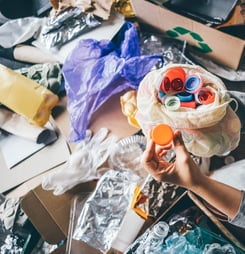
Tangible Karma is your opportunity to help yourself while helping others, by putting out those items around your home that you no longer need and passing the on freely to those who need them.
The nice thing is, with Karma, you can expect it all to come back to you.
Tangible Karma Day Timeline
Karma Takes Shape in Early Indian Texts
The concept of karma develops in early Hindu scriptures such as the Upanishads, describing a moral law of cause and effect in which actions influence future experiences.
Buddhist and Jain Teachings Refine Karmic Ethics
Buddhism and Jainism adopt and reinterpret karma, linking intentional actions to rebirth and ethical living, and emphasizing compassion, nonviolence, and personal responsibility.
Karma Ideas Spread Across Asia
Through trade, pilgrimage, and scholarly exchange, karma-based beliefs move from India into Tibet, China, Southeast Asia, and Japan, blending with local traditions and shaping social ethics.
Bhakti Movements Connect Karma and Devotion
Bhakti (devotional) movements in India teach that loving devotion to God, combined with selfless service and giving, can transform karma and purify one’s life.
Karma Enters Western Thought
Scholars and spiritual teachers introduce karma to Europe and North America through translations of Sanskrit texts and Theosophical writings, inspiring interest in reincarnation and moral causality.
Growth of “What Goes Around Comes Around” in Popular Culture
The karmic idea that actions return to the doer becomes common in Western music, film, and self-help culture, often framed as “what goes around comes around” or “you reap what you sow.”
Linking Karma to Environmentalism and Charitable Reuse
Spiritual and environmental movements increasingly connect “good karma” with practical acts like recycling, donating items, and voluntary simplicity, encouraging people to help others and the planet at the same time.
History of Tangible Karma Day
Tangible Karma is a company founded by Amber Nicole Dilger in 2005 and her idea was to recycle and reuse.
Amber knew that a cluttered life can lead to a cluttered mind, which in turn leads to an instability of emotion and overall nervousness that can take away from the calming space that a home is supposed to be.
Combining this with her strong conviction of being a steward of the Earth and making the best possible use of its resources, she knew that recycling resources is a great way to tread lightly on our home.
Tangible Karma Day is set to raise awareness of these causes, and to help bring others into line with her attempts to help protect the Earth, its resources, and the future of those who live here.
It’s through efforts like Tangible Karma and another team she’s working with, New Wind Energy®, that she moves forward with her cause and spreads the benefits to everyone.
How to Celebrate Tangible Karma Day
There are some great ways to celebrate this spreading of Karma and love. The best way to celebrate the coming together of people across the world is with a coming together of a small group at your home.
Just call together a house party and have everyone show up and bring something to donate.
But if you’re feeling more proactive about getting out in the community, you can also spend time working at a local shelter. Homeless shelters, domestic violence shelters, all of these communities service unfortunates passing through a difficult and often traumatic part of their lives.
Tangible Karma Day is a great chance to help others in the world, and we even get an immediate result back, the feeling of having done well for someone who needs it.
Facts About Tangible Karma Day
Karma as Moral Cause and Effect
In Indian religions, karma originally referred to ritual action, but by the time of the early Upanishads it had shifted to mean a moral law of cause and effect, where intentional deeds shape a person’s future experiences and even rebirths.
In classical Hindu, Buddhist, and Jain thought, this is not seen as divine reward or punishment, but as an impersonal law comparable to gravity, in which wholesome actions lead to beneficial results and unwholesome actions to suffering over time.
The Golden Rule Appears Across Many Cultures
What many people think of as “karma” in everyday speech often overlaps with the Golden Rule, and versions of that principle show up independently in numerous traditions.
Confucius expressed it in negative form (“Do not impose on others what you yourself do not desire”), while ancient Greek philosophers, Rabbinic Judaism, early Christianity, and Islamic teachings all include parallel maxims about treating others as one would like to be treated.
Household Clutter Is Linked to Stress and Lower Well‑Being
Psychological research has found that high levels of household clutter are associated with elevated stress hormones and poorer emotional well‑being.
In one study of dual‑income families, mothers who described their homes as cluttered and unfinished had flatter daily cortisol patterns, a biological marker linked with chronic stress and adverse health outcomes, compared with those who described their homes as restorative.
Reusing Goods Often Beats Recycling for Cutting Emissions
From a climate perspective, extending the life of products through reuse or donation frequently avoids more greenhouse gas emissions than recycling alone.
Analyses of consumer goods show that keeping items in use for longer reduces demand for new manufacturing, which is typically the most carbon‑intensive stage of a product’s life cycle, while recycling mainly recovers materials after a product has already been produced and discarded.
Most Donated Items Stay in Use, Not in the Trash
In many countries, a surprisingly high share of donated clothing and household items is resold or otherwise reused rather than dumped.
For example, Goodwill Industries reports that more than 80 percent of what it receives by weight is sold in stores, sent to secondary markets, or recycled, with only a minority ultimately landfilled, illustrating how donation systems divert large volumes from the waste stream.
Charitable Giving Boosts Happiness Across Income Levels
Experimental studies consistently find that people who spend money or resources on others report greater happiness than those who spend the same amount on themselves, even when controlling for income.
In one cross‑national experiment, participants randomly assigned to recall or perform a generous act reported higher well‑being than those assigned to a personal‑spending condition, suggesting that prosocial behavior has a reliable psychological payoff.
Decluttering by Donating Can Strengthen Sense of Meaning
Beyond freeing physical space, letting go of possessions through donation can enhance a person’s sense of purpose and identity.
Qualitative research on voluntary simplifiers and people who consciously reduce their belongings shows that when items are passed on to someone who can use them, givers often experience increased feelings of alignment with their values and a stronger narrative of “who they are” in relation to their community.
Tangible Karma Day FAQs