World Piano Day
Keys to unlocking musical creativity, a timeless instrument with a rich history, and an invitation to compose your own symphony.
Life is like a piano. What you get out of it depends on how you play it.
Tom Lehrer
If you’re a fan of classical music, then you assuredly know about the famous piano. Used in concerts everywhere, the piano has a long history of bringing music to life with its delicate sound and beautiful resonance.
But did you know that there’s a holiday dedicated to pianos? That’s right, there’s a day all about the history and love for pianos. Read more to learn about the history of the piano and about how you can celebrate this amazing holiday.
How to Celebrate Piano Day
Listen to Piano Music
Start by listening to some beautiful piano music on your favorite device. Load up Spotify, Apple Music or another platform and search musicians whose piano music is inspirational.
Martha Argerich, Vince Guaraldi, Mitsuko Uchida, and Herbie Hancock are a few amazing names to get started with!
Enjoy Live Piano Music
If you’re wanting a fun night out, then attend a concert at your local theater. Check out the pianists who will be performing concerts in a more formal atmosphere.
Or, alternatively, go to a pub or other club that is known to feature live music on the piano!
Take Piano Lessons
If you’re really adventurous then take some piano lessons at your local colleges or through online courses. This could be a fun way to get involved in the local community by joining a band just for fun!
Share About World Piano Day
While listening or playing amazing piano music, use the hashtag throughout your social media accounts and let everyone know that this day is all about the beautiful piano!
Learn About World Piano Day
World Piano Day has been designed to celebrate this incredible instrument, which has brought many of us joy over the years.
No matter whether you play the piano yourself or you have an appreciation for this sort of music, we can all appreciate that listening to a quality pianist is a joy.
If you don’t know much about the piano, today is a great day to explore further. The main thing you obviously need to familiarise yourself with is the keys. After all, the keyboard is the most important part of your learning.
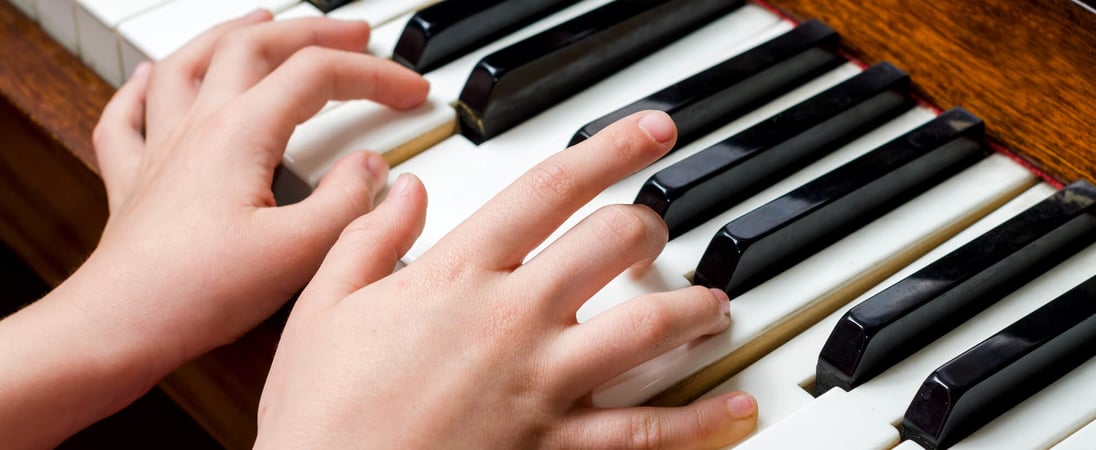
If you look at the keyboard, you will see white and black keys that run from left to white. They do not alternative white-black-white-black. There is actually a pattern that is made of five black keys and seven white keys in a certain order.
An interval is formed from the beginning of one set of keys and the ending, which is at the beginning of the next set. This is called an ‘octave’, which is simply a type of interval; an interval being the musical distance between two sounds.
In addition to this, it is important to note that the highest keys are on the right and the lowest on the left. If you start on the left side, every key is a half step higher than the one before it.
Therefore, you need to go up or down two half steps to make a full step. You simply need to practice a bit to get to grips with these intervals. You should then try other intervals so you can hear the difference in sound.
World Piano Day Timeline
1700
Cristofori invented the first true piano
Italian instrument maker Bartolomeo Cristofori built the “gravicembalo col piano e forte” in Florence, creating a keyboard instrument capable of both soft and loud dynamics and laying the foundation for the modern piano.
1825
Felt hammers transformed piano tone
English maker Henri Pape introduced compressed felt coverings for piano hammers, replacing leather and giving pianos a more powerful, singing tone that suits larger concert halls and Romantic-era music.
1820s–1840s
Cast-iron frames enabled concert grand pianos
Makers in the United States and Europe began using full cast-iron frames, greatly increasing string tension and volume and allowing the construction of much larger, more robust concert grand pianos.
1859
Steinway patented the overstrung scale
Steinway & Sons patented a cross-stringing (overstrung) design that fans the bass strings over the treble section, improving tonal richness and helping to define the sound of the modern grand piano.
1876
Player pianos foreshadowed automated music
The first practical player piano mechanisms using perforated paper rolls were demonstrated at the Centennial Exposition in Philadelphia, allowing pianos to reproduce performances without a human at the keyboard.
1938
Hammond Novachord pioneered electronic keyboards
Laurens Hammond’s Novachord, widely regarded as the first commercial polyphonic electronic keyboard, shows how piano-style keyboards can control entirely electronic sound sources.
1983
MIDI standard connected digital pianos worldwide
The introduction of the MIDI (Musical Instrument Digital Interface) standard let digital pianos and synthesizers communicate with computers and other instruments, revolutionizing how pianists record, compose, and perform.
History of World Piano Day
The invention of the piano began through its predecessors, mainly through medieval times as a dulcimer, a fretted string instrument with three or four strings attached.
From there it developed into the clavichord, the spinet, virginal, clavecin, gravicembalo, and finally, the harpsichord in the 15th century.
The harpsichord was invented by Bartolomeo di Francesco Cristofori and the harpsichord is considered to be to the closest predecessor to what modern-day people know as the piano because of the keyboards that activated the strings.
From there, the harpsichord developed further over the next 300 years into what we know as the modern piano.
Because most pianos have 88 keys, World Piano Day is celebrated on the 88th day of each year (March 29th most years, March 28th on leap years) and began as an idea by the German pianist/composer/producer Nils Frahm.
Nils Frahm composes classical piano music with electronic music, reforming piano music with an unconventional approach.
He launched the holiday back in 2015. When Frahm was asked why the world needs a Piano Day, Frahm replied back “…mostly, because it doesn’t hurt to celebrate the piano and everything around it: performers, composers, piano builders, tuners, movers and most important, the listener.”
Since then, the day expanded as people held concerts, recitals, lectures, and demonstrations. An official website for the day lists all the concerts and events you can go to all over the world to help celebrate the beauty of the piano.
Bonus: How to Choose an Online Piano Course
If you have never played the piano before, you may feel at a little bit of a loss regarding what you should be looking for in an online course.
But, don’t fret, as we have some top tips to help you out. The first thing you need to do is make sure that the website providing the piano lessons is right for your level.
Some websites start at the very beginning and are designed for those who don’t have a clue about playing the piano.
Therefore, they will teach you how to read music and so on. However, there are other websites that have lessons for those who already have experience and are seeking more advanced lessons so that they have something to aim towards.
In addition to this, you should take the time to read reviews that have been left by people and experts that have already used the website in question.
If you come across a lot of negative reviews from people saying that the lesson was too difficult to follow for beginners, for example, then you know to look elsewhere.
Finally, you need to decide if you want to opt for free or paid lessons. In the beginning, it is worth looking into free resources. If you are then struggling to find something that matches your needs, consider a paid version, but do extensive research before spending your cash.
The Hidden Value of Common Weeds
Many plants that show up uninvited in lawns and gardens quietly support nature and even offer practical benefits for people.
From feeding pollinators early in the season to enriching soil and providing traditional uses, these everyday weeds reveal an overlooked side of the landscape that is both useful and worth understanding.
-
Cristofori’s Original Piano Could Play Both Soft and Loud
Around 1700, Italian instrument maker Bartolomeo Cristofori created what he called the “gravicembalo col piano e forte,” a keyboard instrument whose hammer mechanism let players control volume from very soft to very loud, something harpsichords could not do.
This innovation in dynamic control is what ultimately set the piano apart and allowed composers to write more expressive music.
-
A Modern Piano Endures Tons of String Tension
Inside a full‑size modern grand piano, more than 200 steel strings are stretched over a cast‑iron frame at a combined tension that can exceed 18 to 20 tons.
This enormous tension is necessary to achieve the piano’s powerful volume and long sustain, and it is one reason piano frames are made from iron rather than wood alone.
-
The Soundboard Works Like a Built‑In Amplifier
When a piano hammer strikes a string, the string itself is too thin to move much air, so the vibration is transferred through a wooden bridge to a large spruce soundboard.
Acting like an acoustic amplifier, the soundboard vibrates in sympathy and boosts the sound by as much as a hundred times, giving the piano its characteristic richness and projection in a concert hall.
-
The Piano Is Classified as Both String and Percussion
In organological terms, the piano is a hybrid: its sound is produced by hammers striking strings, so it belongs in the chordophone (string) family, but it is also treated as a percussion instrument in orchestral scores and music education because the player produces sound by striking keys that trigger hammer blows.
This dual nature is one reason it bridges roles between melody, harmony, and rhythm so effectively.
-
The 88‑Key Layout Standardized Only in the 20th Century
While early pianos varied widely in size and range, the now‑familiar 88‑key layout, from A0 to C8, only became a de facto standard in the early 1900s as manufacturers like Steinway settled on this design.
That range, a little more than seven octaves, proved to be a practical balance between musical possibilities, instrument size, and the physical limits of string scaling.
-
Pianos Helped Shape Middle‑Class Home Life
By the late 19th century, the piano had become a fixture of middle‑class parlors in Europe and North America, symbolizing both cultural refinement and access to domestic entertainment.
Before recorded sound, families gathered around the instrument to play popular songs and classical pieces, and piano literacy was considered an essential social skill, particularly for young women.
-
The Piano Became a Foundation of Music Education Worldwide
As conservatories and public music schools expanded in the 19th and 20th centuries, the piano emerged as a core teaching tool because its keyboard visually lays out pitch relationships and harmony.
Today, major examination boards such as ABRSM report millions of graded piano exams taken each year globally, reflecting the instrument’s central role in formal music training.
World Piano Day FAQs
How did early pianos get the name “fortepiano”?
Early pianos were called “fortepianos” because of their ability to play both loud (“forte”) and soft (“piano”) notes.
This dynamic control distinguished them from harpsichords, which lacked such expressive range. Fortepianos paved the way for modern pianos, making them revolutionary for their time.
What role does the piano play in jazz music, and how is it celebrated on World Piano Day?
The piano is central to jazz, acting as a harmonic backbone for many compositions.
During World Piano Day, jazz pianists perform improvisational concerts, showcasing the instrument’s versatility.
Famous jazz clubs in New York and New Orleans often organize special events to mark the occasion.
Did you know about the silent piano?
Silent pianos combine acoustic play with digital technology. They allow pianists to practice with headphones without disturbing others.
These unique instruments are often featured on World Piano Day, demonstrating modern innovations in piano design.
How has street art embraced the piano?
Public art installations often use painted pianos to celebrate music.
On World Piano Day, cities like London and Paris showcase these vibrant instruments in parks and streets. Passersby can play, blending visual and auditory art.
What makes the Bösendorfer Imperial piano special?
The Bösendorfer Imperial features 97 keys, nine more than a standard piano. This extra range allows unique bass tones. Pianists celebrate this rare instrument during World Piano Day, exploring its rich soundscape.
Are there any myths about pianos being haunted?
In folklore, abandoned pianos are said to play eerie tunes on their own. These myths arise from creaks and sounds caused by temperature changes.
Such spooky tales add intrigue to World Piano Day storytelling sessions.
How do composers honor World Piano Day?
Modern composers often release piano compositions specifically for the holiday.
For example, Nils Frahm, the day’s founder, debuted minimalist pieces on past World Piano Days. This tradition inspires other artists to create new works.
What’s the connection between pianos and ballet?
Pianos provide live accompaniment for ballet classes and rehearsals. On World Piano Day, some dance schools host performances featuring live pianists.
This collaboration highlights the harmony between music and movement.
Have any records been set for longest piano performances?
In 2015, Romuald Koperski played piano for 103 hours and 8 seconds, setting a world record. Such marathon performances are often highlighted on World Piano Day, inspiring endurance-themed events.
How do lesser-known piano traditions, like silent film accompaniment, play into World Piano Day?
Before movies had sound, pianists performed live to accompany silent films. On World Piano Day, some theaters recreate this experience, blending history and entertainment.
Also on ...
View all holidays
National Smoke and Mirrors Day
Step into a world of illusions where reality is questioned, and the impossible becomes possible - an experience that amazes and mystifies!

National Neighbor Day
Being a good neighbor isn't just about borrowing sugar, it's about building community. Small acts of kindness can bring us closer and make us happier.

We think you may also like...
World TB-303 Appreciation Day
An electronic music pioneer, its unique sound sculpted a genre that continues to resonate through the rhythms of today's tracks.

World Drummer’s Day
Maestros of rhythm, sculpting soundscapes with percussive artistry, their beats infuse life's symphony with pulse and passion.