
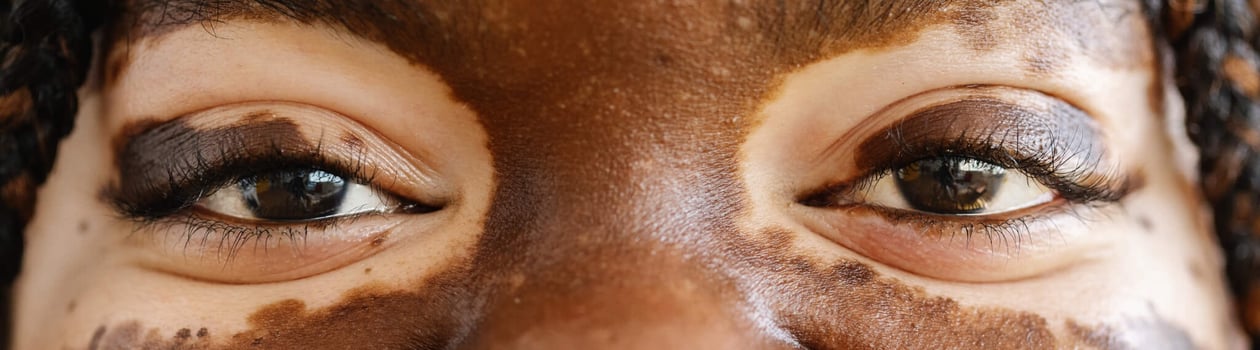
World Vitiligo Day is observed as a global awareness event focused on vitiligo, a long-term condition that causes patches of skin to lose pigment. The date is often connected with public conversations about famous figures who lived with vitiligo, including pop star Michael Jackson, and it is used as a springboard for education, advocacy, and community support.
How to Observe World Vitiligo Day
Observing World Vitiligo Day can be as public or as low-key as a person prefers. Some people choose big gestures like organizing a community talk, while others focus on thoughtful, everyday actions that make life easier for someone with vitiligo. The common thread is simple: replace myths with accurate information, and replace awkward stares with basic kindness.
Because vitiligo is visible, it is often treated like a curiosity instead of a medical condition. World Vitiligo Day pushes back against that by encouraging people to learn what vitiligo is, what it is not, and how to support those who live with it.
Raise Awareness about Vitiligo
Awareness is most helpful when it is practical. Health care providers, teachers, parents, youth leaders, managers, coaches, and other community anchors can use their roles to set the tone for how vitiligo is discussed. A single well-informed adult can shut down a lot of nonsense before it spreads.
Vitiligo is usually physically painless, but it can come with serious challenges that have nothing to do with skin sensation. People with vitiligo may face social exclusion, bullying, workplace bias, unwanted questions, and the exhausting pressure to explain their face or body to strangers. In some settings, misinformation can be especially damaging, such as when vitiligo is mistakenly viewed as contagious or connected to poor hygiene. Clearing up those myths matters.
Ways leaders and communities can raise awareness effectively include:
- Use accurate language. “Vitiligo is a condition that affects skin pigmentation” is better than vague phrasing that makes it sound frightening or mysterious.
- Model respectful curiosity. If questions come up, encourage asking permission before discussing someone’s appearance.
- Include vitiligo in broader inclusion efforts. Anti-bullying programs, body positivity discussions, and disability awareness initiatives can naturally include visible skin differences.
- Highlight the emotional side without pity. A balanced message is empowering: vitiligo can be tough, support helps, and people with vitiligo are not defined by it.
In classrooms, it can be as simple as a short lesson on skin, melanin, and how bodies vary. In a clinic, it might mean displaying educational materials in waiting rooms or training staff to avoid careless comments. In a workplace, it might look like reinforcing grooming and dress policies that do not penalize people for skin camouflage makeup, protective clothing, or sun protection.
Make a difference in a classroom, a group of patients, a neighborhood, or any other sphere of influence by sharing truth and encouraging others to do the same.
Learn Facts About Vitiligo
Learning the basics is one of the most meaningful ways to mark World Vitiligo Day, because knowledge tends to stick around long after an event ends.
Vitiligo is generally understood as an autoimmune-related condition in which the immune system targets melanocytes, the cells that produce melanin (the pigment that contributes to skin, hair, and eye color). When melanocytes are damaged or lost, well-defined lighter patches can develop. Those patches can appear anywhere, but they are often noticed first on the hands, face, elbows, knees, and other areas that get sun exposure or frequent friction.
It is also a condition with variety. Some people have a few small patches that stay stable for years. Others experience a more widespread pattern, and the pace of change can be unpredictable. There are different clinical types, including a more common non-segmental form that often appears on both sides of the body and a segmental form that tends to stay on one side.
One reason public education is so important is that vitiligo can be misunderstood at a glance. People may assume it is a burn, an infection, or something “catching.” It is none of those. It is also not limited to any particular skin tone. The contrast simply looks more dramatic on darker skin, which can change how strangers react.
A few useful, shareable facts include:
Vitiligo is generally considered an immune-mediated condition in which melanocytes are damaged, leading to patches of skin that lose pigment.
Vitiligo is not infectious or contagious. It cannot be “caught” through touch, sharing food, or being in the same room.
Vitiligo is usually not physically painful, but it can be emotionally difficult due to unwanted attention, stigma, and pressure to conceal patches.
Vitiligo can affect anyone, regardless of age, gender, ethnicity, or skin color. It can begin in childhood or adulthood.
Sun protection matters. Depigmented skin has less natural protection from ultraviolet light and can burn more easily, which can also make patches more noticeable.
For those who want to understand vitiligo beyond the basics, it helps to know what diagnosis and management commonly involve. Clinicians often diagnose vitiligo by visual exam and history, sometimes using a Wood’s lamp (a specialized ultraviolet light) to make depigmented areas easier to see. Care plans vary widely and may include topical medications, light-based treatments, or targeted procedures for stable cases. Some people focus on repigmentation, while others focus on blending and comfort through cosmetic camouflage and skin care. Emotional support can be just as important as medical treatment, especially for teens and young adults navigating appearance-based social pressure.
The most supportive “fact” of all is also the simplest: people with vitiligo are experts in their own experience. If someone wants to talk about it, listening respectfully helps more than trying to solve it.
Get More Involved with World Vitiligo Day
Getting involved can mean joining an organized event, supporting a local group, or simply using personal skills to amplify good information. World Vitiligo Day has grown into a network of activities that may include educational talks, community meetups, conferences, awareness walks, and online campaigns where people share photos and stories to normalize skin differences.
Those who have vitiligo, know someone who does, or want to show support can get involved in several ways:
- Attend an educational session, in person or virtually. Dermatology-focused talks often cover treatment options, emerging research directions, and everyday coping strategies like skin care and camouflage products.
- Support patient-led communities. Many people with vitiligo benefit from meeting others who understand the daily reality, from sunburn worries to confidence dips.
- Volunteer skills rather than assumptions. Graphic design, event planning, childcare during meetups, transportation support, or translating educational materials can be genuinely helpful.
- Encourage respectful representation. If a school, clinic, brand, or community organization uses photos or stories, advocate for representation that is accurate and not sensationalized.
For medical professionals and educators, involvement can also mean improving systems: making referral pathways clearer, providing culturally sensitive counseling about appearance-related stress, and ensuring educational materials reflect a range of skin tones so vitiligo is recognizable and not minimized.
World Vitiligo Day Timeline
Early descriptions in the Rig Veda
Ancient Sanskrit texts such as the Rig Veda describe skin disorders called kilas or kilasa, likened to white‑spotted animals, which modern scholars interpret as early accounts of vitiligo‑like depigmentation.
Depigmented patches in the Ebers Papyrus
The Egyptian Ebers Papyrus records skin diseases that include pale or white patches, which dermatology historians consider among the earliest written descriptions of conditions resembling vitiligo.
Vitiligo‑like disease in Ayurvedic medical texts
Classical Indian works such as the Charaka Samhita and Sushruta Samhita describe switra or kilasa, non‑scaly white patches on the skin now thought to correspond closely to vitiligo or related leucodermas.
Greco‑Roman physicians classify “vitiligo”
Roman and Greek physicians like Celsus and Galen use the term vitiligo for certain blemishing white skin diseases, helping establish a distinct category of depigmenting disorders separate from other skin conditions.
Religious texts link depigmentation with impurity
Passages in the Hebrew Bible on tzara’ath describe white skin changes that scholars believe may include vitiligo‑like lesions, contributing to long‑lasting confusion with leprosy and to religiously framed stigma.
PUVA photochemotherapy adopted for vitiligo
Dermatologists formalize psoralen plus UVA (PUVA) as a treatment for vitiligo, using a photosensitizing drug and UVA light to induce repigmentation, making it a mainstay therapy despite later safety concerns.
Narrowband UVB becomes preferred therapy
Clinical studies show that narrowband UVB around 311–313 nm can effectively repigment vitiligo with fewer long‑term risks than PUVA, and guidelines begin recommending it as the first‑line phototherapy worldwide.
History of World Vitiligo Day
World Vitiligo Day began as a grassroots awareness effort and developed into a widely recognized international campaign. Early organizers emphasized not only education about the condition itself, but also the social and emotional impact of living with visible skin differences.
The first celebration connected with the World Vitiligo Day story took place in 2011 and was originally referred to as Vitiligo Awareness Day or Vitiligo Purple Fun Day. The “purple” theme became an early symbol of support and community, showing up in shirts, banners, and group events. The inaugural activities included a notable event in Lagos, Nigeria, where patients, medical professionals, motivational speakers, entertainers, and advocates gathered to share information and push back against stigma.
That early momentum helped the idea travel. In its first years, the campaign expanded through collaboration among patient advocates and organizations focused on vitiligo research and support. What made the movement stand out was its mix of medical seriousness and community warmth. It was never only about clinical definitions. It was also about quality of life, confidence, and the right to participate in public spaces without being treated as an oddity.
A major focus of the campaign has been encouraging formal recognition and broader institutional attention, including outreach efforts aimed at international bodies and public health decision-makers. Even without universal official designation, World Vitiligo Day has succeeded in a different way: it has made vitiligo harder to ignore. More clinicians, researchers, educators, and media creators now treat vitiligo as a condition worthy of resources, thoughtful language, and evidence-based discussion.
Public visibility has also shifted due to cultural moments and familiar faces. Models, athletes, creators, and entertainers with vitiligo have challenged the old assumption that depigmentation must be hidden. One widely discussed milestone came when model Winnie Harlow, who has vitiligo, gained prominence through mainstream fashion and television. Her career helped spark broader conversations about what “normal” skin can look like, and it encouraged many people with vitiligo to see representation that felt bold rather than apologetic.
Over time, World Vitiligo Day has become a platform with multiple lanes: patient support, public education, clinical engagement, and research advocacy. Depending on the community, events might lean more medical, more social, or more artistic, but the purpose remains consistent: reduce stigma, improve understanding, and make life with vitiligo a little less complicated.
World Vitiligo Day FAQs


You may also like

International Skin Pigmentation Day
Explore International Skin Pigmentation Day, raising awareness of hyperpigmentation, skin health, and inclusive beauty while encouraging education, care, and self-love.
- Australia
- Canada
- India
- and 3 more

I Need A Patch For That Day
Take a day to tackle those quick fixes you’ve been putting off, whether it’s a patch for your software or a patch for your jeans, bike tire, or anything else.
- United States

National Patch Day
National Patch Day celebrates sending fabric patches to kids facing serious illness, turning small handmade gifts into powerful symbols of hope, care, and connection.
- United States

National Love Your Skin Day
Celebrate National Love Your Skin Day by embracing gentle routines, sun protection, and hydration that support healthy skin, confidence, and everyday well-being.
- United States
National days and holidays on June 25

National Handshake Day
From business deals to sportsmanship, a good handshake conveys confidence, warmth and professionalism, making a lasting first impression!
- Canada
- United Kingdom
- United States

Color TV Day
Host a TV or movie watching marathon and work your way through different eras to see how color TV has developed, improved and changed over time.
- United States

Global Beatles Day
Put on your favorite Beatles record and honor the British global phenomenon that changed the face of music forever, and continues to influence musicians everywhere.
- United Kingdom
- United States

National Catfish Day
Cook up some catfish at home, visit a catfish festival, or find a local restaurant serving this tasty fish to make the most of National Catfish Day.
- Canada
- United States
- Vietnam
Seize Every Day
Join free for personalised recommendations, email reminders and exclusive guides. Never miss a day.