
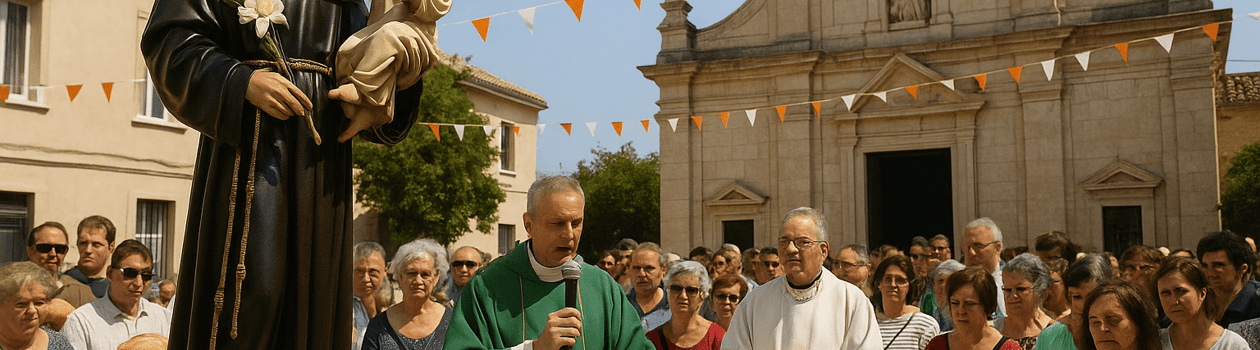
The Feast of St. Anthony centers on one of the most warmly loved figures in the Catholic calendar: St. Anthony of Padua, a Franciscan friar famous for clear preaching, compassionate ministry, and a reputation for practical help when something or someone feels lost.
The celebration blends reverence with neighborhood-style joy, often pairing church services with food, music, and generous outreach.
In many communities, the day is marked by gathering in churches and, where tradition leans festive, by outdoor events that feel part procession and part block party. A familiar custom is the blessing and sharing of bread, a simple symbol with a big message: faith that feeds people, not just thoughts.
Alongside the bread is a strong emphasis on giving, whether that means supporting a pantry, putting together a meal for someone struggling, or making an anonymous donation. The tone is communal and practical, the kind of spirituality that rolls up its sleeves.
St. Anthony’s reputation is full of vivid titles and stories. He has been called the “Hammer of Heretics,” a nickname tied to his ability to explain Christian teaching persuasively in a time of heated debates. He was also declared a Doctor of the Church, an honor given to saints whose writing or preaching has made a lasting contribution to theology.
Yet for many devotees, the grand titles take a back seat to the smaller, daily affection: St. Anthony as the saint to ask for help with missing keys, misplaced documents, or anything that vanishes at the worst possible moment.
Beyond the playful side of “finding lost things,” the feast day points to something deeper in St. Anthony’s legacy: attention to people who are overlooked. Anthony is strongly associated with care for the poor and vulnerable, and the customs around his feast often echo that concern.
Stories of miracles, including accounts of healing or rescue, circulate widely in Catholic tradition and help explain why so many people approach the day with a mix of gratitude and hope. Whether a celebration is quiet and devotional or loud and full of street food, the heart of the day stays consistent: prayer, generosity, and trust that small acts of goodness matter.
How to Celebrate The Feast of St. Anthony
Here are some simple ways to celebrate the Feast of St. Anthony:
Bake and Share Blessed Loaves
Baking bread for St. Anthony’s feast is both symbolic and surprisingly down-to-earth. Small rolls, simple loaves, or even homemade flatbread can work, since the point is not culinary perfection but the intention behind it.
Many churches that observe the feast offer a blessing of bread, either during Mass or as a separate moment after a service. When that option is available, bringing a basket of individually portioned pieces makes sharing easier and more hygienic for a crowd.
The best part is what happens next. Traditionally, the bread is not meant to sit on a counter like a trophy. It is meant to be given away. Some people share with neighbors, coworkers, or friends who could use encouragement.
Others deliver it directly to a shelter, community fridge, or food distribution site. Even a small loaf paired with a handwritten note can turn a basic staple into a genuine act of care.
For families or groups, baking can become its own little ritual: mixing ingredients while talking about what it means to notice hunger in the world, then deciding together where the bread should go. It is a simple way to connect the feast’s devotional side with a concrete act of generosity.
Prayers for Lost Items
St. Anthony’s “lost and found” reputation has staying power because it meets people where they live. Losing something important can spark a specific kind of stress, and devotees often turn that anxious energy into a quick prayer.
The short, rhyming appeal “Tony, Tony, come around” is one of the best-known folk prayers associated with him. It is informal, easy to remember, and often shared between generations precisely because it sounds like something you can say in a hurry while patting every pocket you own.
Those who prefer a more traditional approach might use a brief petition like, “St. Anthony, pray for me,” followed by naming what is missing and asking for calm, clarity, and help in locating it. Many people treat the prayer as a reset button: it encourages patience and attention, which are honestly two of the best tools for finding anything.
Groups can make this devotional practice communal without making it overly serious. Someone can invite a moment of silence, then everyone offers a quiet intention. It can be surprisingly comforting, especially when the “lost thing” is not an object at all, but peace of mind, a sense of direction, or the hope of reconciliation.
Play a “Finder” Game
A “finder” game is a clever way to keep the spirit of St. Anthony’s patronage lighthearted while still meaningful. A scavenger hunt works well, especially when clues are written to reinforce the day’s themes: noticing others, practicing gratitude, and paying attention.
Items can be simple, like a spoon, a book, a paper clip, or a small stuffed toy, and the prize can be something equally modest, such as a small roll of bread or a donation made in the winner’s name.
Hide-and-seek can also be adapted into a “lost and found” version. One person hides a specific object, and the rest search after saying a short prayer for help. The playful routine becomes a gentle reminder that asking for help is not a weakness. It is part of being human.
For schools, youth groups, or families with children, the game can be paired with a quick story about St. Anthony’s reputation for helping locate missing items, then connected to the more serious side of the feast: remembering people who feel “lost” in life and looking for ways to include them.
Donate “St. Anthony Bread”
“St. Anthony Bread” is often used as shorthand for charitable giving connected to St. Anthony’s feast and devotion. In some places, it refers specifically to blessed bread distributed on the feast day. In others, it means a small donation offered in thanksgiving for prayers answered, or as a habit of charity inspired by Anthony’s compassion for the poor.
The beauty of this practice is its flexibility. It can be as structured as setting aside a jar for spare change or as direct as purchasing groceries for a pantry. Some households turn it into a monthly habit: one modest gift, regularly offered, keeps the feast’s message alive throughout the year without needing a major fundraising campaign.
It also helps to choose donations that match real needs. Shelf-stable foods, basic toiletries, baby supplies, and grocery store gift cards can be more useful than random extras. Those who want to keep the bread symbolism front and center might donate flour, yeast, cooking oil, or bakery items, especially if a local organization offers hot meals.
Light Candles in His Honor
Candles are a classic devotional sign because they do something simple and clear: they mark time for prayer. Lighting a candle for St. Anthony can be done in a church where votive candles are available, or at home with any safe candle setup.
Some people choose to keep the prayer short and focused, asking for help in a particular need. Others use the moment to reflect on Anthony’s qualities: clarity in speech, courage in faith, and generosity toward people who struggle.
For a more intentional practice, a person can pair the candle with a small action step. For example, after praying for those who are hungry, donate food. After praying for those who feel lost, send a kind message to someone who has been isolated. This keeps the devotional act from becoming purely symbolic. The candle becomes a reminder that prayers can be paired with compassionate follow-through.
In communities where it is customary, lilies may also appear as an associated devotional sign, reflecting themes of devotion and remembrance. Even without any extra symbols, the candle itself offers a moment of calm in a day that can be busy with celebrations.
Attend or Host a Simple Service
For Catholics, attending Mass on the feast day is the most direct way to observe it, since the liturgy includes prayers and readings that highlight the saint’s witness.
Parishes with a strong St. Anthony devotion sometimes add special features, such as a blessing of bread, a procession, communal prayers, or opportunities to give directly to the poor. Even when none of those extras are present, showing up matters. It is a way of joining the wider Church in remembrance and gratitude.
If attending a church service is not possible, a simple home service can still feel substantial. A small group might gather to read a short passage from Scripture, share a brief reflection on what “lost and found” means in everyday life, then offer intercessions. The service can end with a plan to do one concrete act of charity, which fits St. Anthony’s practical legacy.
Hosting can be as simple as inviting a few friends, setting out bread or soup, and keeping the tone warm and welcoming. The point is not performance. It is community, prayer, and generosity in the same room.
Feast of St. Anthony Timeline
Birth of Fernando Martins de Bulhões in Lisbon
The future Saint Anthony of Padua is born in Lisbon to a noble family, receiving a solid education that later supports his reputation as a brilliant preacher and theologian.
From Augustinian Canon to Franciscan Friar
As a young man, he joins the Canons Regular of St. Augustine and then, around 1220, transfers to the Franciscans, taking the name Anthony and embracing a life of itinerant preaching and poverty.
Revealed as a Gifted Preacher
Asked unexpectedly to preach at an ordination near Forlì, Anthony astonishes his confreres with his command of Scripture, leading Franciscan leaders to assign him formally as a preacher and teacher.
Combating Error and Teaching Theology
Anthony preaches extensively in northern Italy and southern France against doctrinal errors and moral laxity, and is appointed the first formal theology teacher in the Franciscan Order with Saint Francis’s blessing.
Death and Pilgrimage to His Tomb
Anthony dies on June 13 near Padua at about age 36; reports of miracles at his tomb quickly turn the site into a major pilgrimage center, fueling the rapid spread of his cult across Europe.
Legendary Origin of St. Anthony’s Bread
A child is said to have drowned near the newly built basilica in Padua and is restored to life after the mother vows alms equal to the child’s weight in grain, inspiring the enduring custom of giving “St. Anthony’s Bread” to the poor.
Declared Doctor of the Church
Pope Pius XII proclaims Anthony a Doctor of the Church with the title “Doctor Evangelicus,” formally recognizing his enduring importance as a master of Scripture and evangelical preaching.
History of the Feast of St. Anthony
Saint Anthony of Padua moved from life to legend with unusual speed, and that momentum shaped how his feast developed. Anthony was born in Lisbon with the name Fernando Martins de Bulhões and grew up in a well-off family. As a young man, he joined the Canons Regular of St. Augustine, an order known for disciplined community life and serious study. Those years formed his mind and his ability to teach, which would later become one of his defining gifts.
A pivotal turn came when he encountered the Franciscan movement, newly energized by the example of St. Francis of Assisi. Inspired by the zeal of early Franciscans and moved by the witness of martyrs from the Franciscan family, Fernando asked to join the Order of Friars Minor.
With that change came a new name: Anthony, chosen in connection with St. Anthony of Egypt, a revered figure in Christian tradition. It was a name that fit a life oriented toward devotion and service, though Anthony’s path would become distinctly public rather than hidden.
Anthony initially set out with missionary hopes, intending to preach in lands where Christians were a minority. Illness redirected him, and he eventually arrived in Italy. There, his talents surfaced in a way that seemed almost accidental.
Tradition holds that at a gathering where someone needed to speak, Anthony was asked to offer “something simple.” Instead, he delivered a powerful, well-formed sermon that revealed both his learning and his spiritual depth. Word spread quickly, and he was soon recognized as an exceptional preacher.
Preaching in the thirteenth century was not a gentle hobby. It was public, persuasive, and often conducted amid intense arguments about doctrine and reform. Anthony became known for explaining Christian teaching clearly and forcefully, which later contributed to the title “Hammer of Heretics.”
At the same time, he was remembered as a compassionate confessor and a man attentive to the struggles of ordinary people. The pairing is important: his reputation is not just built on intellectual brilliance, but on pastoral care that made people feel seen and helped.
Anthony’s association with Padua became especially strong during his final years, and it is the city most closely linked to his name. He died while traveling toward Padua in 1231, not yet 40 years old. Devotion grew rapidly at his tomb, fueled by reports of answered prayers and extraordinary favors attributed to his intercession. His canonization followed quickly, a sign of how widely his sanctity was recognized across the Church.
As his popularity expanded, communities developed local customs to mark his feast. Franciscans played a major role in spreading devotion, since Anthony was one of their most celebrated saints. Over time, the feast became known not only for liturgical observance but also for acts of charity.
The practice of distributing bread, often connected in popular tradition to stories of help given and received, turned into a beloved sign of the day. Bread is humble, universal, and easy to share, which makes it a fitting emblem for a saint strongly associated with care for the poor.
Public celebrations also grew, particularly in places with deep Franciscan or immigrant ties. In some regions, the feast includes processions, music, and neighborhood decorations. Statues of St. Anthony may be carried through streets, sometimes accompanied by candles, hymns, or banners.
These processions function as both prayer and public witness. They also express something simple: the saint is not remembered only inside church walls, but within the life of the community.
The Feast of St. Anthony has also proven adaptable. Where one community leans toward solemn liturgy, another may add a robust street festival with food stands and performances. Immigrant communities, in particular, often preserved familiar feast customs as a way of holding onto identity and passing faith to younger generations.
In places where large celebrations developed, they typically combined religious observance with shared meals and fundraising for charitable causes, keeping the feast’s emphasis on generosity intact.
Through all its variations, the core reasons the feast endures remain consistent. St. Anthony is remembered as a brilliant teacher and preacher, honored as a Doctor of the Church, and loved as a saint whose intercession feels approachable.
The customs around bread, prayer for what is lost, and giving to those in need are not random add-ons. They mirror the way Anthony is remembered: someone who spoke with clarity, served with compassion, and brought hope into very practical corners of daily life.
Feast of St. Anthony Facts
Anthony of Padua’s Lost Book and the Origins of His Patronage
St. Anthony’s reputation as a helper in finding lost things traces back to a 13th‑century incident in Bologna, when a novice left the Franciscan community and took Anthony’s treasured Psalter, a handwritten book containing his notes for teaching and preaching.
Anthony prayed for its return, and the novice not only came back to the friary but also restored the book, which is still preserved at the Franciscan friary in Bologna.
This story gradually shaped popular devotion to Anthony as the patron of both lost objects and those who have drifted away from faith.
St. Anthony’s Bread: Charity Linked to Miracles of the Poor
The custom known as “St. Anthony’s Bread” grew from stories that tied Anthony’s intercession to concrete help for the hungry.
One oft‑told account from 13th‑century Padua describes a mother whose drowned child was restored to life after she vowed to give the child’s weight in grain to the poor, while later traditions from France tell of a shopkeeper who promised bread for the needy if Anthony helped unlock a jammed door.
Over time, such stories inspired churches and Franciscan ministries to collect alms or distribute loaves in his name, turning gratitude for answered prayers into organized relief for the poor.
A Saint Formed by Two Religious Traditions
Before he became famous as “of Padua,” Anthony was born Fernando Martins in Lisbon around 1195 and first joined the Canons Regular of St. Augustine, where he spent years in rigorous study of Scripture at Coimbra’s Monastery of the Holy Cross.
Only after the martyrdom of five Franciscan friars in Morocco moved him deeply did he leave the Augustinians in 1220, take the Franciscan habit, and receive the name Anthony, giving him a rare formation that blended monastic scholarship with the new mendicant ideal of preaching and poverty.
From Obscure Friar to Sought‑After Preacher
Anthony’s brilliance as a preacher was discovered almost by accident when he was asked, simply because no one else was prepared, to give a sermon at an ordination in Forlì, Italy.
His extempore preaching, rooted in years of scriptural study, astonished his superiors and quickly led to his being sent across northern Italy and southern France to preach, teach theology to other friars, and confront social injustice, drawing large crowds who were struck by both his learning and his concern for the poor.
The Sermons That Earned Him the Title “Doctor Evangelicus”
Beyond popular legends, Anthony left a substantial written work known collectively as the Sermones, detailed commentaries on the Sunday and feast‑day readings that combine literal explanation of Scripture with allegorical and moral applications.
These texts, intended as resources for preachers, were so highly regarded for their doctrinal soundness and spiritual depth that in 1946 Pope Pius XII named Anthony a Doctor of the Church with the title “Doctor evangelicus,” explicitly citing the richness of his preaching preserved in these sermons.
Icon of the Christ Child and the Lily
Artistic depictions of St. Anthony almost always include two striking symbols: the Christ Child and a lily.
The Child recalls a devotional tradition in which Anthony is said to have experienced a vision of the infant Jesus, while the lily represents purity of life and teaching.
Over centuries this iconography has become so fixed that even people who know him only as a “finder of lost things” can often recognize his image instantly by the brown Franciscan habit, the child in his arms, and the white lily he holds.
From Padua to Boston’s North End: A Traveling Devotion
Although Anthony died and was buried in Padua, where a great basilica preserves his relics, his cult followed Italian migrants around the world and helped shape neighborhood identity in places like Boston’s North End.
There, Italian immigrants from the early 20th century built on older southern Italian customs to create Saint Anthony’s Feast, an annual street festival with processions, food stalls, and public devotions that still functions as both a religious observance and a celebration of Italian‑American community life.
Feast of St. Anthony FAQs



You may also like

Susan B. Anthony Day
Susan B. Anthony Day celebrates an important figure in the women's suffrage movement. This day honors her relentless efforts to secure voting rights for women. Known for her fiery speeches and bold actions, Anthony became a symbol of determination and courage in the fight for gender equality. People commemorate this day...
- United States

The Feast of Saint Joseph
The Feast of Saint Joseph is a vibrant celebration honoring Saint Joseph, the spouse of Mary and the earthly father and guardian of Jesus Christ. Observed on March 19, it spotlights a figure who often stays in the background of the Gospel stories yet quietly shapes them through steadiness, protection...
- Canada
- Italy
- Montenegro
- and 3 more
St. Blaise’s Day
St. Blaise’s Day in Croatia, especially in Dubrovnik, is a vibrant celebration that fills the city with energy and tradition. People from all over gather in Dubrovnik’s streets, adorned with flags and colorful costumes, to honor their patron saint. The festivities kick off with the release of white doves, symbols...
- Algeria
- Armenia
- Croatia
- and 6 more

National Coquilles Saint Jacques Day
National Coquilles Saint Jacques Day celebrates one of the most elegant and beloved dishes in French cuisine, a baked scallop classic that feels equal parts comfort food and special-occasion splendor. This day honors not only the dish itself but also the careful, time-tested habits that make French cooking so satisfying: good...
- United States
National days and holidays on June 13

Vivid Sydney
Vivid Sydney is a dazzling celebration that transforms the city into a vibrant playground of lights, music, and creativity. For weeks, iconic landmarks and urban spaces glow with stunning light installations and 3D projections, captivating both locals and tourists. This festival draws millions of visitors each year, offering an enchanting...
- Australia

World Gin Day
Raise a glass to World Gin Day, celebrating juniper spirits with tastings, cocktail events, history, and creative ways to enjoy gin responsibly worldwide.
- Australia
- Canada
- United Kingdom
- and 1 more

Trooping the Colour
Discover the history, pageantry, and military precision of Trooping the Colour, the King’s Birthday Parade that honors the British monarch and armed forces.
- United Kingdom

National Weed Your Garden Day
Celebrate National Weed Your Garden Day by pulling pesky weeds, refreshing beds, and nurturing healthier, more beautiful plants in any garden or container space.
- Australia
- United Kingdom
- United States
Seize Every Day
Join free for personalised recommendations, email reminders and exclusive guides. Never miss a day.