
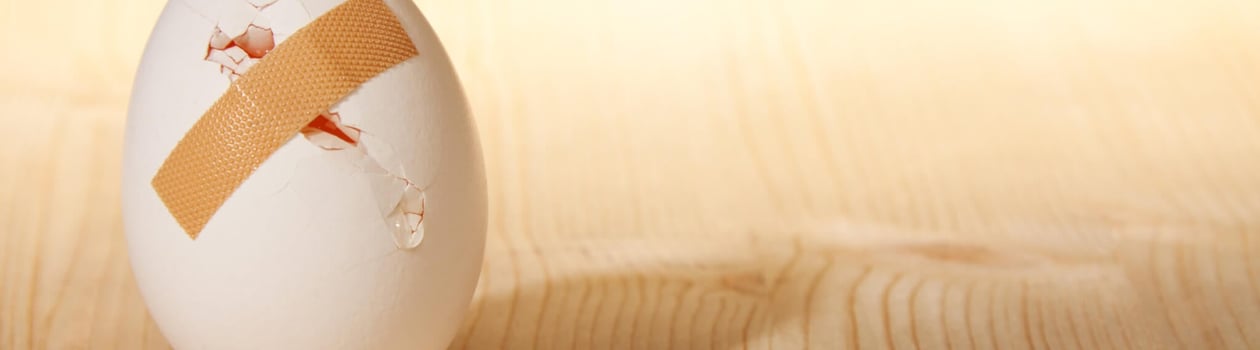
Sometimes you need a quick fix for something, whether that be clothing or a piece of software. Patches are used to seal holes in sweaters, correct issues with software, and even to close up leaks in boats.
I Need A Patch For That Day celebrates these quick fixes and the vital role they play in keeping us on the move. If you’ve ever been riding your bike and gotten a hole in the tire or found an error in a program you love, you’ve probably said: “I need a patch for that.”
How to Celebrate I Need A Patch For That Day
Start celebrating by making sure that all of your electronic devices have the latest patches for their software. Then you can go through your clothes and find out if they need a patch to cover any holes.
Done with that?
Now go see if you need to clear out a patch of the yard for a flower garden! Throughout your day, you’re sure to find a million different times that you really need a patch for that.
There are many ways to celebrate I Need A Patch For That Day that involve getting your hands dirty too. Patches, for instance, are a godsend when you have a puncture on your car or bicycle tire. All you need to do is buy a puncture repair kit, and you’re all set. Repairing a tire can provide you with an immense sense of satisfaction. Plus, you learn how to fix things while out on the road!
New tire repair patches are far more straightforward than their older counterparts. You no longer have to sand down the inner tube to create an adhesive surface, use rubber solution, or press down for two minutes on the rubber patch while it dries. You can stick on new patches like plasters, and they work just as well.
If being a mechanic for the day isn’t your thing, then you can start making traditional patches for your clothes, blankets, and throws. Have a quick rummage through your kids’ bedroom doors and see whether there are any ripped or torn items of clothing. Instead of throwing them out, find a funky, colorful patch and get on with repairs. You’ll be amazed and the difference it can make. The same applies to your blankets and throws. You can fix ‘em up good!
If you don’t have anything requiring physical repair, you can celebrate by getting creative. Try to come up with some exciting ideas for how you might use a patch to solve pesky issues in your life.
What about a patch that puts more money in your bank account?
How about coming up with a patch that makes you super fit without having to go to the gym?
What about a patch that makes broccoli taste like cookies and cream?
When you get into it, coming up with patch ideas is a lot of fun. You can play it with the kids. And it is a great way to teach them about the benefits of fixing things up.
I Need A Patch For That Day Timeline
“Patch” Enters Middle English
The word “patch,” meaning a piece of cloth used to mend or cover a hole, appears in Middle English, rooted in Old North French “pece” and related terms, and becomes associated with repairing garments.
Vulcanized Rubber Enables Practical Tire Patches
Charles Goodyear patents vulcanization, a process that makes rubber durable and elastic, which later allows inner tubes and their punctures to be repaired using rubber patches bonded to the tube.
“Patch” Used for Fixing Computer Programs
At Harvard’s Mark II electromechanical computer, operator Grace Hopper and colleagues documented a literal bug in a relay; early programmers speak of “patching” programs by altering small sections, a notion that evolves into the software patch.
Phone and Radio “Patches” Link Callers to the Airwaves
Amateur radio operators began using “phone patches,” devices that connect radio circuits to the public telephone network so a radio user can be “patched through” to a landline caller, popular during events like the Vietnam War.
Concept of a Nicotine Skin Patch Is Proposed
Austrian scientist Franz Gerhard Selz invents and patents a transdermal system to deliver nicotine through the skin, suggesting a patch as a tool to help smokers quit by providing controlled doses without cigarettes.
“Patch Tuesday” Era of Regular Software Fixes Begins
With the release of early networked operating systems and the growing internet, companies such as Microsoft started issuing downloadable software patches to fix bugs and security flaws, turning “patching” into a routine part of computer maintenance.
First Transdermal Nicotine Patch Approved in the United States
The U.S. Food and Drug Administration approves the first prescription nicotine patch for smoking cessation, making “a patch for that” a literal medical tool to reduce withdrawal symptoms by steadily delivering nicotine through the skin.
History of I Need A Patch For That Day
The history of I Need A Patch For That Day is primarily the history of the word patch and all it has come to mean in our society. The term itself mostly refers to a small piece of something. This could be a small piece of land, cloth, or code, just to name a few options.
The term also refers to connecting two things together, like telephone lines or radio circuits. Yet another meaning for the word patch is ‘to repair something hastily.’ All of these meanings have been mixed and added together to result in the various uses of the word patch today.
While the most common use of the word patch used to refer to fixing something, specifically clothing, there’s a good chance the most common use today refers to software.
Whether you’re running a business, a website, or building a game, it’s likely that you’ve installed multiple patches or updates to your software. This term is used because a software patch is a small piece of code that’s used to cover up or correct a problem in the existing code.
Of course, there are other kinds of patches as well. Consider the eyepatch, often considered to be the easiest way to recognize a pirate outside of a peg leg. Are you trying to quit smoking?
Then you’re probably going to be using a nicotine patch to help you along. Getting ready to garden? Then you’re going to need to clear out a patch of land to work on! No matter what you do, there’s a good chance you’re going to need a patch for that.
The original idea for I Need A Patch For That Day came from Thomas and Ruth Roy – two people intimately involved in the travel industry. The pair realized that patches weren’t just helpful, but fundamental to people’s lives, for all the reasons we mentioned above. Patches, it seemed, were everywhere, and yet there didn’t appear to be any way to celebrate them.
I Need A Patch For That Day became quite tongue-in-cheek. People use the day to pay homage to them, but it has more to do with celebrating them as objects and the fact that they seem to be able to do anything – like Chuck Norris.
Do you have a cold? Well, there’s a patch for that!
Do you have a test coming up? Well, there’s a patch for that, too!
In fact, when you start running with it, you soon realize that there’s a patch for everything that irks you in your life. Patches cover up the things that we don’t want in life. They’re a veritable “kiss it better” you can apply every time you’re in need.
Surprising Facts About Patches
Patches have played an essential role across history, from clothing repairs to modern technology. These facts reveal how something as simple as a “patch” has evolved into a powerful tool for durability, innovation, and security in everyday life.
Sewing Patches Helped Ordinary People Stretch Their Wardrobes for Centuries
Before mass-produced clothing became affordable, patches were a normal part of everyday dress rather than a sign of poverty.
In 18th and 19th-century Europe and America, households routinely patched garments to make fabric last longer, often using visible, contrasting cloth that reflected local styles and available scraps.
Even military uniforms were officially issued with extra cloth or patch kits so soldiers could repair tears in the field, underscoring how vital basic patching skills were to daily life.
Software “Patches” Grew Out of a Culture of Fixing Code on the Fly
The term “patch” in computing emerged in the mid‑20th century, when programmers literally taped paper patches over sections of punched cards to correct instructions instead of rerunning an entire job deck.
As software grew more complex, the word stuck as shorthand for small code changes that correct bugs or security flaws, and by the 1970s, operating system vendors were regularly shipping “patches” as discrete updates rather than complete new releases.
Security Patches Are Often the Only Thing Standing Between Users and Mass Exploits
Modern operating systems and popular applications receive a constant stream of security patches because attackers rapidly weaponize newly discovered vulnerabilities.
Studies by cybersecurity firms have shown that many large-scale ransomware outbreaks, including the 2017 WannaCry incident, succeeded largely because organizations failed to apply already-available patches, which turned what should have been a contained issue into a global disruption.
Visible Mending Turned Fabric Patches into a Quiet Design Movement
In the 21st century, a “visible mending” movement has reframed patches as a creative design choice rather than something to hide.
Drawing inspiration from Japanese sashiko stitching and European darning traditions, crafters deliberately use contrasting threads and bold fabric patches to highlight repairs, both to extend garment life and to signal values like sustainability and anti-fast-fashion.
Museums and design schools now treat such patched garments as examples of contemporary craft and material culture.
Transdermal Patches Changed How Some Medicines Are Delivered
Medical patches that deliver drugs through the skin, known as transdermal systems, were first approved in the late 1970s for motion sickness and later for conditions like chronic pain and hormone therapy.
These patches release medication at a controlled rate through a specially engineered polymer matrix or reservoir, which can improve convenience and reduce the spikes and crashes in drug levels seen with pills or injections.
Nicotine Patches Help Rewire Habit as Well as Reduce Withdrawal
Nicotine replacement patches, introduced in the early 1990s, provide a steady, low dose of nicotine through the skin to reduce cravings and withdrawal symptoms when people stop smoking.
Clinical trials and reviews have found that using a nicotine patch roughly doubles the chances of quitting successfully compared with going “cold turkey,” especially when combined with counseling that addresses the behavioral side of tobacco addiction.
Tire Patches Depend on Chemistry That Recreates Vulcanized Rubber Bonds
Rubber tire and tube patches work because the adhesive and “vulcanizing” cement partially dissolve and then chemically bond with the existing rubber surface.
When applied correctly, the patch and tire form a single continuous piece of vulcanized material that can sometimes be nearly as strong as the original, which is why a properly patched inner tube or tubeless tire can safely remain in service for thousands of miles.
I Need A Patch For That Day FAQs



You may also like

National Patch Day
National Patch Day celebrates sending fabric patches to kids facing serious illness, turning small handmade gifts into powerful symbols of hope, care, and connection.
- United States

National Customized Wheel and Tire Day
National Customized Wheel and Tire Day celebrates one of the most visible ways drivers make a vehicle feel like their own: the wheels and the rubber that meets the road. For some enthusiasts, it is all about performance; for others, it is pure style; and for many, it is the...
- Canada
- United Kingdom
- United States

National Rubber Ducky Day
Treat yourself to a fun bath time toy, attend a convention to admire people’s collections or race these bobbing birds to raise funds for good causes.
- Australia
- Canada
- United Kingdom
- and 1 more

Take Down Tobacco National Day of Action
Informing young people about tobacco dangers sparks healthier choices, shielding futures from addictive pitfalls with knowledge empowerment.
- United States
National days and holidays on May 21

Cannes Film Festival
The Cannes Film Festival is one of the most glamorous and important events in the film industry. Held annually in the beautiful city of Cannes on the French Riviera, this festival draws the biggest names in cinema, from directors to actors. The red carpet is a dazzling display of style...
- France

International Tea Day
While everyone loves a cup of tea, many of the workers and producers of that tea face poor conditions and pay. Help raise awareness and keep tea fair.
- China
- India
- Japan
- and 1 more

National Notebook Day
Open up a notebook and get writing. Jot down your to-do list, journal your thoughts, make lists or even try some creative writing with good old pen and paper.
- Japan
- United Kingdom
- United States

Chardonnay Day
Chardonnay Day is a lively celebration dedicated to one of the world’s most beloved white wines. Wine enthusiasts across the globe pause to appreciate the rich diversity and versatility of Chardonnay wines on this day. It is a chance to taste widely, compare styles, and learn why this single grape...
- Argentina
- Australia
- Brazil
- and 10 more
Seize Every Day
Join free for personalised recommendations, email reminders and exclusive guides. Never miss a day.