
Random Acts of Cardness Day is a reminder that encouragement does not have to be complicated to be meaningful. A greeting card can be a small object, but it carries something many people crave: proof that someone took time to choose a message, write a few personal words, and send them off with care. In a world where communication is often quick and disposable, a card feels slower, more deliberate, and easier to hold onto.
The spirit of the day is simple. It invites people to send “just because” cards that offer warmth without expecting anything in return. The act can be as light as a funny postcard to a friend who needs a laugh, or as thoughtful as a handwritten note to someone who rarely hears they are appreciated. What matters is sincerity, not perfection. A short message that sounds like a real person is usually the one that lands the best.
How to Celebrate Random Acts of Cardness Day
Send a Random Card
The easiest way to mark Random Acts of Cardness Day is to send a card for no reason other than kindness. A surprise card has a different energy than a birthday or holiday card because it is not tied to an obligation. It tells the recipient, “You crossed my mind,” and that can be incredibly grounding.
Keeping the message short helps remove the pressure. A card does not need a polished quote or a big emotional reveal. A few honest sentences are enough, such as:
- Thanking someone for a specific thing they did that still matters.
- Noting a trait that makes them easier to be around.
- Saying they are missed and appreciated.
- Offering a simple encouragement for whatever they are facing.
Choosing who to write can be part of the fun. Many people start with their closest circle, then branch out to “in-between” relationships: an old neighbor, a former coworker, a coach, a cousin they do not talk to often, or a friend who has been quiet lately. A card is a gentle way to reopen a line of connection without putting someone on the spot. It also works well for people who are not great at small talk but still want to show up.
A few practical habits make it easier to follow through:
- Keep a small stash of blank cards and a few general designs for thank-you notes, encouragement, and humor.
- Store stamps and a pen in the same place as the cards.
- Jot down addresses when they are offered instead of waiting until the last minute.
- Write the message first, then pick the card if that makes the words flow better.
For hand delivery, the same “surprise” effect still works. A card can be left on a desk, tucked into a backpack, placed by a coffee mug, or slipped into a book as a bookmark. The presentation does not have to be elaborate. The personal note is the gift.
It also helps to respect boundaries. If the relationship is complicated or distant, a warm, neutral message can be the most appropriate. Something like “Thinking of you and wishing you a peaceful week” offers care without asking for a reply or stirring up old tension. The goal is to brighten someone’s day, not to create a new obligation.
Make Some Handcrafted Cards
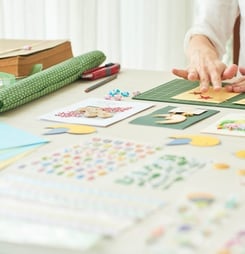
A store-bought card is lovely, but a handmade card adds an extra layer of intention. It signals time, attention, and a willingness to create something just for that person. Handmade does not have to mean artistic or intricate. It can be simple, clean, and still feel special.
A folded piece of cardstock with a small drawing and a few sincere lines can be more memorable than something expensive. A group activity also fits the day well. Families, classrooms, neighbors, and coworkers can make cards together, then each person can send a few. Creativity tends to loosen people up, and card-making gives kindness a practical shape.
Approachable ideas that do not require specialized supplies include:
- Border doodles: A simple frame of stars, dots, or flowers around the edge, with a message in the center.
- Cut-and-paste designs: Patterns made from scrap paper, old magazines, or leftover wrapping paper.
- Sticker-and-stamp cards: A polished look with minimal effort, especially good for people who feel uncertain about drawing.
- Photo cards: A printed snapshot of a pet, a favorite view, or a shared memory with a short caption.
Those who enjoy extra detail can add texture, but it helps to keep the card mail-friendly. Flat decorations tend to travel better. If something is likely to shed, smear, or break off, it can turn a cheerful note into a mess. A few choices also make cards easier for more recipients to enjoy: readable handwriting, high contrast colors, and straightforward messages.
Handcrafted cards shine when they sound like the sender. A short line such as “I made this and thought of you” or “This reminded me of you” often feels more personal than a long paragraph. It invites the recipient into the moment of making, which is exactly what makes the day feel human.
Send Cards to Troops Or Hospitals
Some people celebrate Random Acts of Cardness Day by sending cards to those going through difficult seasons, including people in medical settings or serving in the military. In environments that can feel stressful, repetitive, or isolating, a card can offer a brief return to normal life. It can also provide encouragement without demanding energy the recipient may not have.
When sending cards through an organization, following guidelines is essential. Many groups have rules about what can be included and how messages should be written. A few common best practices are:
- Keep cards flat and free of bulky add-ons.
- Avoid including food, money, or personal contact details.
- Use supportive, general wording rather than overly personal messages.
- Skip sensitive topics and keep the tone steady and kind.
- Do not request a reply.
Good messages in these situations are often simple: “Wishing you comfort and strength,” “Thank you for what you do,” or “Hope you have a calmer day ahead.” Gentle humor can help too, as long as it is widely understandable and not sharp or sarcastic.
It can also be meaningful to write to local community helpers if cards are welcomed. Senior living communities, shelters, clinics, schools, and libraries sometimes accept notes for residents, clients, or staff. The key is to confirm what is appropriate before sending or dropping anything off, so the gesture stays helpful rather than creating extra work.
Another option is to aim kindness closer to home while still thinking broadly. A card to a caregiver, a teacher, a parent of a new baby, or a friend dealing with grief can be a steadying presence. These are the people who may look “fine” from the outside but carry a lot privately. A quiet note of support can land at exactly the right time.
History of Random Acts of Cardness Day
Random Acts of Cardness Day grew from a community of card senders sometimes known as “Card Warriors,” people who treat greeting cards as a simple tool for spreading encouragement. The idea may sound old-fashioned at first, especially in an era of instant messages. Yet the day has a grassroots feel, centered less on buying anything specific and more on practicing connection in a tangible way.
The movement is widely associated with a group called Random Acts of Cardness, often shortened to RAoC. Accounts of its beginnings commonly describe it starting in the mid-2010s and being connected to a founder named Megan Evans, who used card sending as part of her recovery after a traumatic brain injury. In that context, the appeal makes sense.
Recovery can be slow, and isolation can creep in. A card project offers a manageable routine and a reason to reach outward: pick a card, write a message, address an envelope, and imagine the moment it is opened.
Early efforts are often described as small-scale and service-minded, including sending cards to children in hospitals. That starting point fits the heart of the day. For someone stuck in a medical setting, a bright envelope can interrupt the sameness of the day.
It can feel like a celebration arriving out of nowhere, even if it is only paper and ink. From there, the concept naturally expands, because the need is not limited to hospitals. Many people, in many situations, benefit from being noticed.
Over time, the project grew into a larger community of senders who trade ideas, organize exchanges, and encourage each other to keep writing. The sustained popularity of the day points to a larger truth about communication: people still value physical reminders of care.
A digital message can be heartfelt, but it is easy to miss, scroll past, or lose in a flood of notifications. A card arrives as an object. It can sit on a counter, be pinned to a board, or be tucked away and found years later. Even small details like handwriting, doodles, or a crossed-out word make it feel undeniably personal.
Random Acts of Cardness Day also reframes kindness as something practical. It does not require a big budget or a grand public gesture. It asks for a stamp, a few minutes, and the willingness to think of someone else. That simplicity is part of its staying power. A “random” card is not random in impact. It can strengthen friendships, reopen gentle connections, and reassure someone who has been feeling invisible.
At its core, the day celebrates a quiet form of generosity: attention. A card says, “You matter enough for me to pause.” For many recipients, that pause is the part they remember most.
Victorian Britain Helped Turn Greeting Cards Into a Mass Phenomenon
While people had exchanged New Year and Valentine messages for centuries, the modern commercial greeting card took off in Victorian Britain when Londoner Henry Cole commissioned the first mass-produced Christmas card in 1843.
Advances in color lithography and the introduction of cheap “penny post” postage meant even working-class families could afford to send decorative cards, and by the late 19th century, millions were sent each holiday season.
Handwritten Notes Create Stronger Emotional Impact Than Senders Expect
Experiments run by psychologists at the University of Texas at Austin found that people consistently underestimate how meaningful a simple handwritten note will be to its recipient.
In one study, recipients of brief gratitude letters reported significantly higher happiness and surprise than senders predicted, suggesting that even small, unexpected messages on paper can have a powerful emotional effect.
Sending Cards Can Strengthen Social Bonds and Reduce Loneliness
Social scientists have long noted that written correspondence helps maintain “weak ties,” such as distant friends or acquaintances, which can be crucial for emotional support.
Surveys by the United Kingdom’s Greeting Card Association report that many people keep meaningful cards for years, and respondents frequently describe them as tangible reminders that someone cares, which can buffer feelings of isolation during difficult times.
Acts of Kindness Benefit the Giver’s Mental Health
A 2017 meta-analysis in The Journal of Experimental Social Psychology found that people who regularly perform small acts of kindness, such as giving notes or small gifts, experience measurable boosts in well-being.
Across multiple studies, participants who engaged in these prosocial behaviors reported higher life satisfaction and reduced symptoms of depression compared with control groups.
Art-Making, Including Card Crafting, Supports Brain Injury Recovery
Occupational therapists often incorporate creative projects like handmade cards into rehabilitation programs for people recovering from brain injuries.
Case reports and small studies show that structured art activities can improve fine motor skills, attention, and emotional expression, while also giving patients a sense of accomplishment that supports overall quality of life.
The U.S. Greeting Card Market Remains Surprisingly Large in the Digital Age
Despite email and social media, Americans still buy billions of paper greeting cards each year.
The U.S. Greeting Card Association estimates annual retail sales of greeting cards at around $7–8 billion, with an average household purchasing 20 to 30 cards annually, many of them for non-holiday occasions such as “thinking of you” or encouragement.
Children’s Handmade Cards Are Used in Hospital Compassion Programs
Many pediatric hospitals and related nonprofits invite children, schools, and community groups to create handmade cards for patients they have never met.
Programs like “Cards for Hospitalized Kids” in the United States distribute tens of thousands of these cards annually, noting that simple, colorful notes from strangers can provide comfort, distraction, and a sense of being remembered during hospital stays.