Skip to content

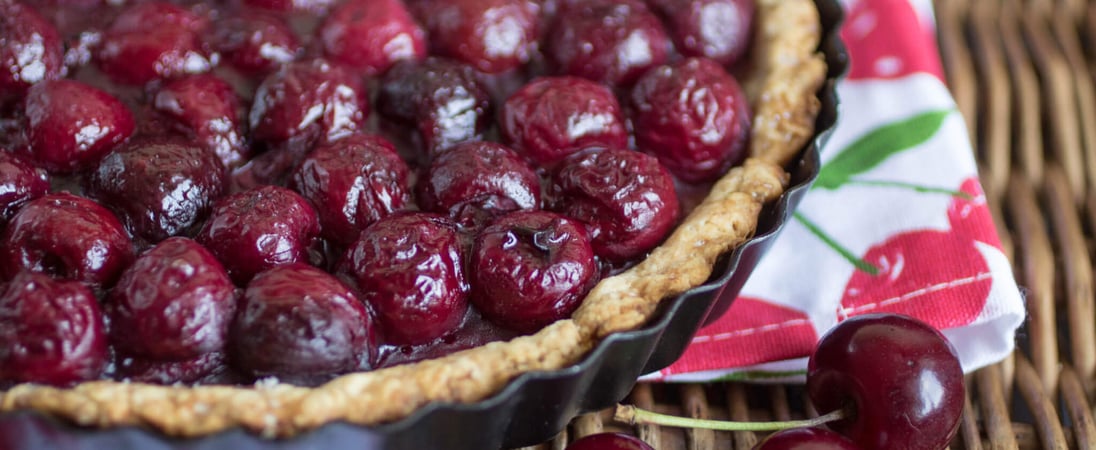
It’s sweet and fruity, tasty and delicious, and it gives cherries their chance to shine in a crisp, buttery crust. National Cherry Tart Day is all about enjoying a dessert that manages to be both charmingly simple and secretly impressive, especially when those ruby-red fruits get glossy and jammy in the oven.

How to Celebrate National Cherry Tart Day 

Short on ideas of how to observe this day? Have a load of delicious fun observing National Cherry Tart Day with some of these delightful and delectable plans:

Try Making a Cherry Tart 

Perhaps it would be fun to get involved with National Cherry Tart Day by testing out those culinary skills in the kitchen. Whether making the pastry from scratch or using a refrigerated crust, it’s fun to make a homemade cherry tart. While some folks might want to use fresh cherries, others may be just as satisfied with a can of cherry pie filling that will render this a super quick and easy dessert!

To make it feel like a true tart (and not just a pie wearing a different hat), it helps to think about a few classic tart basics:

Choose a tart style that fits the mood

  • Classic tart shell: A firm, crisp pastry pressed into a tart pan (often with fluted edges). It’s neat, sliceable, and great for showing off fruit.
  • Rustic, free-form tart: The “no special pan required” option. Dough is rolled out, fruit is piled in the center, and the edges fold up casually. It tastes just as good and looks artistically unbothered.
  • Tartlets: Mini versions that feel fancy even if the baker is wearing pajamas. They also bake a little faster and are easy to portion for sharing.

Pick the right cherries
Cherry tarts can be made with sweet cherries (like Bing or Rainier) or tart cherries (often sold as “sour” cherries). Tart cherries are especially popular in baking because their sharper flavor balances sugar and buttery pastry. Sweet cherries work beautifully too, but the filling can benefit from a little extra brightness, such as a squeeze of lemon juice, to keep the flavor from tasting one-note.

Fresh, frozen, or canned can all work

  • Fresh: Great texture and flavor, but they require pitting and can be messy in the best way.
  • Frozen: Convenient and often picked ripe. Thawing and draining helps control extra liquid.
  • Canned cherries or prepared filling: The fastest route to success. If using prepared cherry pie filling, it already includes sweetener and thickener, so it can go straight into the shell.

Prevent the dreaded soggy bottom
Cherry filling is juicy, and tart shells are proud, delicate creatures. A few practical moves keep the crust crisp:

  • Chill the dough before baking to reduce shrinking.
  • Blind bake the crust (partly or fully) if the filling is especially wet or if a very crisp base is the goal.
  • Create a barrier: A light brush of egg before a final few minutes of baking can help seal the crust. Some bakers also use a thin layer of melted chocolate under fruit for a moisture shield, which also happens to taste excellent.

Thicken with intention
A cherry tart filling needs enough structure to slice cleanly. Common thickeners include cornstarch or tapioca, and the amount often depends on how juicy the fruit is. Frozen cherries usually release more liquid than fresh, so they may need a little extra help.

Add flavor without overpowering the cherries
Cherry pairs naturally with:

  • Almond (extract, sliced almonds, or a frangipane layer)
  • Vanilla for warmth
  • Lemon zest or juice for lift
  • A subtle pinch of cinnamon or cardamom if a cozy bakery vibe is desired

Make one large tart for the family or a group to slice up, or divide the recipe up into small tartlets that make it even easier to pass out and share. The baking time will likely be a bit shorter for the smaller portions, which is even more of a bonus. And if the tart needs a “chef’s finishing touch,” a dusting of powdered sugar or a spoonful of whipped cream does wonders.

Enjoy a Cherry Tart 

Whether deciding to make a cherry tart at home or enjoy choosing one from a local bakery or cake shop, this National Cherry Tart Day, invite friends round for tea and offer them a slice! It’s a perfect way to celebrate this delicious fruit that can be made into all sorts of amazing sweet treats.

Cherry tart is also a dessert that rewards attention. A good one has contrasts: crisp crust against soft fruit, sweetness against tang, and a little buttery richness tying it all together. It can be served in a few satisfying ways depending on the texture and style:

Serving ideas that never disappoint

  • Warm tart + ice cream: The classic temperature contrast. Vanilla is traditional, but cherry also loves pistachio, almond, or even a lightly tangy frozen yogurt.
  • Room temperature + whipped cream: Especially nice for tarts with a delicate crust that could crumble too enthusiastically when warmed.
  • A drizzle of cream or custard: For people who like their dessert slightly dramatic.

And yes, cherries do bring some nutritional perks to the party. They contain vitamin C and potassium, plus naturally occurring plant compounds that give cherries their deep red color. Those pigments, often discussed in the context of antioxidant activity, are one reason cherries get so much attention in wellness conversations. Tart cherries are also studied for compounds that may relate to inflammation and recovery after exercise, and they contain small amounts of naturally occurring melatonin. That said, a cherry tart is still a dessert, and its main job is joy, not medical care.

Of course, in celebration of the day, don’t forget to give this delicious dessert pride of place after the main course, on the top shelf of the dessert cart, and rightfully so. Delight those taste buds!

Host a National Cherry Tart Day Event 

Invite a few friends to celebrate this important day with a little party or event. Make it a fun diversion from work by setting up a cherry tart bake off in the breakroom at the office. Or have friends and family over to the house to share in the delight of a cherry tart themed party. No matter how it is done, make sure there are plenty of cherries and plenty of fun!

To make hosting feel easy (and not like running a tiny pastry factory), it helps to give the gathering a simple structure:

Make it a tart “tasting table”
Offer different tart variations side-by-side so guests can compare textures and flavors:

  • A classic cherry tart with a simple fruit filling
  • A cherry-almond version with frangipane
  • A rustic galette-style cherry tart
  • A “shortcut” tart made with prepared filling, because convenience deserves respect

Add a few toppings in small bowls: whipped cream, sliced almonds, shaved chocolate, vanilla ice cream, or even plain yogurt for a tangy option.

Try a friendly bake-off format
Keep rules light so it stays fun:

  • Everyone brings one tart, tartlets, or even cherry bars if that’s their comfort zone.
  • Have categories like “Best Crust,” “Best Cherry Flavor,” or “Most Likely to Disappear First.”
  • Encourage bakers to label ingredients for guests with allergies or dietary needs.

Offer a no-bake activity
Not every celebration needs an oven marathon. A few low-effort ideas:

  • Decorate tartlets: Use store-bought tart shells, spoon in cherry filling, and let guests add toppings.
  • Cherry pit spitting contest (outdoors only): Silly, classic, and best saved for a crowd that appreciates harmless chaos.
  • Recipe swap: Guests bring printed recipes or write down their best baking tips. Sometimes the best takeaway is learning how someone else keeps their crust from shrinking.

Don’t forget food safety basics
If the tart includes custard, cream, or dairy-based toppings, refrigeration is a smart plan after serving time. Fruit tarts are generally happiest eaten sooner rather than later anyway, when the crust is still crisp and the filling is at peak flavor.

National Cherry Tart Day Timeline

  1. Theophrastus Describes the Cherry Tree

    In his botanical work “Enquiry into Plants,” Greek philosopher Theophrastus gives one of the earliest written descriptions of cherry trees, marking cherries as a known and cultivated fruit in the ancient Mediterranean.

  2. Pliny the Elder Records the Spread of Cherries

    Roman naturalist Pliny the Elder writes that General Lucullus brought cultivated cherries from Asia Minor to Italy, and that cherries spread throughout parts of the Roman Empire, helping establish them as a common fruit in Europe.  

  3. Italian Crostata Emerges as Early Fruit Tart

    Cookbooks from Renaissance Italy describe “crostata,” an open‑faced tart of pastry and fruit or jam, providing one of the earliest clearly documented European fruit tarts that later influences similar desserts across the continent.  

  4. Sweet Fruit Tarts Gain Popularity in Europe

    As sugar becomes more available in Renaissance kitchens, European cooks shift from largely savory meat tarts to sweet tarts filled with fruit and custards, laying the groundwork for modern cherry tarts.  

  5. Enriched Shortcrust Pastry Becomes Standard for Tarts

    Culinary historians note that enriched shortcrust doughs begin to be used widely for tart shells around the mid‑16th century, creating the tender, crumbly bases now associated with classic fruit and cherry tarts.

  6. First Successful Cherry Plantings on Old Mission Peninsula

    Presbyterian missionary Peter Dougherty plants cherry trees on Old Mission Peninsula near present‑day Traverse City, Michigan; the trees thrive and inspire larger orchards that will eventually supply cherries for pies and tarts.

  7. Commercial Tart Cherry Orchards Established in Michigan

    The first commercial tart cherry orchards are planted on Ridgewood Farm on Old Mission Peninsula, marking the beginning of Michigan’s large‑scale tart cherry industry that underpins many American cherry desserts, including tarts.

History of National Cherry Tart Day

Historically, in certain parts of the world, cherries were plentiful in supply but their uses were limited, so a number of recipes have been created to solve this issue. Although cherries are grown on several continents, they have a relatively short growing season.

That short season is exactly why cherries inspire such devotion. Fresh cherries are a “get them while they’re good” fruit, which nudges cooks toward recipes that celebrate them at their best, or preserve them for later through jams, drying, or baking. A tart is one of the most satisfying solutions because it’s straightforward: fruit, sugar, heat, and a crust that turns everything into dessert.

But while cherries are in season, modern cherry lovers can find a plethora of ways to enjoy these little red fruits with a sweet but tart flavor. And the cherry tart is the dessert that is celebrated on this, National Cherry Tart Day!

While many people may be familiar with the cherry pie as an all-American treat, the cherry tart may be slightly less well-known. In a cherry tart, the fruit is presented in an appealing open-faced crusty pastry shell with superior ingredients that leave the mouth watering for more.

A tart also has a slightly different personality than a pie. Where pies often feel cozy and homey, tarts tend to look a bit more polished. Tart pans help create straight sides and a clean edge, and the open top means the fruit gets to be the decoration. It’s dessert with built-in presentation, which is a nice trick for something made of flour and butter.

Cherries have been enjoyed in the United States since the 1600s, and they have been one of the major fruits of Michigan for over a century, since 1893 when the trees were introduced to the state. And the cherry tart is just one of the many ways that the state celebrates this fruit, right in the middle of cherry season!

Michigan is especially associated with tart cherries, the type many bakers consider ideal for baking because of their bright acidity. Tart cherries are frequently processed into products like frozen fruit, dried cherries, juice, and canned fillings, which helps make cherry desserts possible far beyond the few weeks when fresh fruit is at its peak.

In fact, it is thought that the origins of National Cherry Tart Day date back to the annual National Cherry Festival that is held annually in Traverse City, in the northern reaches of the state of Michigan. The day is held in mid June, just at the time when the cherries are at their finest.

It’s worth noting that food-focused celebration days are often informal and can be promoted through communities, calendars, and enthusiastic bakers rather than through official proclamations. National Cherry Tart Day fits that modern pattern: a dessert people already love, paired with a seasonal ingredient, given a special nudge to make it feel like an occasion. And while it’s frequently associated with cherry festivals and cherry-growing regions, the real tradition is simpler and more universal: when cherries are good, put them in a tart.

So get those taste buds ready to enjoy and celebrate National Cherry Tart Day!

Facts About National Cherry Tart Day

  • Hybrid Origins of the Tart Cherry

    The tart or sour cherry most often used in pies and tarts is a separate species, Prunus cerasus, that likely arose thousands of years ago from natural hybridization between the wild sweet cherry (Prunus avium) and the steppe or ground cherry (Prunus fruticosa) in the region around the Black and Caspian Seas and central/eastern Europe.

    This hybrid origin helps explain why tart cherries combine intense flavor, high acidity, and hardiness that make them well suited to cooler climates and baking.

  • From Roman Orchards to Modern Pastries

    Sour cherries were already recognized as distinct from sweet cherries in ancient Rome: in the first century CE, Pliny the Elder described types such as the Macedonian and Chamaecerasus sour cherries, noting their cultivation across the empire.

    Over centuries, these tangier cherries became prized for cooking and baking, forming the backbone of many European cherry pastry traditions that later inspired American cherry pies and tarts.

  • Medieval Tarts Were Status Symbols

    Tarts began as elite medieval European dishes, often appearing on banquet tables more for appearance than for everyday eating.

    Historical food references describe richly enriched doughs and custard-based fillings presented in open, decorative forms, so that colorful fruits or smooth custards could be seen, making fruit tarts as much a visual centerpiece as a dessert long before they became common café fare.

  • Why Bakers Prefer Tart Cherries

    Cooks and food scientists note that tart cherries, particularly the Montmorency variety, offer more acidity and a slightly lower natural sugar content than sweet cherries, which lets bakers add sugar without losing a bright, balanced flavor.

    Extension and industry materials point out that this contrast of sharp fruit against sweet pastry is one reason tart cherries dominate in commercial pie and tart fillings.

  • Michigan’s Montmorency Powerhouse

    Modern U.S. tart cherry production relies heavily on the French-origin cultivar ‘Montmorency,’ which dominates commercial orchards, especially in Michigan.

    USDA and industry reports show that Michigan has been a leading tart cherry state for more than a century, with hundreds of millions of pounds harvested in good years and much of the crop processed into frozen fruit and fillings destined for pies and tarts sold nationwide.

  • Tart Cherries Are Mostly a “Processing Fruit”

    Unlike sweet cherries that are often eaten fresh, tart cherries are overwhelmingly grown for processing into products such as canned or frozen fruit, pie fillings, juices, concentrates, and dried cherries.

    Agricultural overviews estimate that the bulk of the U.S. tart crop enters these processed channels, allowing bakeries and manufacturers to offer cherry pies and tarts year-round despite the fruit’s short harvest season.

  • Anthocyanins Give Cherries Their Color and “Punch”

    The deep red color of many cherries, especially tart varieties, comes from anthocyanins like cyanidin glycosides, which are potent antioxidant pigments.

    Reviews in scientific journals report that these compounds can reduce markers of oxidative stress and inflammation in controlled studies, particularly when consumed as tart cherry juice or concentrates, although dessert portions like a slice of tart provide much smaller doses than research products.

National Cherry Tart Day FAQs

You may also like

Jump to main navigationJump to content