
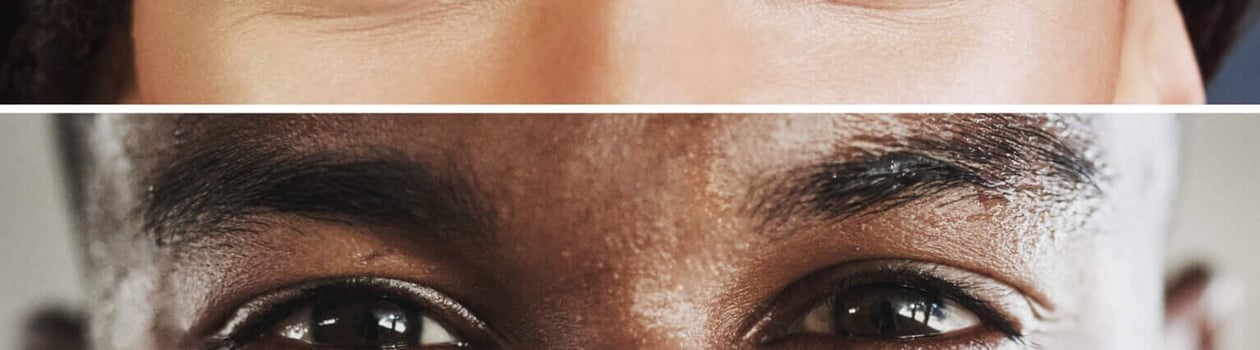
International Nystagmus Awareness Day brings attention to a condition that affects how the eyes move and how the brain receives visual information. Imagine trying to read a menu, watch a sports game, or make eye contact while the eyes shift rapidly on their own.
That involuntary motion is the hallmark of nystagmus, and for many people, it turns everyday visual tasks into a mix of strategy, patience, and problem-solving.
Nystagmus can be present from infancy or develop later due to an underlying health issue. The movements may be side to side, up and down, rotary, or a combination, and they can vary in intensity throughout the day. For some, vision may feel simply “less sharp.”
For others, the world may seem to bounce or blur, especially in acquired forms of the condition. Either way, nystagmus can affect far more than reading. It can influence confidence in new environments, ease on stairs, comfort in bright lighting, and how quickly someone can spot details at a distance.
This awareness day centers the lived reality of people with nystagmus and encourages better support in schools, workplaces, and public spaces. It also helps the general public understand a key point: nystagmus is not a quirky habit or nervous tic. It is a neurological and/or visual condition that deserves practical accommodations and respectful curiosity, not assumptions.
Increased understanding can lead to earlier recognition, more accessible tools, and stronger research efforts toward improved treatments. By shining a light on this condition, International Nystagmus Awareness Day supports a world where those affected can navigate life with more confidence, comfort, and independence.
How to Observe International Nystagmus Awareness Day
Celebrating International Nystagmus Awareness Day offers a chance to support those affected and educate others in ways that are useful, not performative. The most meaningful observances tend to focus on accurate information, everyday accessibility, and listening to people who actually live with the condition.
Organize Educational Workshops
Host a workshop, panel, or lunchtime talk that explains nystagmus in plain language. Bringing in eye care professionals can help cover the basics: what nystagmus looks like, why it happens, and how it affects vision beyond simple sharpness. Including an orthoptist or low vision specialist can be especially helpful because management is often about function, not just diagnosis.
Workshops can also address the practical questions people are often afraid to ask:
- Why someone might tilt or turn their head to see better (many people use a “null point,” a gaze position where the eye movement is reduced).
- Why eye contact can feel complicated even when someone is fully engaged.
- Why lighting, glare, and fatigue can change visual performance from one moment to the next.
- Why a person may read more comfortably with large print or a screen close to their face.
If the event includes Q and A, encourage respectful language and emphasize that nystagmus varies widely. Two people with the same diagnosis can have very different day-to-day experiences.
Launch a Social Media Campaign
Social media works best for awareness when it trades vague inspiration for concrete clarity. Share short posts that explain what nystagmus is, what it is not, and how to be supportive. Personal stories can be powerful, especially when they focus on real-life adaptations: preferred seating in a classroom, using phone zoom to read labels, taking breaks to reduce visual fatigue, or choosing routes with better lighting.
A strong campaign can also highlight inclusive design tips that benefit many people, not only those with nystagmus:
- Use high-contrast text and avoid busy backgrounds.
- Keep important information in larger fonts.
- Add captions to videos.
- Avoid rapid flashing graphics that make content harder to track.
Another helpful angle is myth-busting. People often assume the eye movement means the person cannot see at all, or that glasses “should fix it.” Clear messaging can correct those misconceptions while keeping the tone friendly and human.
Host Fundraising Events
Fundraising is a natural fit for this awareness day because research and support services matter. A small community event can be simple and still effective: a themed bake sale, a silent auction, a donation-based fitness class, or a virtual game night. The key is to connect the event to real needs, such as funding for research, family resources, or peer support programs.
To keep fundraising inclusive:
- Make printed materials easy to read from a distance.
- Use clear signage with large fonts.
- Offer digital ways to participate for people who find crowded spaces visually exhausting.
Even when the fundraising goal is modest, the visibility can be huge. A well-explained donation drive can spark conversations that outlast the event itself.
Create Art and Writing Contests
Nystagmus is a visual condition that makes creative projects an unexpectedly good way to build empathy. Invite participants to create artwork or short writing pieces about what it feels like when vision is unstable, when details are hard to lock onto, or when the environment is visually overwhelming.
For school-age participants, prompts can keep things thoughtful rather than pity-based:
- “Design a classroom that makes seeing easier for everyone.”
- “Write about a day when you had to solve a problem using creativity and tools.”
- “Create a poster that explains a vision-friendly tip.”
Displaying submissions in libraries, community centers, or online galleries can extend the reach of the message. When posting digital galleries, use image descriptions so the exhibit is accessible to more viewers.
Collaborate with Schools
Schools are one of the most important places to improve awareness because nystagmus often starts early in life, and students spend years navigating reading, board work, and social dynamics. Collaborate with educators to share accurate resources and to encourage simple supports that can make a large difference.
Practical classroom accommodations may include:
- Seating that matches the student’s best viewing angle, not just “front row.”
- Extra time for reading-heavy tests and assignments.
- Access to large print, digital copies, or screen magnification.
- Permission to use a tablet or phone camera zoom to view board content.
- Reduced penalties for slower copying speed when vision is the bottleneck.
- Attention to glare from windows, whiteboards, or overhead lighting.
Awareness also helps with social understanding. When classmates learn that eye movements are involuntary and not contagious, curiosity becomes calmer and teasing becomes less likely. Teachers can model respectful language and set expectations for inclusion without putting the student on the spot.
International Nystagmus Awareness Day Timeline
Early Clinical Descriptions of Nystagmus
Ophthalmologists and neurologists in the mid‑19th century began publishing detailed bedside descriptions of involuntary eye oscillations, separating nystagmus from other eye movement disorders in clinical practice.
Use of “Nystagmus” in Modern Neurology and Ophthalmology
By the early 20th century, the term nystagmus was firmly established in neurology and ophthalmology texts, described as rhythmic, involuntary eye movements linked to both vestibular and central nervous system disease.
Development of Electronystagmography
Clinicians introduce electronystagmography, using electrodes around the eyes to record corneo‑retinal potentials, allowing objective measurement of eye movements and transforming the diagnosis of vestibular nystagmus.
Expansion of Low Vision Rehabilitation
Specialized low vision services emerge in eye hospitals and rehabilitation centers, combining optical aids, orientation and mobility training, and counseling to help people with nystagmus and other causes of visual impairment function more independently.
Tenotomy and Reattachment Surgery for Nystagmus
Dell’Osso and colleagues report that extraocular muscle tenotomy with reattachment can reduce nystagmus amplitude and improve visual function in some patients, stimulating broader interest in surgical management of infantile nystagmus.
FRMD7 Identified in Familial Infantile Nystagmus
Researchers demonstrate that mutations in the FRMD7 gene cause X‑linked idiopathic infantile nystagmus, providing the first well‑defined genetic basis for many familial cases and enabling molecular diagnosis and counseling.
High‑Speed Eye Tracking and Comprehensive Treatment Reviews
High‑speed video eye tracking, advanced imaging, and systematic reviews clarify nystagmus waveforms and evaluate surgical, pharmacologic, optical, and behavioral therapies, leading to more standardized, evidence‑based management strategies.
History of International Nystagmus Awareness Day
International Nystagmus Awareness Day began as an initiative of the Nystagmus Network, a UK-based charity created to support people with nystagmus and their families. Founded in 1984, the organization built a reputation for turning a frequently misunderstood condition into something people could talk about openly and accurately, especially in places where it matters most: clinics, schools, and everyday life.
The reasoning behind a dedicated awareness day is straightforward. Nystagmus is often visible, but public understanding of it can be surprisingly limited. Many people encounter the term only in a medical setting, and even then it may be explained quickly, with the focus placed on the eye movement rather than the lived experience. Establishing a specific day provided a focal point for education, storytelling, and community-building, all in one recognizable moment.
Over time, the day has gained broader recognition beyond its original base, with individuals, families, clinicians, and advocacy groups joining in to share information. That widening participation matters because nystagmus is not a niche curiosity. It intersects with eye health, neurology, accessibility, and inclusive design, and it touches every stage of life, from early childhood screening to adult workplace accommodations.
As awareness has grown, the conversation has matured, too. Early public messaging often centered on simply naming the condition. More recent efforts emphasize nuance: there are different types of nystagmus, different causes, and different support needs.
Some people have infantile nystagmus, which appears in the first months of life and may be associated with visual pathway differences or eye conditions present from birth. Others develop acquired nystagmus later, sometimes alongside dizziness or a sensation that the environment is moving. That distinction is important because acquired nystagmus can signal an underlying medical issue that needs timely evaluation.
The awareness day’s ongoing impact is also visible in how people talk about support. Rather than presenting nystagmus as something to “overcome” through willpower, advocates encourage practical problem-solving: optimized eye exams, appropriate eyewear, low vision services, assistive technology, and environmental changes that reduce strain.
In some cases, treatments such as prism lenses, medications for specific acquired forms, or eye muscle surgery to improve head posture may be discussed with specialists. The emphasis stays on function and quality of life, not on one-size-fits-all promises.
International Nystagmus Awareness Day continues to grow because it answers a real need. It gives people with nystagmus a platform to explain their experience in their own words, it gives families a way to find community, and it gives everyone else a clear invitation to learn. That combination, equal parts education and empathy, is what keeps the day relevant and steadily expanding in reach.
International Nystagmus Awareness Day Facts
The Brain’s Balance System Can Drive Eye Oscillations
The same inner ear system that helps a person keep their balance also helps keep their eyes steady.
When disease or injury disrupts the vestibular organs or their brain pathways, the brain can miscalculate how to hold gaze, producing vestibular nystagmus in which the eyes rhythmically jerk even when the head is still.
Infantile Nystagmus Often Has a Genetic Signature
Many cases of infantile nystagmus run in families, and one of the best-studied causes is a mutation of a single gene called FRMD7 on the X chromosome.
In affected families, males who inherit a faulty copy of FRMD7 usually develop nystagmus in early infancy, while female carriers may have milder symptoms or sometimes appear unaffected because of X‑chromosome inactivation.
Nystagmus and Albinism Frequently Occur Together
Children with ocular or oculocutaneous albinism commonly develop nystagmus because the pigment shortage in their eyes disrupts normal development of the visual pathways.
Studies summarized in clinical genetics reviews show that misrouting of optic nerve fibers and foveal underdevelopment in albinism make it harder for the brain to stabilize images, which in turn increases the likelihood of continuous eye movements.
A “Null Point” Head Turn Can Sharpen Vision
Many people with infantile nystagmus discover that their eye movements are calmer when they look in a particular direction.
To exploit this “null point,” they naturally adopt a persistent head turn or tilt so that everyday viewing lines up with that quieter eye position, a strategy that can measurably improve visual acuity even though the eye movements never completely disappear.
Contact Lenses Can Sometimes Steady What a Person Sees
Although contact lenses do not stop the eyes from oscillating, some people with nystagmus report clearer, more stable vision with rigid or soft lenses than with glasses.
Because the lens moves with the eye, the optical center stays aligned with the pupil throughout each oscillation, which can reduce image smear compared with a spectacle lens fixed in front of a moving eye.
Certain Medications Can Quiet Specific Forms of Nystagmus
For a subset of patients, neurologically acting drugs such as gabapentin, memantine, or baclofen can reduce the intensity of particular nystagmus waveforms and ease symptoms like oscillopsia.
Large eye‑care organizations caution that these medicines are used off‑label, help only some patients, and must be prescribed by specialists who weigh potential side effects against the visual gains.
Nystagmus Can Greatly Slow Reading Speed in Children
Clinical and educational reports note that children with nystagmus typically read more slowly than their peers, even when text is enlarged, because their eyes struggle to hold each word steady long enough for quick decoding.
Research cited in pediatric ophthalmology resources shows that simple classroom adjustments such as front‑row seating, high‑contrast large print, and extra time on tests can significantly narrow this reading gap.
International Nystagmus Awareness Day FAQs

You may also like
Wobbly Wednesday
Did you know Wobbly Wednesday is a special day dedicated to raising awareness of nystagmus? This condition causes people's eyes to move uncontrollably, making things look blurry. Imagine trying to read or recognize a friend's face, but your eyes won't stay still. That's what some people deal with every day. Wobbly...
- United Kingdom
International Vascular Birthmarks Awareness Day
Understand the origins of vascular birthmarks, and help get rid of any stigma and misunderstandings that have to do with these very common birthmarks.
- Canada
- United Kingdom
- United States

National Eyewear Day
Seeing the world is something many people take for granted until road signs turn to smudges, menus become a guessing game, or the day ends with tired, aching eyes. National Eyewear Day spotlights just how much glasses, contacts, and protective lenses do for millions of people who rely on them...
- United States
National Mechanical Dry Eye Day
National Mechanical Dry Eye Day raises awareness of conjunctival folds that disrupt tear flow, helping patients and eye doctors find accurate diagnosis and relief.
- United States
National days and holidays on June 20

National Dog Dad Day
Celebrate National Dog Dad Day by honoring the bond between men and their dogs with treats, playdates, photos, and giving back to pups in need.
- Australia
- Canada
- United Kingdom
- and 1 more

World Martini Day
Gin and vermouth, shaken not stirred…and garnished with olives. The classic and iconic Martini had been a favorite of everyone from James Bond to Ernest Hemingway.
- Canada
- France
- United Kingdom
- and 1 more

International Surfing Day
Hit the waves on International Surfing Day, or volunteer or donate to help clean up the oceans and keep them clean and surf-friendly for years to come.
- Australia
- Brazil
- France
- and 2 more

American Eagle Day
Show your national pride on American Eagle Day by wearing eagle-adorned clothing, or donating to a cause to help protect and preserve these majestic creatures.
- United States
Seize Every Day
Join free for personalised recommendations, email reminders and exclusive guides. Never miss a day.