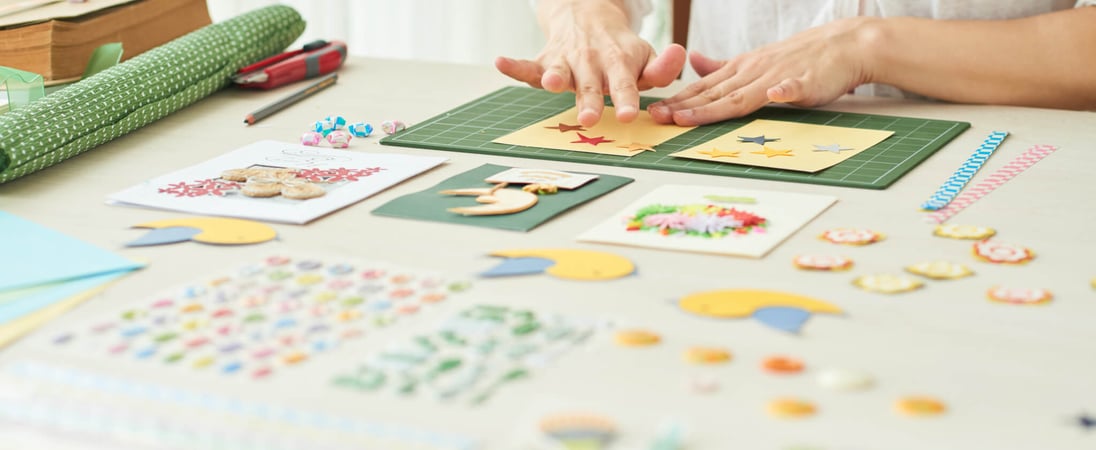
National Greeting Card Day
Sending a heartfelt message through colorful, expressive tokens that light up special moments in the lives of loved ones is a beautiful tradition.
Whether it is for a birthday, Valentine’s Day or Christmas, it can be such a delightful experience to open up the mailbox to find that it contains not a bill or an advertisement, but a colorful envelope with a greeting card from someone you love. And this is the time to enjoy and celebrate National Greeting Card Day!
How to Celebrate National Greeting Card Day
Passing on greetings from one person to another through a card used to be an important and exciting tradition that has been handed down through generations. Even in this modern era, it can be fun to bring back the old days and observe a day like National Greeting Card Day. Check out some of these ideas for celebrating and enjoying the day:
Send a Greeting Card
Of course, the most appropriate thing to do in celebration of National Greeting Card Day is to go ahead and send a card to someone. In fact, send several! Head out to the local paper store or drug store and spend some time choosing a few cards that are just because you care.
Write some funny or sappy messages in them, then pop over to the post office, pick up a couple of stamps and pop them in the mail. Friends or family members will be so delighted to receive them and their day will certainly be a little bit brighter!
Learn Some Fun Facts About Greeting Cards
Have a delightful time not only sending greeting cards in honor of National Greeting Card Day, but also celebrating by raising awareness for the day! Perhaps it would be fun to learn a few bits of trivia about the day and then share them with friends and coworkers or through social media.
Check out some of these fascinating facts about greeting cards in celebration of the day:
-
The tradition of greeting cards is believed to have been brought to the United States by a German lithographer named Louis Prang, who opened up a shop located in Boston in 1856.
-
Some of the most expensive greeting cards in the world can be purchased through a company called Gilded Age Greetings. Made from silk and embroidered with real gold, the cost of these cards begins at $395 and can go all the way up to almost $5000.
-
Each year, Americans spend around $8 billion dollars by sending more than 6 million greeting cards within the United States and all around the world.
-
According to the White House archives, the first official Christmas card that was sent from the White House was from US President Calvin Coolidge in 1927. Today, millions of Christmas cards are sent from the White House each year.
Make Some Handmade Cards
A great way for creative people to get involved with celebrating National Greeting Card Day might be to get connected through paper crafting. Making homemade greeting cards and sending them out to friends and family might be a fun activity for engaging with children or adults. Whether it’s an artform like painting messages or pictures with watercolor paints or learning how to do origami paper folding, this is a fun and exciting opportunity for parents, school teachers, youth workers, and others.
National Greeting Card Day Timeline
600–900 CE
New Year Wishes in Imperial China
During the Tang Dynasty, people in China began exchanging written messages of goodwill to celebrate the New Year, an early ancestor of the paper greeting card.
3000 BCE–1000 BCE
Papyrus Greetings in Ancient Egypt
Egyptians used papyrus scrolls to write personal messages and letters, providing one of the earliest known traditions of sending written greetings.
1415
A Valentine from the Tower of London
Charles, Duke of Orleans, writes a Valentine poem to his wife while imprisoned in the Tower of London, often cited as the oldest surviving Valentine greeting.
1843
The First Commercial Christmas Card
In London, Sir Henry Cole commissions artist John Callcott Horsley to create a printed Christmas card, launching the commercial Christmas card tradition.
1856
Louis Prang and American Lithography
German immigrant Louis Prang opens a lithographic printing business near Boston, laying the groundwork for mass‑produced American greeting cards.
1875
America’s First Christmas Card Line
Prang introduces the first complete line of Christmas cards for the U.S. market, using advanced color lithography to make high‑quality cards widely available.
1910
Hallmark and the Modern Greeting Card Industry
Joyce Clyde Hall founded Hallmark Cards in Kansas City, helping shift greeting cards from occasional novelties to a year-round, standardized commercial product.
History of National Greeting Card Day
The tradition of giving a card to a person as a show of affection can be traced back many centuries. In Ancient China, people would send messages back and forth to one another to celebrate the coming of the New Year and Ancient Egyptians would use papyrus scrolls to pass their greetings on in the form of “letters”.
In Europe, the idea of passing notes or messages back and forth to a beloved person in the form of a love letter probably started in the 14th century, in the early Renaissance and the Age of Chivalry. But it wasn’t until around the 15th century that the custom of giving and receiving handmade paper greeting cards really caught on in Europe. By this time, Germans were printing New Year’s greetings using woodcuts and, of course, the oldest existing paper Valentine dates back to the year 1477.
Greeting cards became more commonplace in the 1800s, especially for Valentine’s Day. And in 1843, the first Christmas card was published when Sir Henry Cole of London enlisted an artist to design a card he could send out to his friends and family. When advances in technology and printing processes came in the mid-20th century, sending a greeting card became a cost-effective and simple way to send messages back and forth to friends and family.
With the advent of the internet and electronic communication, the practice of sending and receiving greeting cards – and mail in general – may have dwindled in popularity a bit. But there’s still so much to appreciate about this delightful tradition and greeting cards can still be a special way of connecting with loved ones.
In light of this history, National Greeting Card Day is a great time to take a look at the impact that greeting cards have had on the world, and consider ways that these principles could be implemented going forward into the future!
National Greeting Card Day seems to have had its first observance in 2021 when it was established by Lovepop. This “disruptive” greeting card company was started in 2014 and made its way into the world by combining art with engineering in their creation of beautiful, intricate, laser cut pop up greeting cards. Not only are Lovepop cards sold in local retail stores, but they also can be purchased online and sent directly to the recipient.
So whether sending one special greeting card to a loved one or looking through a box of old greeting cards from cherished friends years ago, National Greeting Card Day offers a delightful opportunity to celebrate something so simple and enjoyable!
To honor other days throughout the year that are focused around the theme of greeting cards consider celebrating Hug a Greeting Card Writer Day in September or World Card Making Day in October.
National Greeting Card Day FAQs
How did greeting cards develop from ancient messages into the modern cards people buy today?
Historians trace greeting cards back to the ancient Chinese, who exchanged handwritten messages of goodwill at New Year, and to early Egyptians, who wrote greetings on papyrus scrolls.
In Europe, handmade cards grew more common from the late Middle Ages, with early Valentins appearing in the 1400s. The modern, commercial card industry took shape in the 1800s, helped by cheaper printing, the introduction of postage stamps, and mass production.
A key turning point was the first commercial Christmas card in 1843 in London, followed by the work of printer Louis Prang, who popularized colorful Christmas cards in the United States later in the 19th century. [1]
Why do many people still value a physical greeting card when digital messages are so convenient?
Communication researchers note that a physical card carries effort, planning, and cost, which can signal care in a way that a quick text or email may not.
Because cards are tangible and often displayed in homes or offices, they can reinforce social bonds over time and serve as keepsakes that mark important life events.
While digital messages are faster and easier to send, physical cards are often perceived as more personal and meaningful, especially for major occasions such as bereavements, weddings, and milestone birthdays. [2]
Are greeting card traditions the same around the world?
The basic idea of sending written good wishes is widespread, but customs vary by culture. In many Western countries, birthdays, Christmas, and Valentine’s Day are major card‑giving occasions.
In East Asian countries influenced by Chinese traditions, New Year greetings can be more prominent than birthdays, and red or auspicious imagery is often used to convey luck and prosperity.
Some cultures focus more on family‑oriented holidays or religious festivals, and in others, verbal greetings or gifts may play a larger role than cards.
These differences reflect local histories, religious practices, and postal traditions, even though the underlying goal of expressing connection is similar. [3]
How significant is the greeting card industry in modern economies?
The greeting card business is a substantial part of the broader stationery and gift sector, with hundreds of publishers, independent designers, and retailers in major markets.
In the United States, the Greeting Card Association describes it as a mature, multibillion‑dollar industry that employs writers, illustrators, printers, and distribution staff, and that relies heavily on seasonal peaks such as Christmas, Valentine’s Day, and Mother’s Day.
Trade associations in other countries report similar patterns, where cards are sold through supermarkets, bookstores, gift shops, and online platforms, often providing important revenue for small creative businesses. [4]
What makes a greeting card message feel sincere instead of generic?
Experts who write cards professionally emphasize specificity and tone. A message that mentions a shared memory, a concrete trait the sender appreciates, or a situation the recipient is facing tends to feel more authentic than a stock phrase alone.
Matching the tone to the occasion and to the relationship also matters: light humor may suit a close friend but not a formal condolence, where simple, direct language is usually better.
Many professional guidelines suggest starting with a short, clear sentiment (such as congratulations or sympathy), adding one or two personal lines, and closing with an appropriate sign‑off that reflects how close the sender and recipient are. [5]
How do greeting card archives help historians understand everyday life?
Museums and archives that collect greeting cards, such as the Smithsonian Institution in the United States, use them as evidence of social history.
Designs and messages reveal changing fashions, gender roles, religious practices, and family structures across decades. Holiday cards, for example, can show how people represented their homes, work, and relationships at different points in time.
Because cards are often kept in family collections, archivists see them as a window into private, domestic life that is not always captured in official records or newspapers. [6]
Why is Louis Prang often called the “father of the American Christmas card”?
Louis Prang, a German‑born lithographer who settled in Boston in the 19th century, is widely credited with popularizing high‑quality color Christmas cards in the United States.
Using advanced color printing techniques for the time, he produced elaborate designs that were sold nationally and even awarded in public design competitions.
The Greeting Card Association notes that his work helped establish expectations for richly illustrated, commercially produced cards, and it positioned Christmas cards as a regular seasonal purchase for many American households. [7]
Also on ...
View all holidays
Reading Is Funny Day
By reading books of riddles, jokes, and comedy, help kids see how reading can be just as fun and funny (if not moreso) as video games, tv, or the internet.

Fun Day
Carve out some time for yourself to laugh, play, and unwind from the high-speed stress of everyday life by doing something that brings you joy and happiness.


We think you may also like...

Fill Our Staplers Day
An unsung hero of the office, the quiet "click" of a full stapler often goes unnoticed until the frustrating "clunk" of an empty one.

National Ballpoint Pen Day
Whether you’re writing a letter, jotting down a grocery list, or crafting a Shakespearian sonnet, make sure you use a ballpoint pen on National Ballpoint Pen Day.
National Notebook Day
Open up a notebook and get writing. Jot down your to-do list, journal your thoughts, make lists or even try some creative writing with good old pen and paper.

National Rubber Eraser Day
Precision in errors, these small tools quietly correct, leaving traces of lessons learned in graphite whispers.