
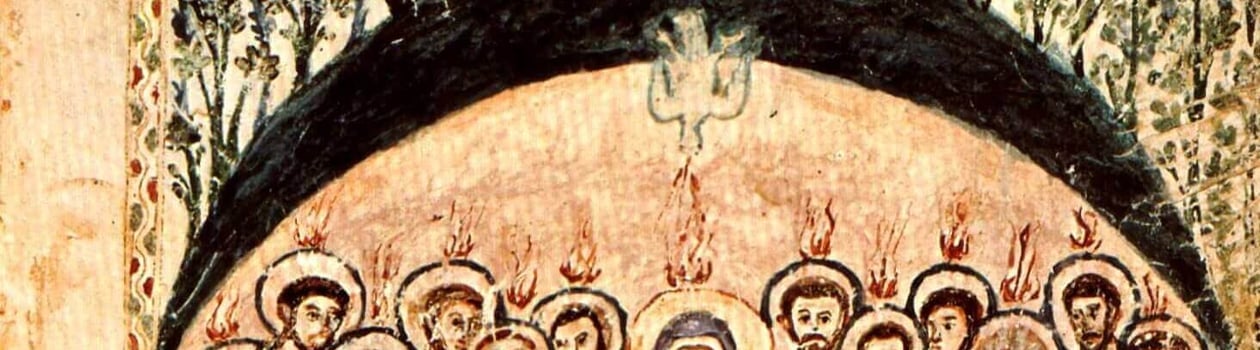
Pentecost is a vivid celebration marking the birth of Christianity. Fifty days after Easter, this dynamic day observes the Holy Spirit’s descent onto the followers of Jesus.
They were then filled with divine power, enabling them to speak various languages and spread their message worldwide. It’s a moment that defines Christian unity and outreach, turning many into believers and forming the church’s foundation!
How to Celebrate Pentecost
Pentecost calls for a celebration that’s as spirited and vibrant as the event itself! Here are some quirky and playful ways to mark this holy day:
Multilingual Marvels
Why not kick things off with a bit of linguistic flair? Have the tale of Pentecost read in several languages during your gathering. It’s a brilliant nod to the apostles speaking in tongues and adds an international twist to your celebration!
Reflect and Meditate
Spend some quiet time reflecting on the themes of Pentecost, such as renewal and inspiration. Whether it’s through prayer, meditation, or reading spiritual texts, you can connect more deeply with the day’s significance.
Feast with Family and Friends
Organize a picnic or a backyard barbecue to gather loved ones together. Sharing a meal has always been at the heart of many celebrations. Therefore, Whit Sunday is the perfect occasion to enjoy good food in great company.
Crafty Candles
Get crafty with some homemade candles. Grab a cardboard tube and wrap it in colorful paper. Scribble inspiring messages like “Flame of the Spirit” on them. Top it off by attaching red, yellow, and orange tissue paper flames. It’s both a decoration and a great conversation starter!
Divine Decor
Who says you can’t bring a little wind and fire indoors? Make wind socks by decorating paper bags with bold, fiery colors and attaching streamers that flutter beautifully in the breeze. It’s a festive way to symbolize the rushing wind of the Holy Spirit.
Soaring Spirits
For that extra ‘wow’ factor, craft a dove from paper or fabric—a symbol of peace and the Holy Spirit. Attach it to a pole and have it ‘swoop’ through your processional, bringing dynamic energy to any Pentecost procession.
Creative Crafts for Kids
Engage the little ones with craft activities like making dove ornaments or flame headbands, which symbolize the Holy Spirit. Crafts keep the kids entertained and offer a fun way to teach them about the holiday’s meanings.
These suggestions blend traditional elements with a touch of fun, perfect for making your Pentecost celebration memorable and engaging.
Some of the Significance of Pentecost
Pentecost is not just a remembrance of historical events; it’s a day imbued with spiritual significance!
Christians honor the Holy Spirit’s role in empowering the apostles and, by extension, all believers. This empowerment is central to Christian teachings and community life, influencing various worship practices, church services, and religious observances around the world.
Celebrated by various Christian denominations, Pentecost holds a special place in the religious calendar. Depending on the church’s traditions, it falls on different dates each year due to its link to Easter.
For instance, in 2024, Western churches makred this day on May 19, while Eastern churches observed it on June 23. These varying dates reflect the diverse ways the Christian faith commemorates this crucial event.
Pentecost has been one of the principal feasts in the Christian liturgical year for centuries. It is widely observed across various denominations, including Roman Catholics, Eastern Orthodox, Anglicans, and Lutherans.
One nickname is particular to Britons who would often consider this a day for baptisms where the participants would wear white, garnering the name “White Sunday”, “Whit Sunday” or “WhitSun”.
Pentecost Timeline
Shavuot Becomes a Pilgrimage Festival
In the period of the Second Temple, the Jewish feast of Shavuot is established as one of the three pilgrimage festivals associated with the wheat harvest, laying the calendrical and religious backdrop for what Greek-speaking Jews call “Pentecost,” the fiftieth day after Passover.
Pentecost in the New Testament
The Acts of the Apostles describes the Holy Spirit descending on Jesus’s followers during the Jewish Feast of Pentecost, with believers speaking in other languages and Peter preaching to the crowds, an event Christians come to view as the birth of the church.
Pentecost Becomes a Major Christian Feast
Early Christian writers such as Tertullian and Augustine refer to Pentecost as a distinct and joyful feast, and by the 4th century, it is firmly fixed in the liturgical year as one of the great festivals following Easter, often associated with baptisms and confirmations.
Pentecost and Whitsun Practices Develop in the West
By the early Middle Ages, Western churches expanded Pentecost observances into a season that included a week of services and popular customs; white garments for baptisms gave rise to the English term “Whitsunday,” reflecting the link between the feast and initiation into the church.
Reformation-Era Pentecost Traditions
Protestant reformers retain Pentecost as a principal feast but reshape its theology and practice, emphasizing preaching about the Holy Spirit and congregational participation, while many folk customs like processions and plays are reduced or reinterpreted in Reformation regions.
Azusa Street Revival and Modern Pentecostalism
At a multiracial revival on Azusa Street in Los Angeles, led by William J. Seymour, worshipers report speaking in tongues and other spiritual gifts associated with the Holy Spirit, giving birth to the modern Pentecostal movement that takes its name from the New Testament Pentecost event.
Charismatic Renewal in Historic Churches
During and after the Second Vatican Council, experiences of “baptism in the Holy Spirit” and speaking in tongues spread within Roman Catholic, Anglican, and other mainline churches, broadening the influence of Pentecostal-style spirituality and reshaping how many Christians understand and celebrate the work of the Spirit.
History of Pentecost
Pentecost marks a significant moment in Christian history, celebrating the descent of the Holy Spirit upon the apostles.
This event, which occurred fifty days after Easter, is often described as the birth of the Christian Church. Originally, the term “Pentecost” comes from the Greek word for “fiftieth,” referring to its place in the calendar following Passover. Historically, it also coincides with the Jewish festival of Shavuot, a celebration of the wheat harvest and the giving of the Torah at Mount Sinai.
The story of Pentecost, as detailed in the Acts of the Apostles, describes the apostles speaking in tongues, which allowed them to communicate the gospel to a diverse crowd in Jerusalem. This miraculous event attracted thousands of converts and is seen as the moment when Christianity first began to spread beyond ethnic Jewish boundaries.
This is why Pentecost is often seen as the moment when the Church was moved to engage with the wider world, a significant shift in its mission, and the beginning of its global spread. The importance of Pentecost continues to be recognized across many Christian denominations, emphasizing both the role of the Holy Spirit and the universal message of Christianity.
It’s a time to reflect on the Church’s spiritual empowerment and its mission to share the teachings of Jesus with all peoples.
Pentecost Traditions, Symbolism, and Historical Impact
Pentecost is more than a single religious event—it is a rich blend of symbolism, cultural traditions, and historical significance.
From the striking use of red to represent spiritual fire, to communal celebrations in medieval England, and the powerful message of unity through language, these facts reveal how Pentecost shaped both religious practice and social life across centuries.
Red as the Color of Flame in Western Pentecost Traditions
In many Western Christian churches, the liturgical color for Pentecost is red, symbolizing the “tongues of fire” and the power of the Holy Spirit described in the Acts of the Apostles; medieval and later Western practice extended this symbolism to clergy vestments, altar hangings, and sometimes congregants’ clothing to visually emphasize themes of zeal and mission.
Whit Sunday and English Social Customs
In medieval and early modern England, Pentecost, known as Whit Sunday, became linked with not only baptisms but also fairs, processions, and multi-day communal feasts during “Whitsuntide,” and parish and legal records indicate it was a favored time for church ales, village fundraisers, and hiring fairs at which laborers sought new employment.
Pentecost and the Birth of the Church Mission
According to Acts 2, around three thousand people were baptized after hearing the apostles speak in their own languages, a scene many historians regard as a symbolic starting point for Christianity’s self-understanding as a missionary movement that crossed ethnic and linguistic boundaries and helps explain the rapid spread of early Christian communities across the eastern Mediterranean.
“Speaking in Tongues” as Known Languages in Acts 2
Scholars frequently distinguish the “speaking in tongues” at Pentecost from later Christian glossolalia, since Acts 2 describes xenolalia, where Galilean followers of Jesus are understood by visitors from various regions of the Roman world in their native languages, an image often interpreted as a deliberate reversal of the Tower of Babel story that highlights mutual intelligibility rather than ecstatic but unintelligible speech.
Charismatic Movements and Modern Glossolalia
Twentieth-century Pentecostal and charismatic movements deliberately drew on the Pentecost narrative when reviving glossolalia and other spiritual gifts, with landmark revivals such as the Azusa Street Mission (1906–1909) treating speaking in tongues as a sign of spiritual empowerment and contributing to Pentecostalism becoming one of the fastest-growing forms of Christianity worldwide, especially in Latin America, sub-Saharan Africa, and parts of Asia.
Pentecost FAQs



You may also like
Ascension Day
Ascension Day is a major Christian observance that remembers the belief that Jesus Christ, after the resurrection, ascended into heaven. It is traditionally marked on the fortieth day after Easter and is often observed on a Thursday. In many churches, it falls within the stretch of days between Easter and...
- Austria
- Belgium
- Denmark
- and 13 more
Holy Thursday
Holy Thursday, celebrated on the Thursday before Easter, is a pivotal day in Holy Week. This day is marked by the remembrance of Jesus Christ's Last Supper with his disciples. During this dinner, he established the sacrament of Holy Communion. Not only does Holy Thursday honor this significant event, but...
- Greece
- International
- Iran
- and 5 more
Orthodox Holy Saturday
Orthodox Holy Saturday is a deeply symbolic day that follows the sorrow of Good Friday. It represents a powerful moment of waiting and hope. This day honors Jesus' burial yet carries a unique, uplifting promise. Orthodox Christians reflect on Christ’s descent into Hades, where he brings hope to souls and...
- Albania
- Australia
- Bulgaria
- and 14 more

National Christian T-Shirt Day
Celebrate National Christian T-Shirt Day by wearing faith-inspired shirts to share Christian messages, inspire hope, and show unity among believers worldwide.
- Canada
- United Kingdom
- United States
National days and holidays on May 24

Vivid Sydney
Vivid Sydney is a dazzling celebration that transforms the city into a vibrant playground of lights, music, and creativity. For weeks, iconic landmarks and urban spaces glow with stunning light installations and 3D projections, captivating both locals and tourists. This festival draws millions of visitors each year, offering an enchanting...
- Australia

National Escargot Day
It was a brave man who first ate a snail. Yet, escargot is a classic French delicacy, and possibly the first farmed creatures in history. Give it a try, at least.
- Canada
- France
- United Kingdom
- and 1 more

Brother’s Day
Get in touch with your brother, brothers or someone you think of as one, and spend some quality time together, in-person or virtually.
- Australia
- Canada
- France
- and 4 more

Foster Care Fortnight
Foster Care Fortnight, an annual event in the UK, typically happens in the first two weeks of May. This initiative is driven by The Fostering Network, a leading charity that promotes foster care awareness and recruitment. The event raises awareness about the growing need for foster carers and their vital...
- United Kingdom
Seize Every Day
Join free for personalised recommendations, email reminders and exclusive guides. Never miss a day.